Are Heelys Dangerous? What the Injury Research Actually Says
Short answer: Heelys carry a real but manageable injury risk, and the published research does not show they are more dangerous than other wheeled footwear. What the data does show is a clear pattern. Half of reported Heelys injuries were fractures, most affected the arms and wrists, and only about a third of injured children were wearing any protective equipment at the time. The reassuring part of the same research: in one hospital review, none of the Heelys-related fractures required surgery or a hospital stay.

This guide walks through what the studies actually found, which children the data describes, the single piece of gear that addresses the most common injury, and how to set your child up so rolling stays fun. If you are still deciding what to buy, start with the shoes with wheels safety guide and the sizing advice below.
Safety Guide | Pop-Out Roller Shoes | Heel Wheel Shoes | Size Guide
What the research actually found
Two published studies give us the clearest picture. A review of United States National Electronic Injury Surveillance System data covering 2002 to 2006 examined 131 reported Heelys injuries in children. A separate hospital study reviewed 953 children who came in with fractures over a 90 day period and identified which of those were Heelys related.
| Finding | What the data showed |
|---|---|
| Mean age of injured child | About 10 years |
| Share of reported injuries that were fractures | 50.4 percent |
| Most commonly injured area | Upper limb, 57.3 percent |
| Fell onto an outstretched hand | 57 percent |
| Injured children wearing protective gear | Only 31 percent |
| Parents who did not know gear was recommended | 62 percent |
| Share of childhood fractures that were Heelys related | 1.68 percent in the hospital review |
| Heelys-related fractures requiring surgery | None in that hospital review |
Read the table honestly and both sides show up. Fractures were prominent among reported injuries, and they were mostly to the arms and wrists. But Heelys accounted for under two percent of childhood fractures in the hospital review, and none of them were severe enough to need an operation. These studies describe injury patterns. They do not establish that Heelys are riskier than any other shoe with wheels.
The single most useful finding for parents
Fifty seven percent of injured children fell onto an outstretched hand, and 57.3 percent of reported injuries involved the upper limb. That is the same event described twice: the child loses balance, throws a hand out to catch themselves, and the wrist takes the impact.
Now put that next to the other number. Only 31 percent of injured children were wearing protective gear, and 62 percent of parents did not know any was recommended.
Those figures do not prove gear would have prevented every injury, and no honest article would claim that. But they do tell you two useful things. The most common injury in this category is a wrist injury, and the cheapest piece of equipment in the category is a pair of wrist guards. Most of the families in that research simply did not know they were supposed to buy them. You now do.
Which children does the data describe?
Injured riders in the research were young, with a mean age of about 10 years. Age on its own does not determine whether a child will fall, and the data does not support a clean cutoff where wheeled shoes suddenly become safe.
Readiness is about the individual child: balance, coordination, judgment, willingness to wear protective gear, ability to follow a rule about where they may roll, a shoe that actually fits, and somewhere smooth and flat to practise.
How to reduce the risk in practice
1. Buy the wrist guards at the same time as the shoes
Because the majority of reported injuries were to the arms and wrists from catching a fall by hand, wrist guards target the most likely injury in this category. A helmet covers the rarest but most serious outcome, so both belong in the same order. Knee and elbow pads prevent the scrapes that make children give up in the first week.
2. The surface matters more than parents expect
Smooth, flat, dry, and open. An empty tennis or basketball court is close to ideal. Avoid gravel, cracked pavement, wet ground, slopes, stairs, and crowded spaces while a child is learning. Predictable ground means fewer variables for a beginner to manage at once.

3. Fit is a safety feature
A shoe that slides on the heel throws off balance every time the child shifts weight. Measure both feet in centimeters and match them in the size guide rather than guessing from another brand, and avoid buying oversized for growing room.
4. Teach the technique, do not just hand over the shoes
Short, supervised practice sessions give a child time to learn stance, rolling, and stopping before adding speed. Our step by step guide to teaching a kid to ride covers the whole progression.
5. Keep the wheels away when they should be away
Most school and shop incidents happen because a child rolls somewhere they should be walking. How easily a pair switches between walking and rolling mode decides how realistic that rule is to enforce, so it is worth understanding the mechanism before you buy.
Does the number of wheels change the risk?
Here is the honest answer first: the injury research above does not compare wheel designs, so nobody can tell you from that data that one layout is safer than another. Any brand claiming otherwise is going beyond the evidence, and that includes us.
What can be said is physical rather than statistical. A single heel wheel puts balance on one narrow contact point behind the foot. A four-wheel setup spreads weight across a wider base, which reduces side to side wobble and gives a beginner more margin for error. That is a difference in how the platform feels underfoot. It does not eliminate falls and it does not replace protective gear.
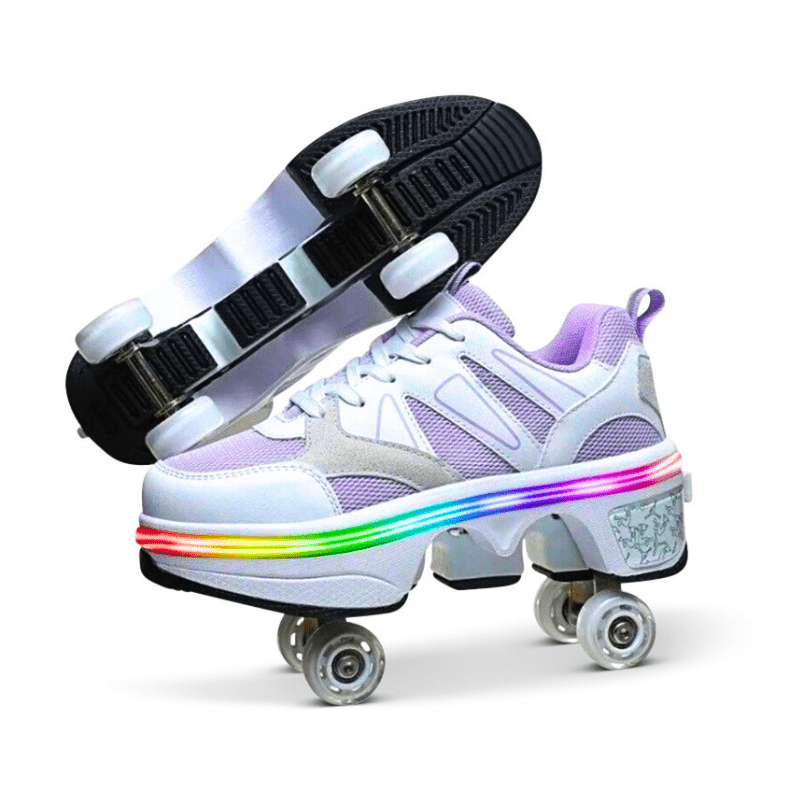
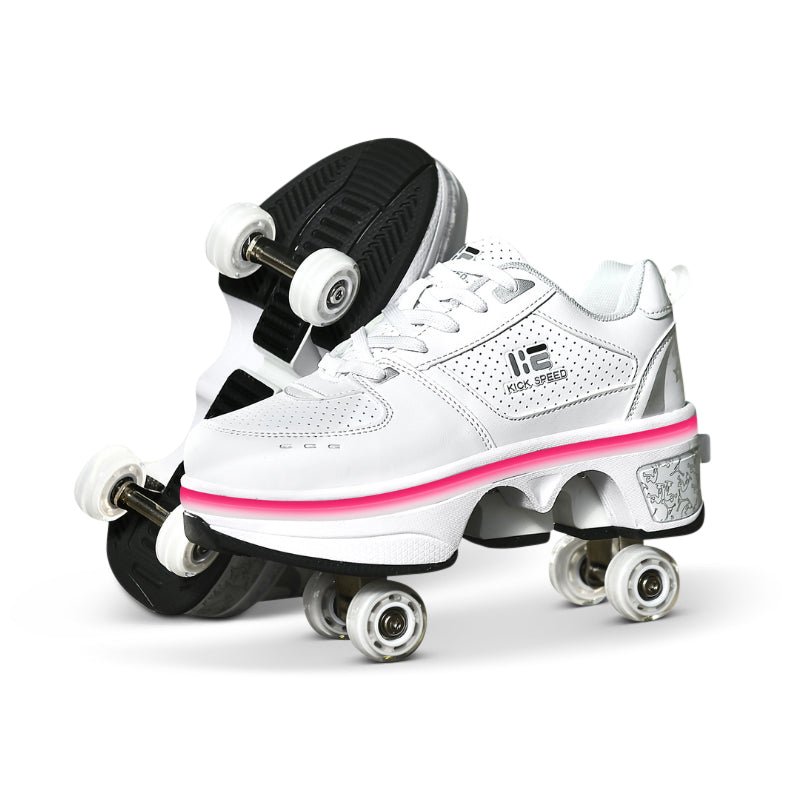
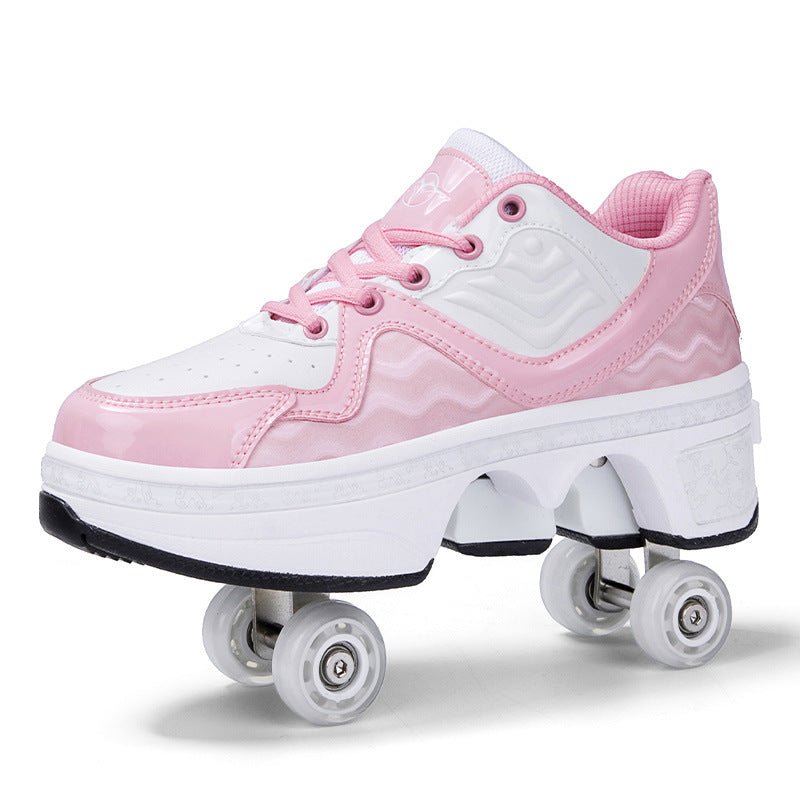
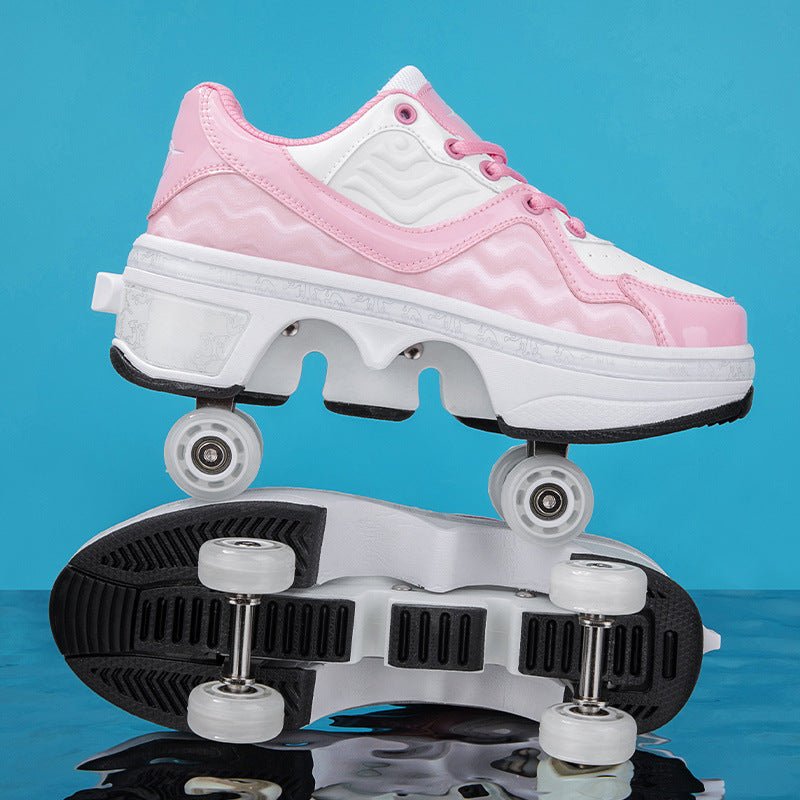
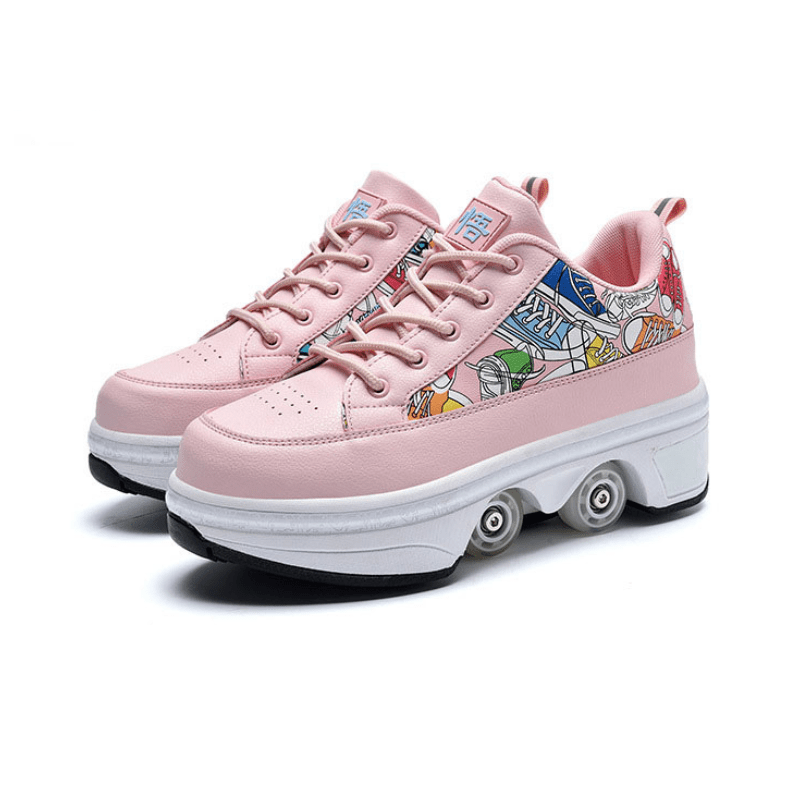
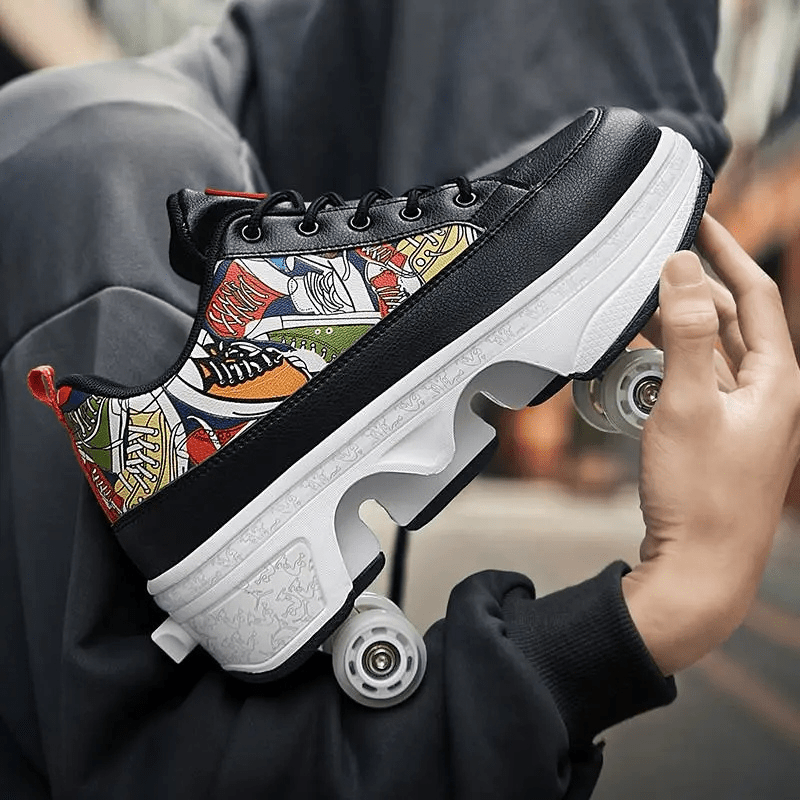
That is the practical difference between the two main categories. Pop-out roller skate shoes deploy four wheels from the sole with a heel button and lock in place. Wheel mechanisms vary across Kick Speed heel wheel roller shoes. Cloud LOW and Pro-X LOW heel wheel roller shoes have button-operated retractable rear wheels, while their front wheels are fitted and removed manually. Other models, including Kick Air LOW heel wheel roller shoes, use manually removable front and rear wheels. For the full comparison, read 4-wheel roller skate shoes vs heel wheel shoes.
Heelys use a different mechanism again, covered separately in do Heelys have retractable wheels, and the full brand-by-brand breakdown is in Kick Speed vs Heelys.

What about long term foot effects?
That is a different question from injury risk and we answered it in full separately. The short version is that the concern experts raise is about all day wear in wheel mode rather than occasional riding. For the detail, read are shoes with wheels bad for kids feet and ankles.
What age should a child start?
No single age makes wheeled shoes automatically safe, and the research does not give one. Most families find six or seven is the earliest that balance, coordination, and foot size come together, but readiness still comes down to the individual child rather than a birthday.
For age by age guidance, see our picks for 10 to 12 year olds and the broader guide to whether roller skate shoes are safe for kids.

What is built into the shoe
Gear and habits do the heavy lifting, but the shoe contributes too. Kick Speed pop-out models use a button-activated four-wheel retractable system with a lock and unlock function, so the wheels stay where you put them. Cloud LOW and Pro-X LOW heel wheel roller shoes have button-operated retractable rear wheels and manually fitted front wheels. Kick Air LOW heel wheel roller shoes have manually removable front and rear wheels. The wheel system runs on a steel frame, authentic spare wheels are available so worn parts can be swapped rather than ridden down, and selected models use a twist-lock dial instead of laces.
Light-up models are USB rechargeable. The 7-LED system has 7 modes, while the brighter NEW LED stays visible in daylight and makes a child easier to spot on a dark afternoon. None of this makes wheeled footwear risk free, and lights are not a substitute for safe routes and supervision. The full breakdown is in Kick Speed safety features.
Beginner-friendly options
Kick Air LOW Heel Wheel / LED
Kick Air LOW Heel Wheel has manually removable front and rear wheels. Fit only the rear wheels for heel-wheel riding, or fit both front and rear wheels for the full setup. Shop Kick Air LOW Heel Wheel.
Original MID Black / 7-LED
The pop-out four-wheel system in a mid-top, so there is more coverage around the ankle while a child is learning. Clean black works with school outfits, and the USB rechargeable 7-LED sole has 7 modes. Shop Original MID Black.
Viper Twist Lock LOW / NEW LED
A twist-lock dial instead of laces, so nothing comes undone mid-glide and the fit stays even through a session. The brighter NEW LED stays visible in daylight. Shop Viper Twist Lock LOW.
Keep worn wheels replaced with authentic spare wheels, and browse everything in the full range.
Frequently asked questions
Are Heelys dangerous?
They carry a real but manageable injury risk, mostly wrist and arm injuries from falling onto an outstretched hand. Published research found half of reported injuries were fractures, while one hospital review found Heelys accounted for 1.68 percent of childhood fractures with none requiring surgery. The research does not show Heelys are more dangerous than other wheeled footwear.
Are Heelys safe for kids?
Heelys are wheeled footwear, so falls are possible and injuries do happen. Only 31 percent of injured children in the research were wearing protective gear. Use wrist guards and a helmet, add knee and elbow pads, pick a smooth flat surface away from traffic, get the size right, and supervise younger riders.
What is the most common Heelys injury?
Upper limb injuries, which made up 57.3 percent of reported injuries, usually from falling onto an outstretched hand at 57 percent. Fractures were the most common injury type at 50.4 percent.
Do kids really need wrist guards?
Wrist guards target the most likely injury in this category, since most reported injuries were to the arms and wrists from catching a fall by hand. They do not eliminate injury risk, so use them alongside a helmet, knee and elbow pads, a suitable surface, and supervision.
Are Heelys good for kids?
They build balance, coordination, and confidence, and they get children moving outdoors, which are real benefits. Whether they suit your child depends on balance, judgment, willingness to wear protective gear, correct fit, and having a safe place to ride. A child who will not wear wrist guards or who only has rough ground nearby is not set up for success.
At what age are Heelys safe for children?
No single age guarantees safety and the research does not give one. Most families find six or seven is the earliest that balance, coordination, and foot size come together, but readiness depends on the individual child rather than a birthday.
Is one wheel or four wheels safer for a beginner?
The research cited here does not compare wheel designs, so it cannot establish that one is safer. Physically, a wider four-wheel base spreads weight across a broader platform and reduces side to side wobble, which gives beginners more margin for error. It does not eliminate falls and does not replace protective gear.
Where do most Heelys accidents happen?
The research does not identify a single location. For practice, choose a smooth, flat, dry, open area away from traffic, and avoid gravel, wet ground, slopes, stairs, and crowded spaces while your child is learning.
Can wheeled shoes be worn safely at school?
School rules vary, so check the policy first. Most schools that allow them require the wheels to stay away during the day, and a button-retracted system makes that rule easier to follow. See are Heelys allowed in school.
What should I buy alongside the shoes?
Wrist guards and a helmet at minimum, with knee and elbow pads strongly recommended for the first weeks. Spare wheels are worth having too, since worn wheels roll less predictably.
The bottom line
Heelys are not uniquely dangerous, and they are not risk free either. The research points to a clear pattern: a child around ten years old loses balance, puts a hand down, and hurts a wrist or arm, usually without wearing any protective equipment because nobody told the parents it was recommended. The same research found that in one hospital review, none of those fractures needed surgery.
You now know what most of those families did not. Buy the wrist guards and the helmet at the same time as the shoes, pick a smooth flat place to practise, get the size right, teach the technique before the speed, and choose a wheel setup that matches your child's confidence rather than their ambition.
If you want a wider base while your child learns, look at the pop-out roller skate shoes or the heel wheel models where the front wheels can stay on until balance improves. And before the first ride, read the shoes with wheels safety guide.
Shop beginner-friendly roller shoes