Shoes With Wheels Safety Guide: Gear, Rules & Riding Tips

Shoes with wheels can be safe when they’re used correctly, on the right surfaces, and with the right protective gear. This guide explains how shoes with wheels work, what makes them stable, how to choose a safe setup for beginners, and how to ride responsibly—whether you’re shopping for shoes with wheels for kids, shoes with wheels for teens, or shoes with wheels for adults.
You’ll also learn the key differences between roller skate shoes with retractable pop-out wheels and heel wheel shoes (Heelys-style riding), plus essential tips for safer rides and fewer falls.
In this guide: safety checklist, protective gear, beginner tips, safest surfaces, pop-out vs heel wheel setups, and answers for kids and adults.

Quick Answer: Are Shoes With Wheels Safe?
Yes—shoes with wheels can be safe with proper gear and responsible use, especially when:
- They’re used on smooth, flat surfaces (not steep hills or rough roads).
- The rider wears proper protective gear (helmet, wrist guards, knee and elbow pads).
- The wheels are locked/secured correctly (for pop-out/retractable systems).
- The rider learns braking, balance, and turning before riding fast.
- A beginner starts slowly and practices in a controlled area.
- They’re used away from traffic and busy streets.
Just like skateboards, inline skates, or roller skates, the main risk comes from speed and hard surfaces. The goal is to manage that risk with setup, technique, and gear.
Shoes With Wheels Safety Checklist
Before riding shoes with wheels, run through this quick safety checklist. A few simple checks can make a big difference in control, balance, and injury prevention—whether you're riding roller skate shoes with retractable wheels or heel wheel shoes.
- Check the wheel mechanism – Make sure wheels are properly installed or fully deployed and locked before riding.
- Inspect the wheels – Wheels should spin smoothly without wobble, cracks, or excessive wear.
- Wear protective gear – Helmet, wrist guards, knee pads, and elbow pads are strongly recommended, especially for beginners and kids.
- Choose the right surface – Start on flat, smooth ground such as a driveway, sidewalk, or sports court.
- Avoid hills and rough terrain – Steep slopes, gravel, sand, and wet surfaces increase fall risk.
- Secure your shoe fit – Laces or closures should be snug so your foot stays stable inside the shoe.
- Start with slow practice – Begin with short glides and controlled stops before trying longer rides.
- Check your surroundings – Avoid traffic, crowded walkways, and obstacles that could cause sudden stops.
- Practice stopping safely – Learn to step down and slow gradually instead of trying to stop suddenly.
- Supervise younger riders – Kids should ride in safe areas with adult supervision until they build confidence and balance.
Running through this checklist before riding helps ensure a safer experience with shoes with wheels, whether you're using roller skate shoes with retractable wheels or heel wheel roller shoes.

What Are Shoes With Wheels?
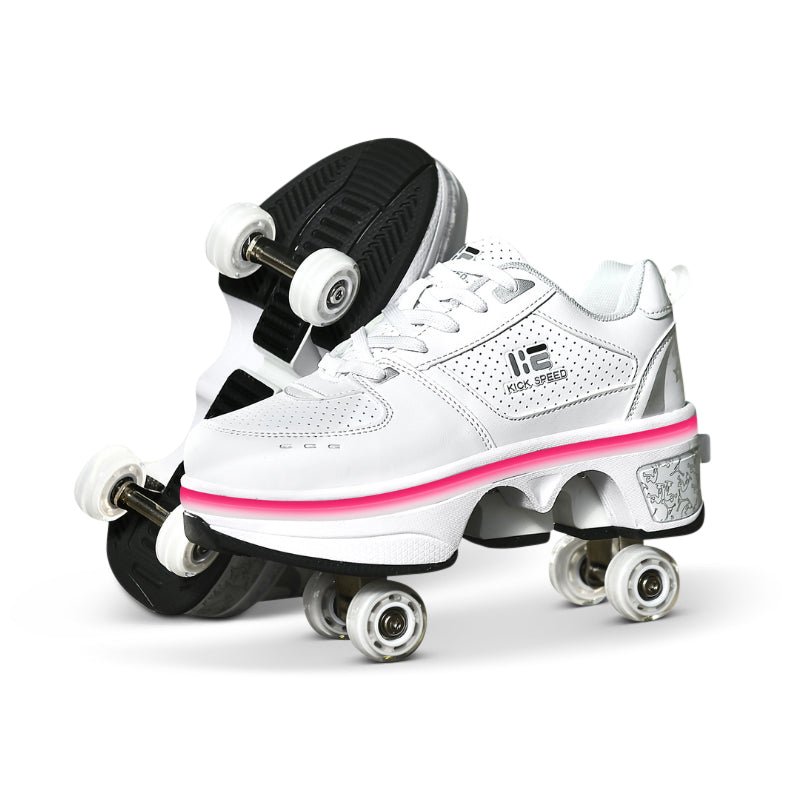
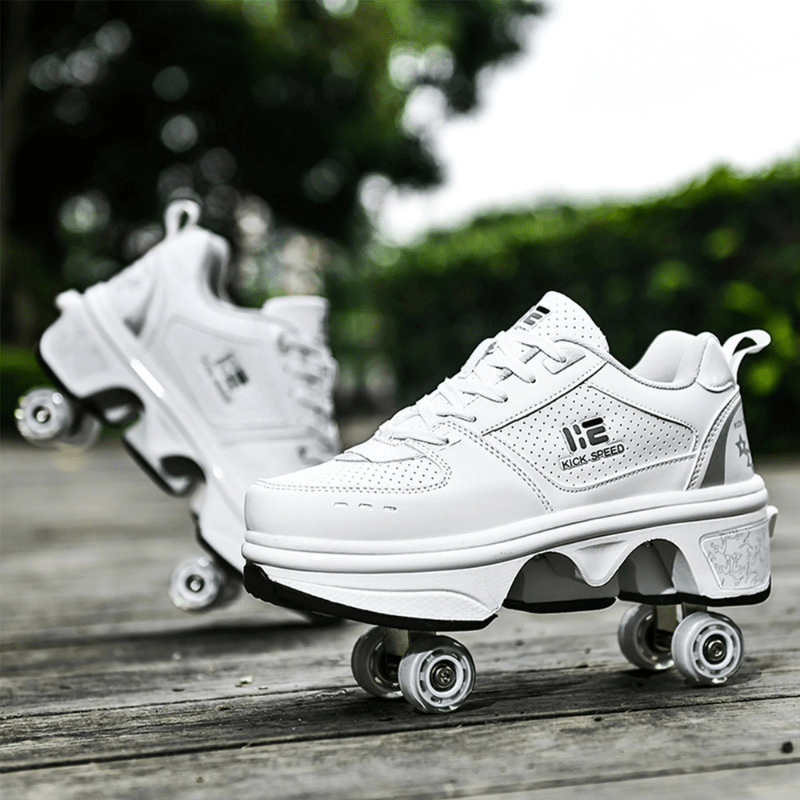
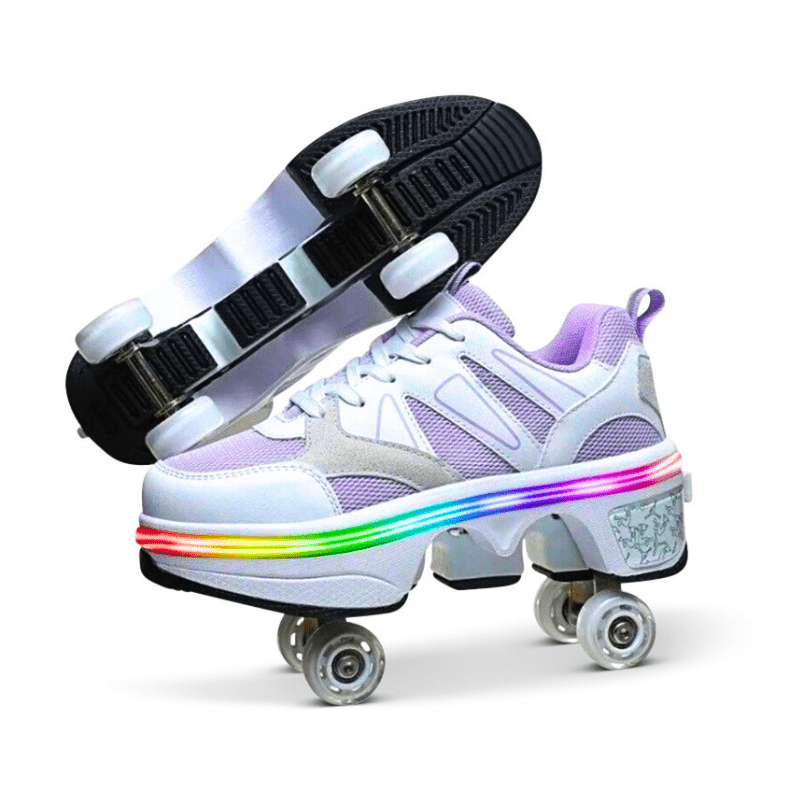
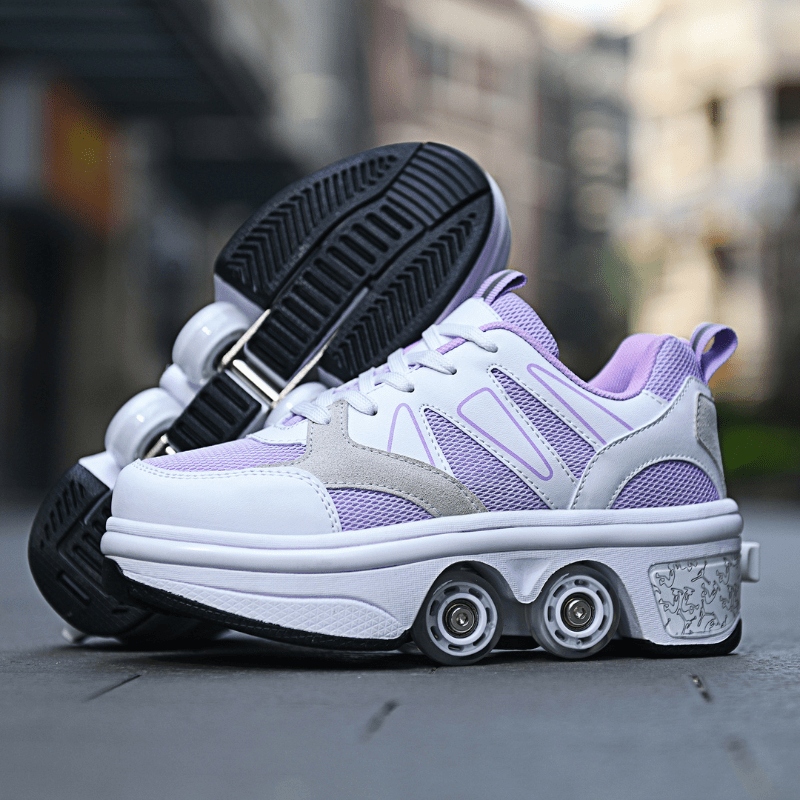
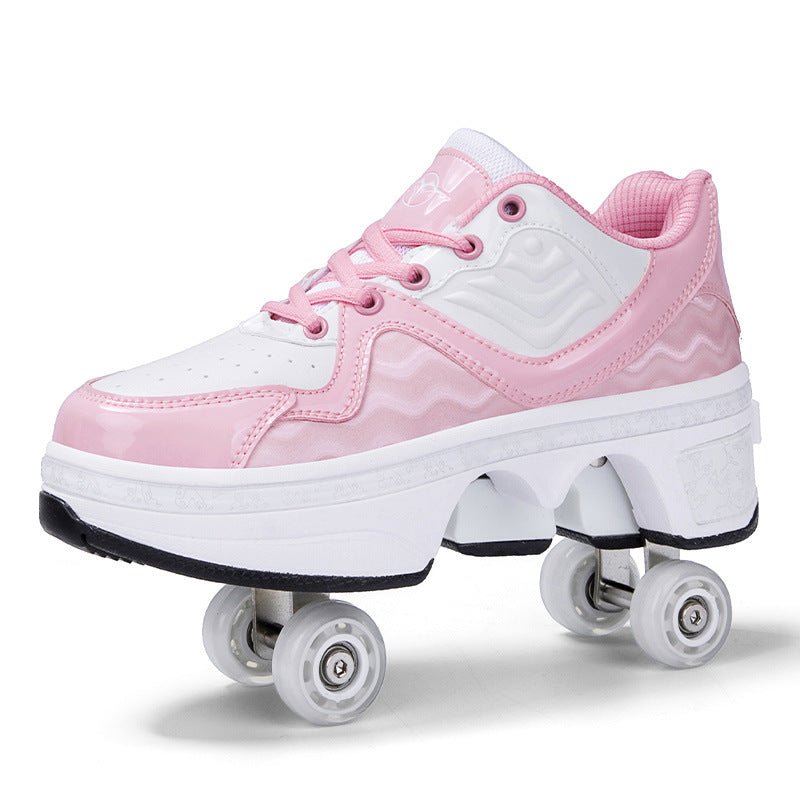
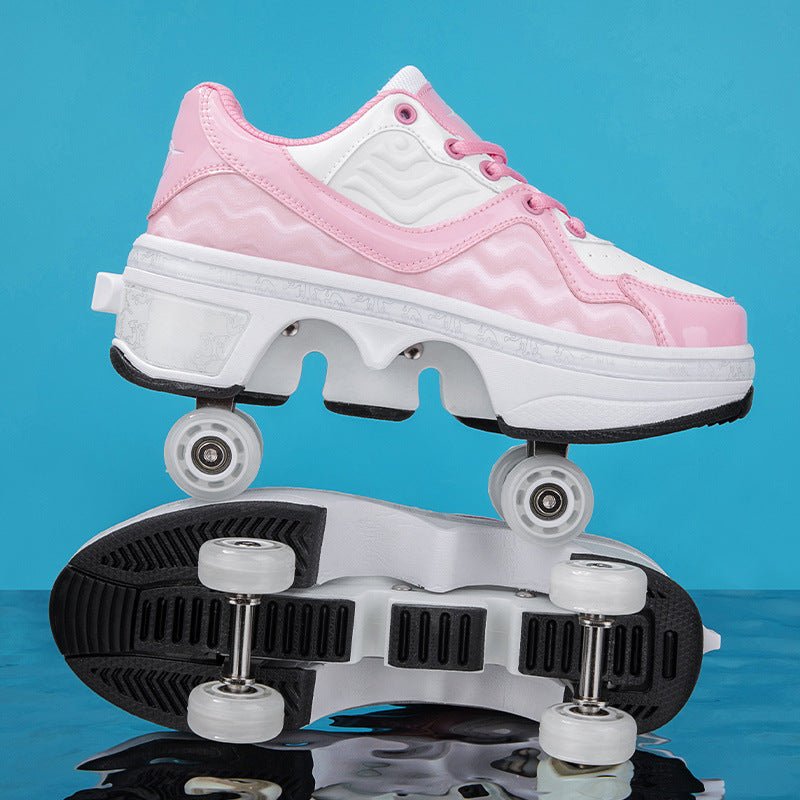
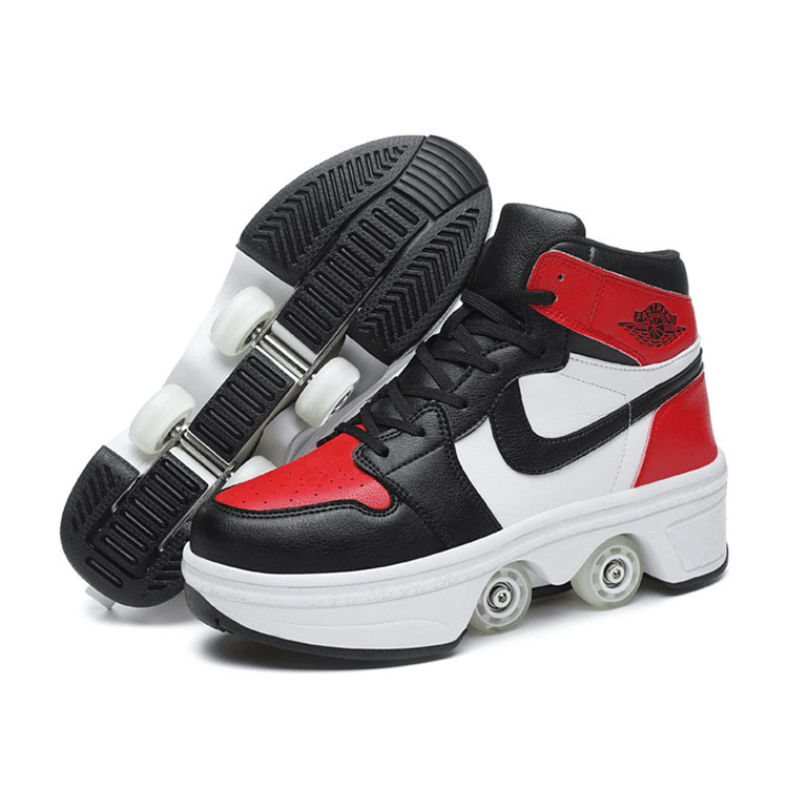
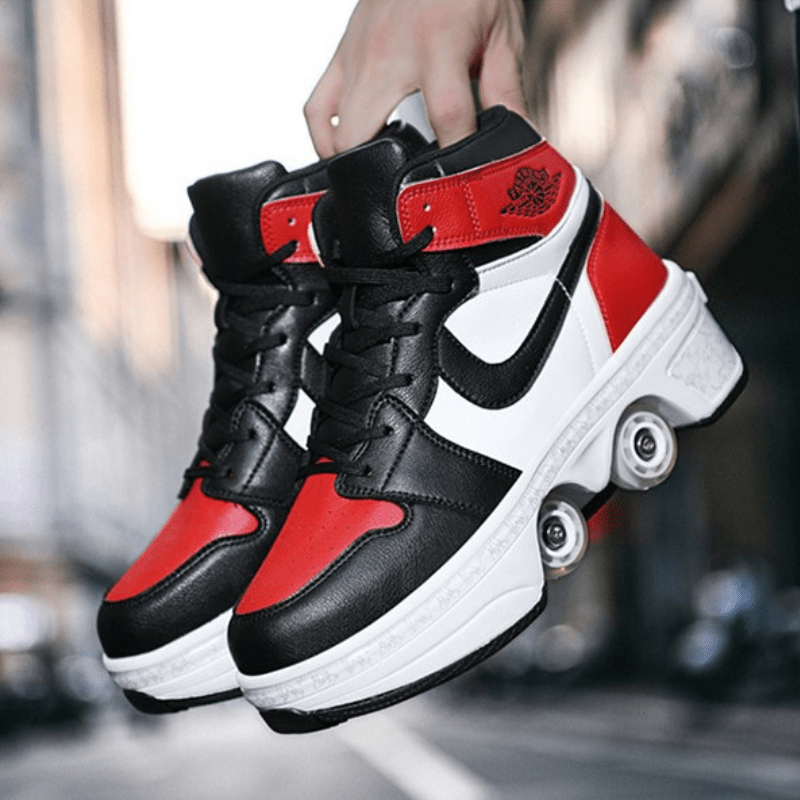
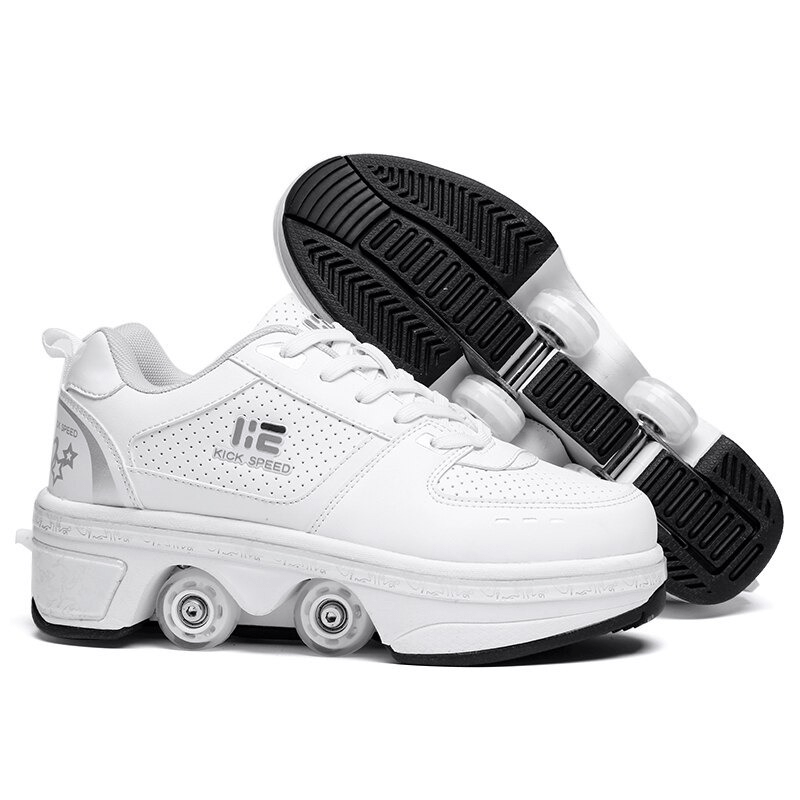
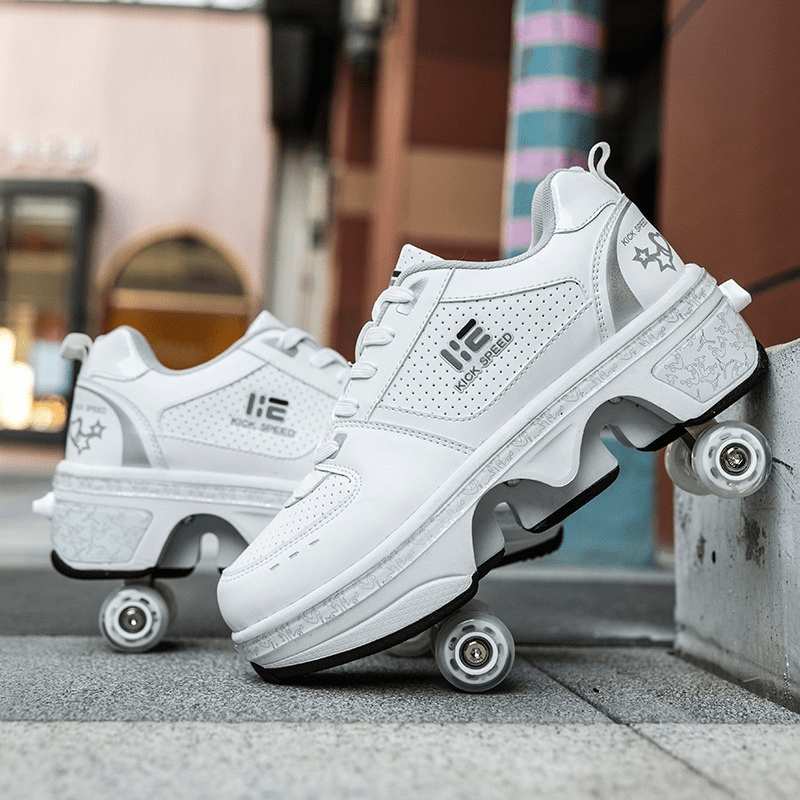
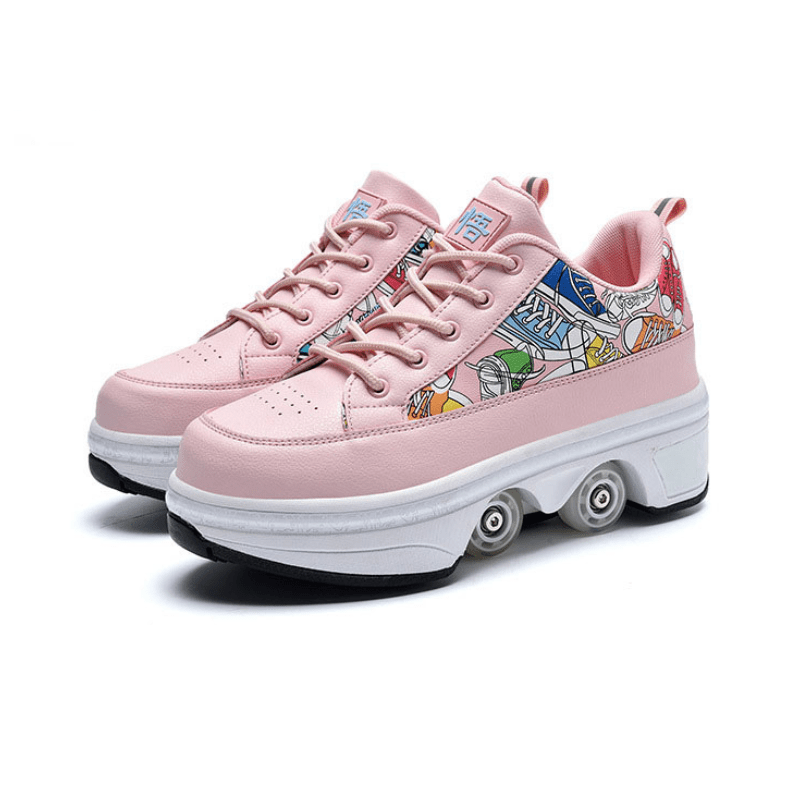
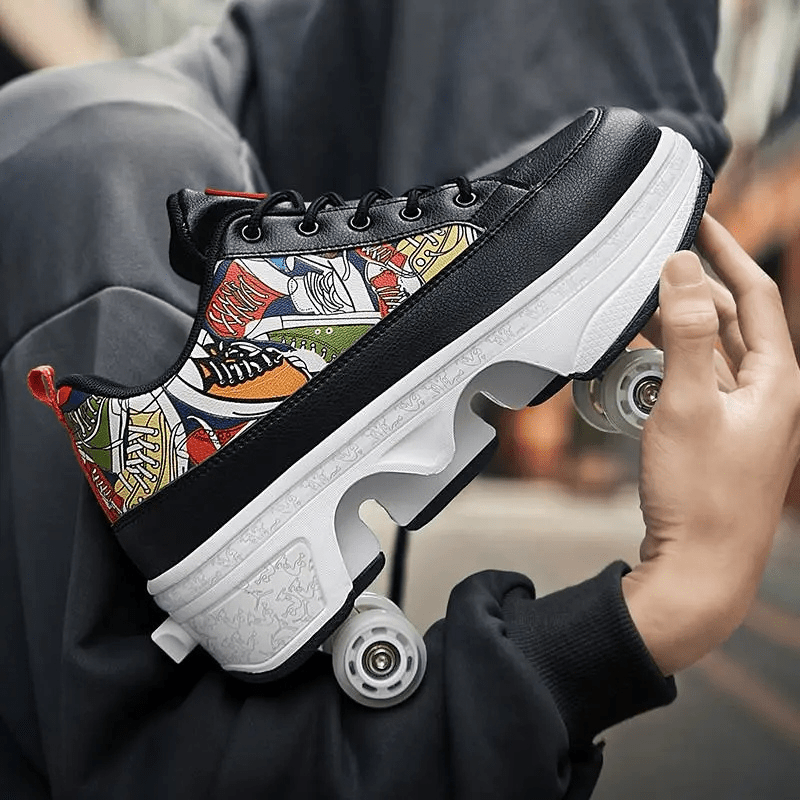
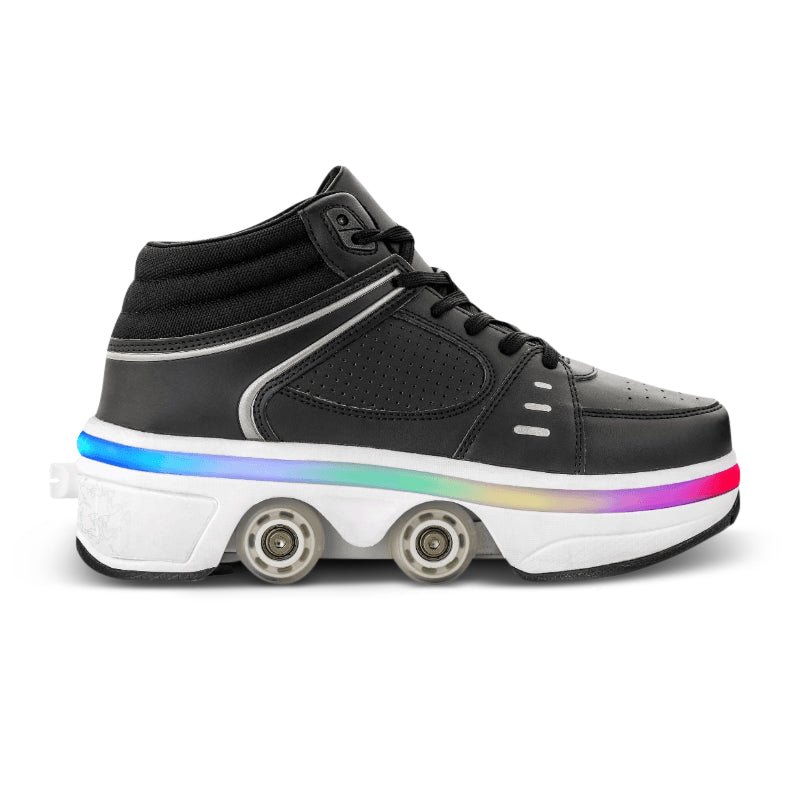
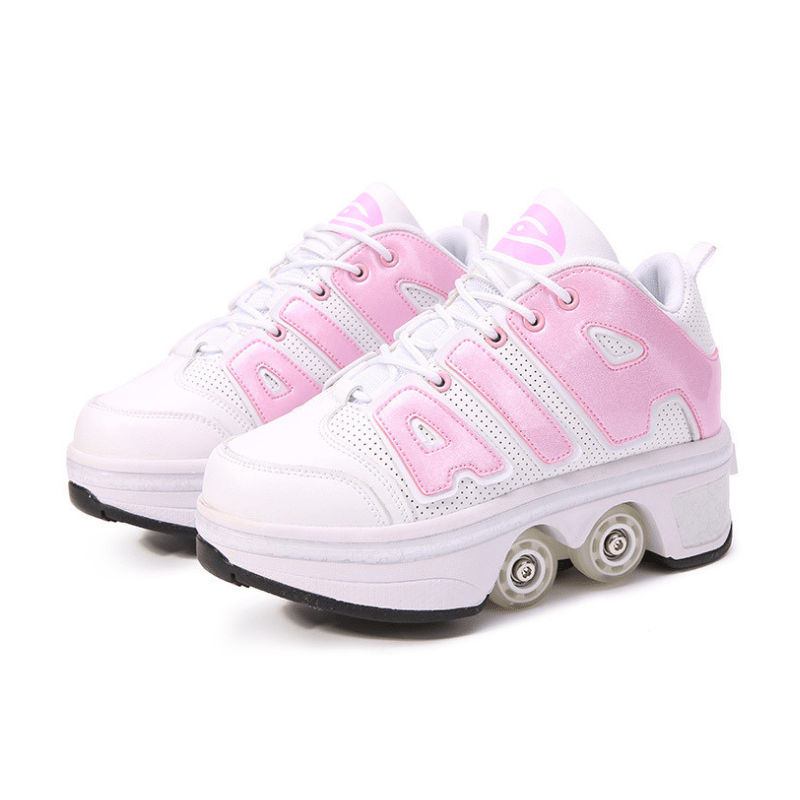
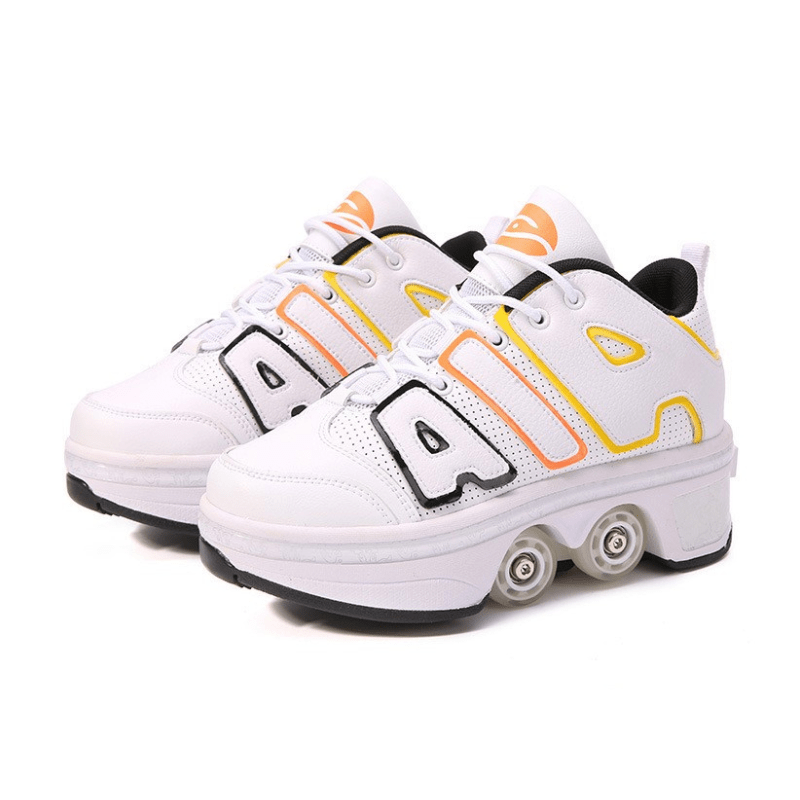
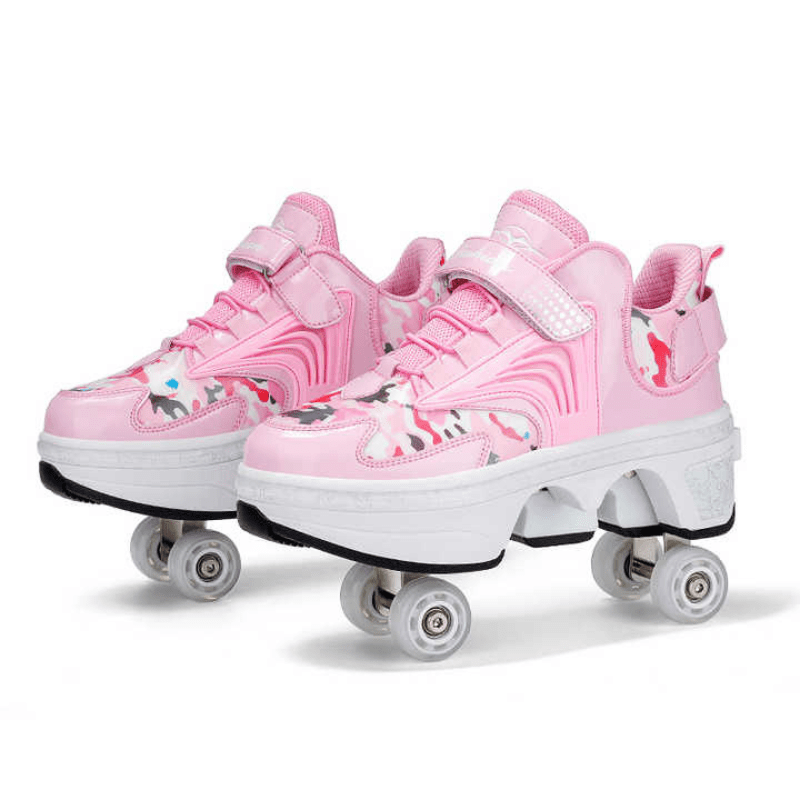
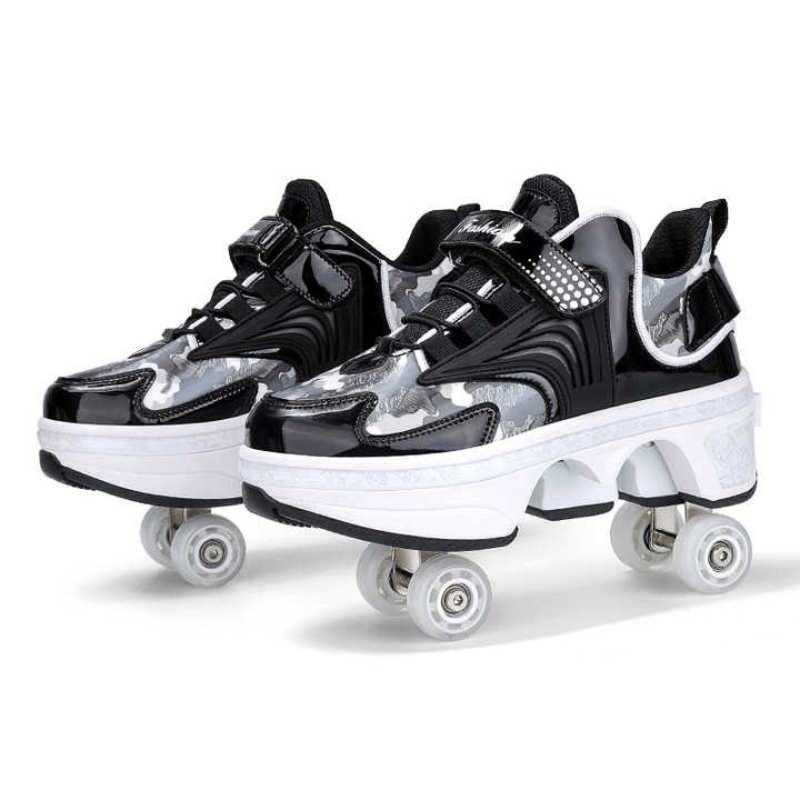
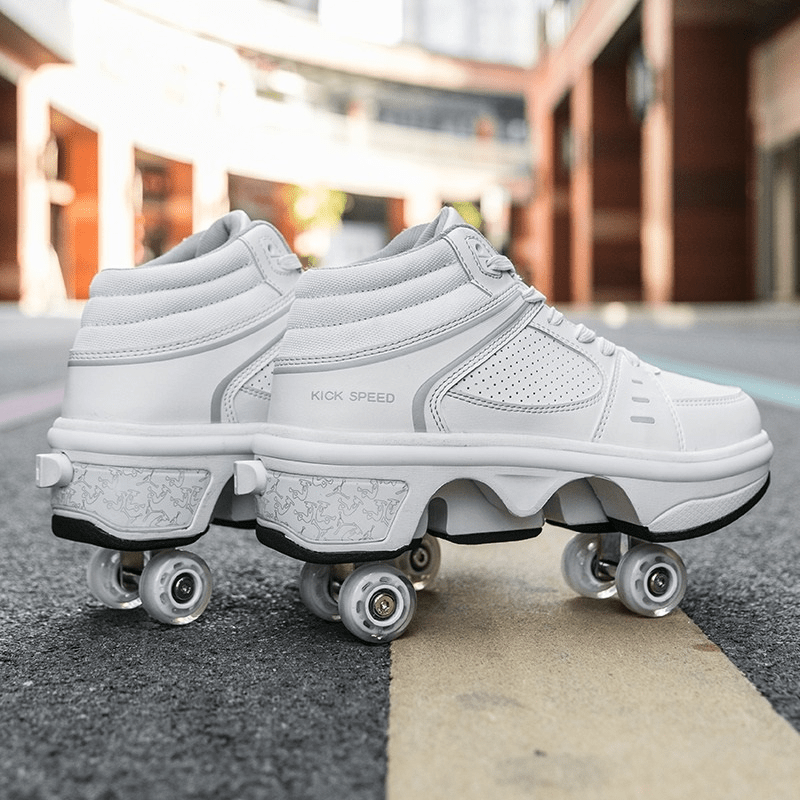
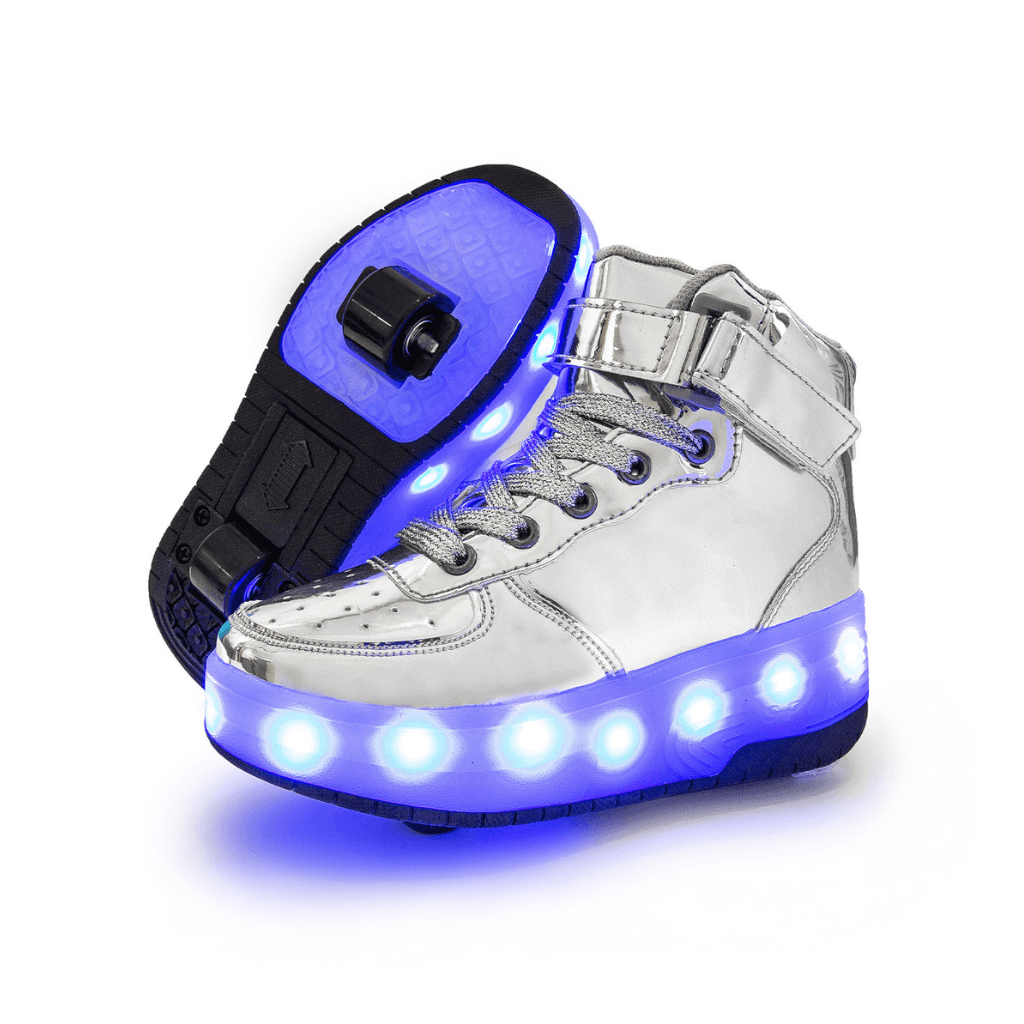
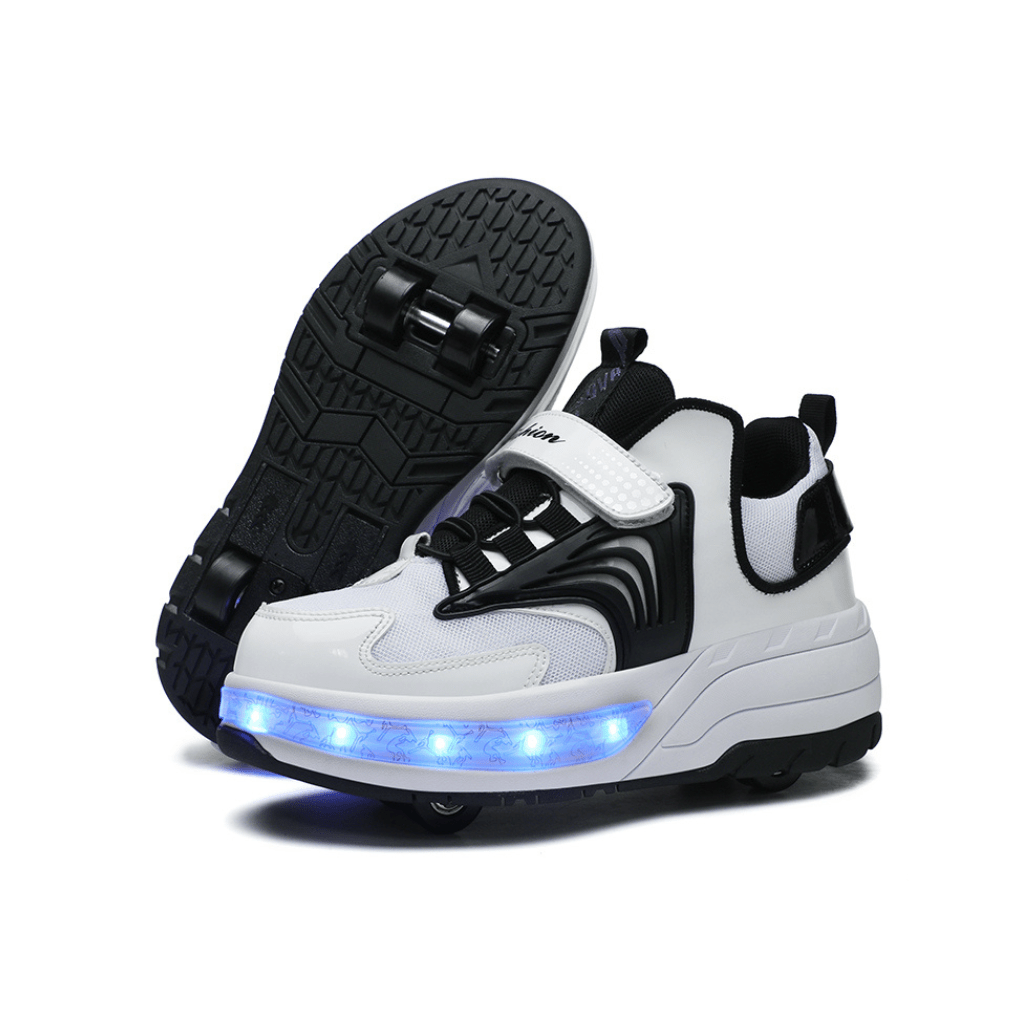
Shoes with wheels are convertible sneakers designed to roll when wheels are installed or deployed, and to walk like regular shoes when wheels are removed or retracted. People also call them:
- roller shoes
- roller sneakers
- shoes with retractable wheels
- shoes with pop-out wheels
- heel wheel shoes (Heelys-style)
- roller skate shoes with wheels (when using a multi-wheel setup)
At Kick Speed™, there are two common riding styles:
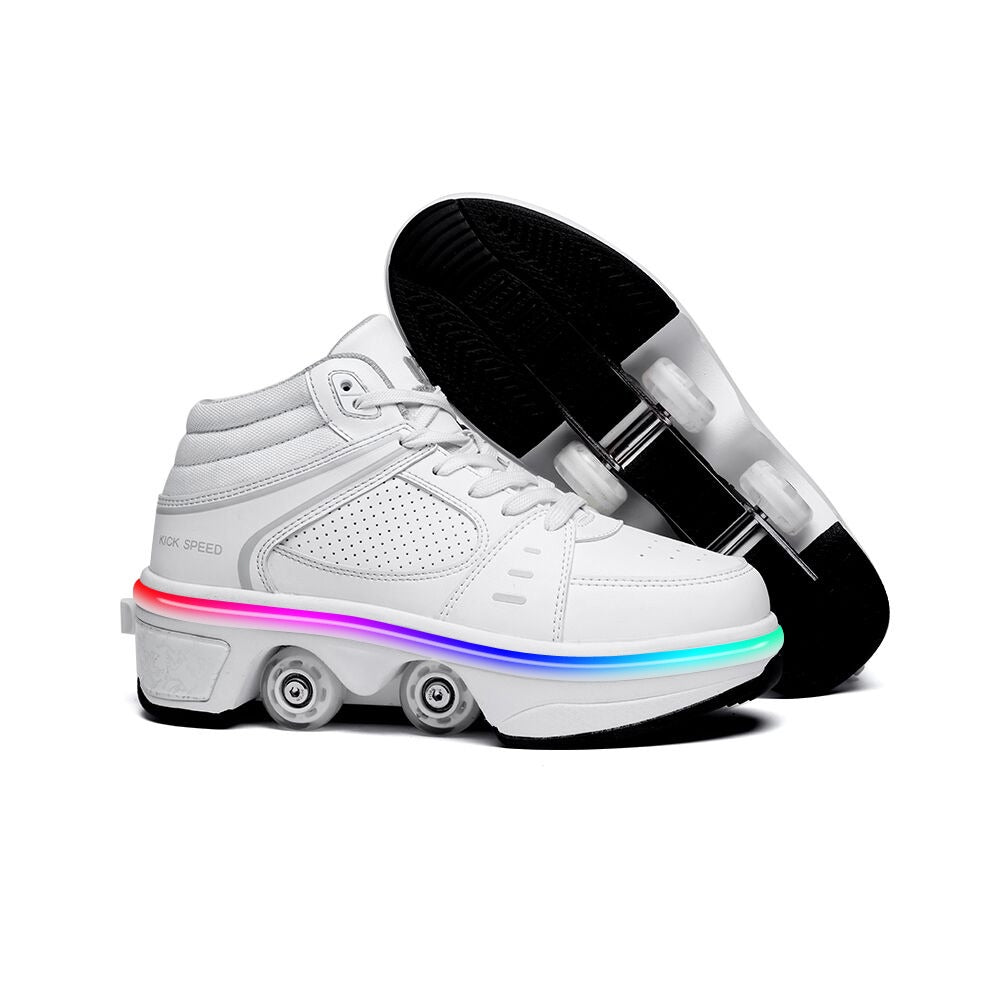
- Roller skate shoes with retractable pop-out wheels (wheels deploy and retract, typically with a heel button + lock system).
- Kick Speed Heel Wheel shoes (rear-wheel riding like Heelys-style glide, with optional front wheels for a more stable multi-wheel setup depending on the model).
If you want a visual explanation, see our guide explaining how shoes with wheels work.

Pop-Out / Retractable Wheels vs Heel Wheel Shoes: Which Feels Safer?
After you understand what shoes with wheels are, the next question is usually which setup feels safer to learn on. Safety always depends on surface, protective gear, and riding skill, but the ride feel differs between pop-out/retractable wheel shoes and heel wheel shoes—especially for beginners.
Roller skate shoes with retractable pop-out wheels
- Designed to switch between walking and rolling using a deploy/retract mechanism.
- Before riding, confirm the wheels are fully deployed and securely locked.
- A great option for riders who want the convenience of a built-in wheel system and a more “skate-like” feel.
Heel wheel shoes (Heelys-style riding)
- Uses a rear-wheel gliding style that can feel simpler at first for people who don’t know how to skate.
- Because it’s mainly a controlled glide, it’s often more about fun movement than learning classic skating technique.
- Start at low speed with short glides and focus on balance and safe stopping.
- Some Kick Speed Heel Wheel models can also be configured with additional front wheels for a more stable setup, depending on the design.
If you’re shopping for shoes with wheels for beginners, heel wheel shoes are often the easiest way to start, as long as you practice on smooth flat ground and wear protective gear.
Beginner tip: start with the setup you can control at slow speed. Many first-time riders prefer heel wheel shoes for easy gliding, then move to pop-out/retractable wheel models as balance improves.

What Makes Shoes With Wheels Safer?
Not all roller shoes feel the same. Safety and stability usually come down to these factors:
1) Wheel stability and layout
Stability improves when the wheel setup reduces side-to-side wobble. A more stable layout helps beginners control balance, turning, and speed.
2) A secure wheel mechanism
For shoes with retractable wheels or shoes with pop-out wheels, the mechanism must hold wheels firmly in place while riding. Riders should always confirm wheels are fully deployed and locked before moving.
3) Supportive shoe structure
A stable fit helps control. Look for:
- Snug heel support
- Secure lacing/closure
- Firm sole feel when walking
4) Correct wheel condition
Worn or damaged wheels can reduce traction and control. Check wheels regularly and replace them when needed.
Common Mistakes When Riding Shoes With Wheels
Most falls with shoes with wheels happen because of simple beginner mistakes. Understanding these common issues can help riders improve balance, control speed, and avoid unnecessary accidents when learning to ride roller shoes or roller skate shoes with wheels.
1. Leaning too far backward
Many beginners instinctively lean backward when they start rolling. This shifts the center of gravity behind the wheels and makes balance harder to control. A safer riding position is a slightly forward athletic stance with knees gently bent and the body centered over the feet.
2. Trying to go too fast too early
Speed is one of the biggest causes of falls for new riders. When learning to ride roller shoes, start with short controlled glides instead of long fast rides. Gradually increase distance and speed only after balance improves.
3. Skipping protective gear
Protective equipment greatly reduces injury risk. Beginners riding shoes with wheels should always wear a helmet and wrist guards. Knee and elbow pads are also highly recommended, especially for kids.
4. Riding on unsafe surfaces
Rough pavement, gravel, wet sidewalks, and steep hills make riding much more difficult. Beginners should practice on smooth, flat surfaces such as empty basketball courts, driveways, or quiet sidewalks.
5. Not checking the wheels before riding
For roller skate shoes with retractable wheels or pop-out wheel systems, always confirm wheels are fully deployed and secure before starting. Loose or improperly installed wheels can reduce stability and control.
6. Looking down instead of forward
Looking down at the feet can disrupt balance and reduce awareness of obstacles. Riders should keep their eyes forward and maintain a relaxed posture while rolling.
Most of these mistakes disappear quickly with practice. Taking time to learn balance, control speed, and choose safe riding areas helps riders build confidence when using shoes with wheels.

Are Shoes With Wheels Safe for Kids?
Shoes with wheels for kids can be a fun way to stay active, but kids need structure and supervision—especially at the beginning.
Best practices for kids
- Start on flat ground (driveway, smooth sidewalk, tennis/basketball court).
- Use full protective gear every ride (see the gear checklist below).
- Practice “walk first” before rolling. If wheels are removable/retractable, learn walking mode first.
- Avoid traffic areas and crowded walkways.
- Parent supervision is recommended for beginners.
Common kid mistakes (and how to fix them)
- Leaning too far back – teach a slight forward athletic stance (knees bent).
- Trying to go fast immediately – start with short glides and controlled stops.
- No wrist guards – wrist guards are one of the most important pieces for beginners.
Tip: If a child is brand-new, the safest approach is short practice sessions (10–15 minutes) until balance improves.

Are Shoes With Wheels Safe for Adults?
Shoes with wheels for adults can also be safe, but adults often underestimate the learning curve and overestimate braking ability early on. The best approach is the same as any rolling sport: gear + controlled practice + gradual speed.
Adult safety advantages
- Better body control and decision-making
- More patience with practice (when treated like a skill)
Adult safety risks
- Higher speed on day one
- Harder falls due to weight and momentum
- Skipping protective gear
- Less fall practice – Many adults aren’t used to falling or catching themselves safely, so it’s important to start slow and wear protective gear.
If you’re shopping for roller shoes for adults, prioritize protective gear and practice technique before doing longer rides.
How Beginners Should Start Riding Roller Shoes
Learning to ride roller shoes or shoes with wheels is easier when beginners start with simple, controlled steps. The goal is to develop balance and confidence before attempting longer rides or higher speeds.
Step 1: Practice walking first
Before rolling, beginners should get comfortable walking in the shoes. If the model has removable or retractable wheels, practice walking mode first to understand how the shoe feels and how weight shifts while moving.
Step 2: Find a safe practice area
Choose a wide, smooth, and flat surface with minimal obstacles. Ideal beginner locations include empty basketball courts, quiet sidewalks, school playgrounds, or flat driveways. Avoid hills, crowded areas, and rough pavement during early practice.
Step 3: Start with short glides
Begin with small controlled glides lasting one or two seconds. Push gently, roll briefly, then step down and stop. Repeat this movement until balance starts to feel natural.
Step 4: Learn basic balance posture
- Knees slightly bent
- Body centered over the feet
- Eyes looking forward
- Arms relaxed for balance
Step 5: Practice controlled stopping
Stopping safely is one of the most important beginner skills. Instead of trying to stop suddenly, riders should gradually slow down and step out of the glide. Practicing controlled stops builds confidence and reduces fall risk.
Step 6: Increase distance gradually
Once balance improves, beginners can extend their glides and experiment with gentle turns. Progress slowly and avoid sudden movements until riding becomes comfortable.
With regular practice, most riders quickly become comfortable using shoes with wheels, whether they are roller skate shoes with retractable wheels or heel wheel roller shoes.

Protective Gear for Riding Shoes With Wheels (Highly Recommended)
Protective gear dramatically reduces injury risk for both kids and adults. For most riders, this is the best upgrade you can make.
- Helmet (properly fitted)
- Wrist guards (commonly reduce wrist injuries in falls)
- Knee pads
- Elbow pads
Extra helpful items:
- Gloves (if you don’t have wrist guards)
- Reflective clothing/lights for evening rides
- A small backpack (to carry wheels/tools if your model converts)

How to Ride Shoes With Wheels More Safely
1) Learn the stance
- Knees slightly bent
- Core engaged
- Eyes forward (not down)
- Arms relaxed for balance
2) Start with controlled glides
Practice short glides (1–2 seconds), then step to a stop. Repeat until balance feels natural.
3) Practice turning safely
Begin with wide turns. Sharp turns at speed increase fall risk.
4) Learn a safe stop
Beginner-friendly stopping methods include:
- Step-down stop (walk out of the roll)
- Gradual slowdown by reducing stride and rolling distance
Note: Braking like skating takes practice. Don’t assume you can stop instantly on day one.

Best Places to Ride Shoes With Wheels Safely
Choose surfaces that help you control speed and reduce sudden stops.
Good places to practice
- Smooth sidewalks (not crowded)
- Empty basketball/tennis courts
- Flat driveways
- Indoor smooth floors where allowed (wide open space)
- Indoor skating areas
- Indoor roller rinks
- School gym floors
Where You Should NOT Ride Shoes With Wheels
These environments make skating harder and increase fall risk—especially for beginners:
- Wet pavement, rain, or slippery tiles
- Gravel, sand, uneven pavement, or broken sidewalks
- Steep hills and long declines
- Busy streets, intersections, and parking lots with moving cars
- Crowded areas where sudden stops are required
- Wet leaves, ice, snow
Benefits of LED Shoes With Wheels
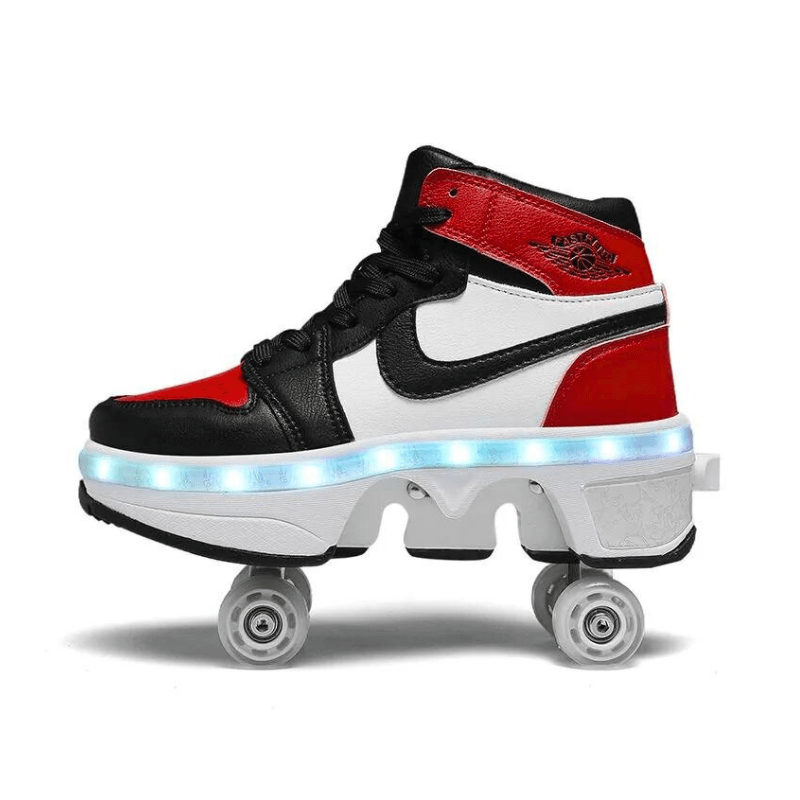
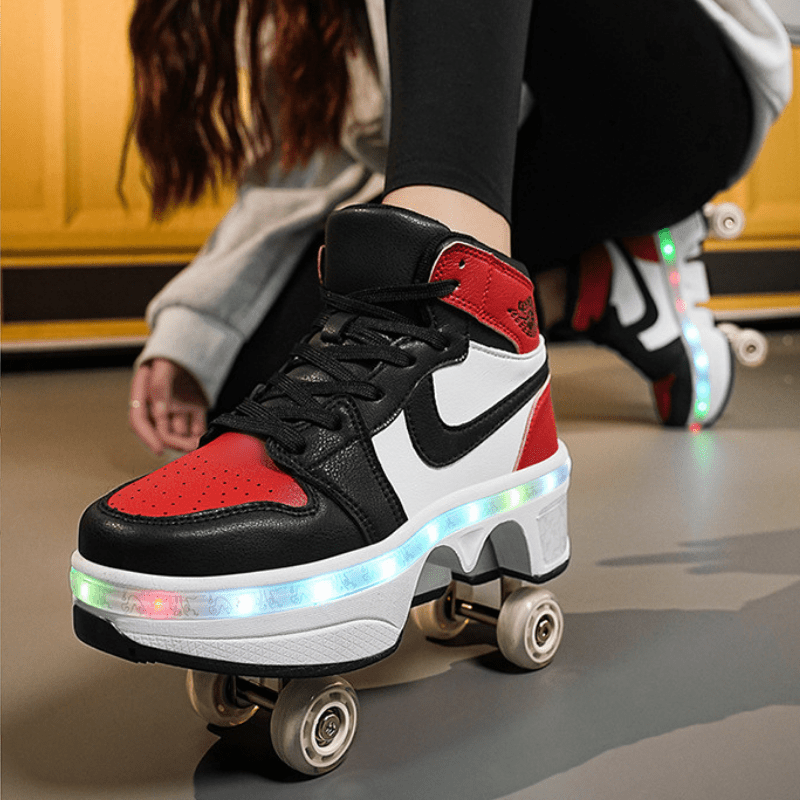
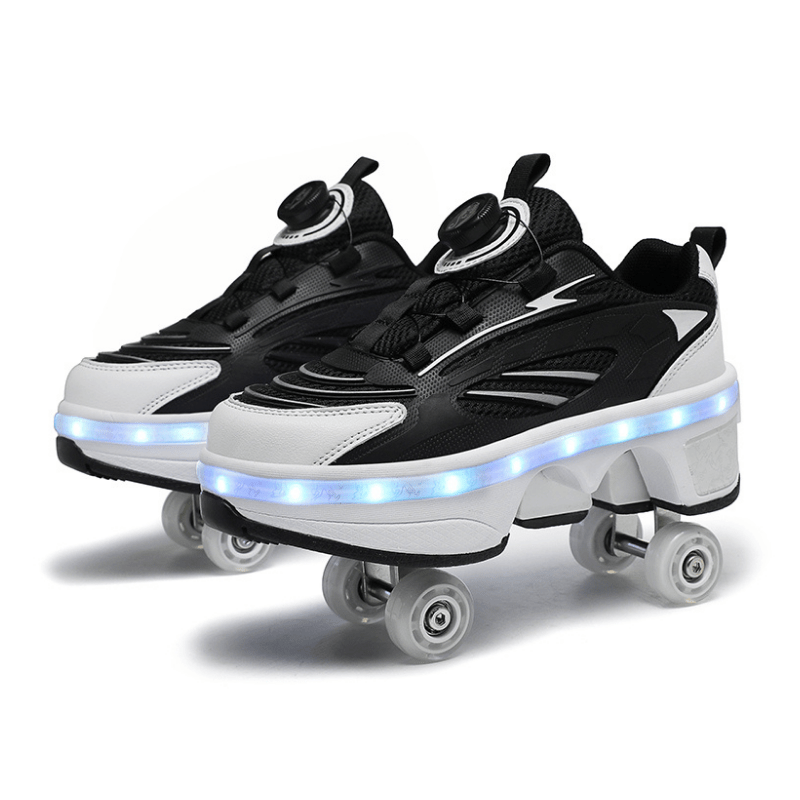
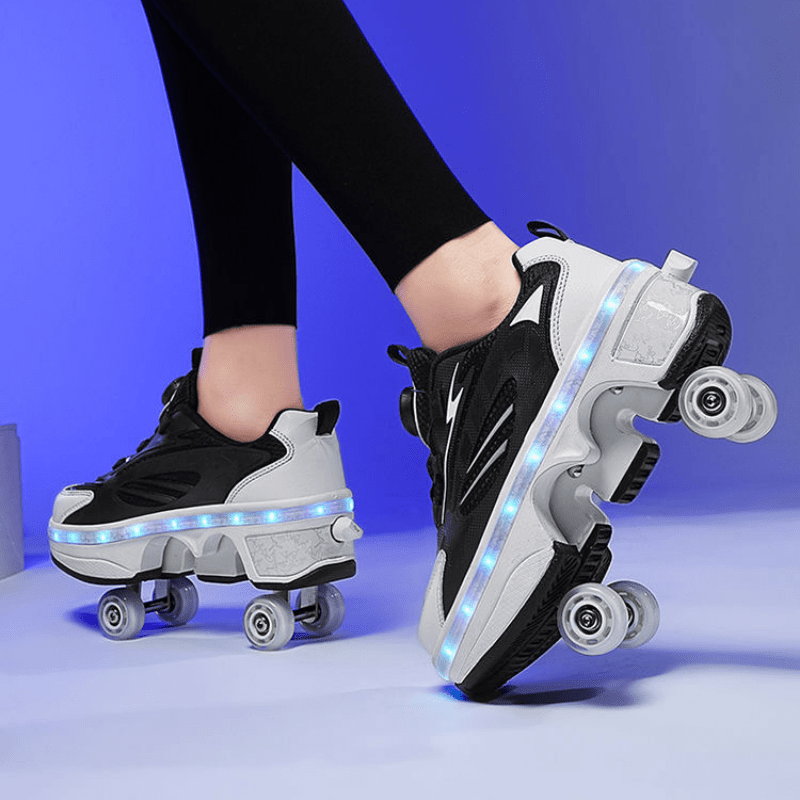
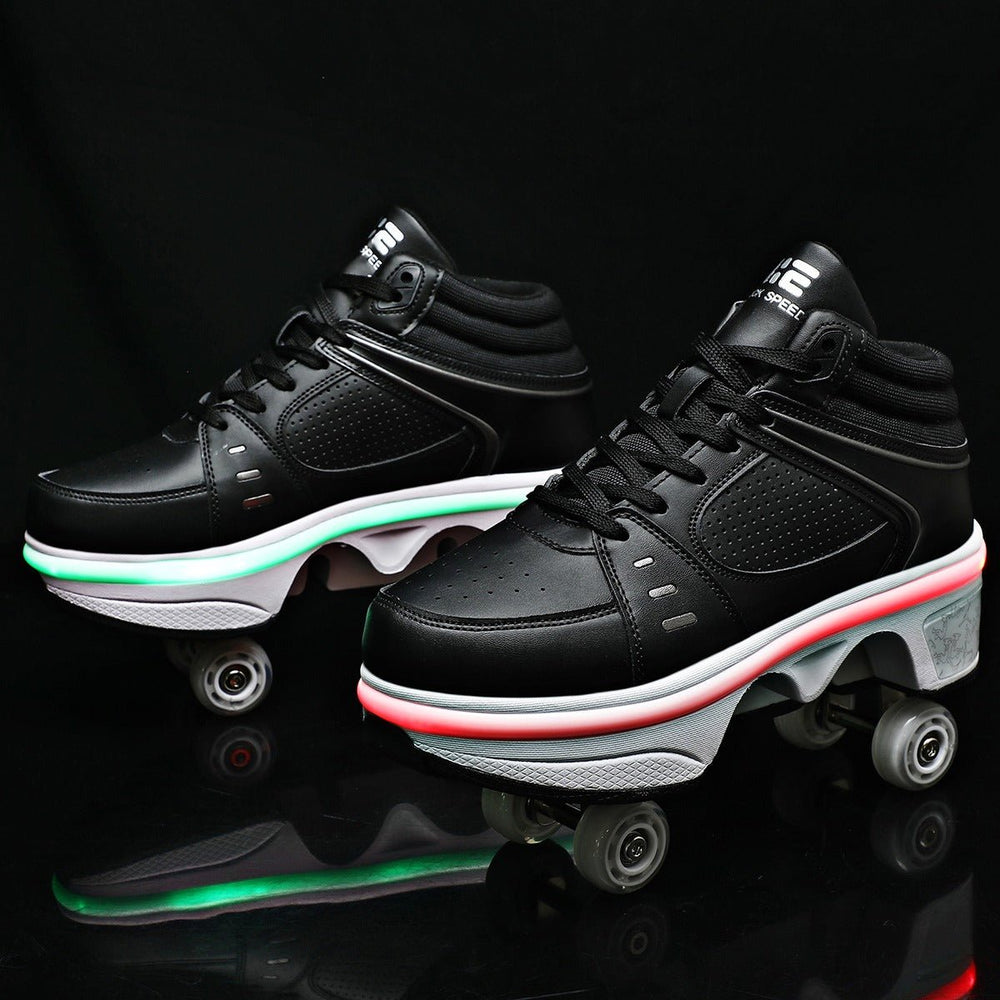
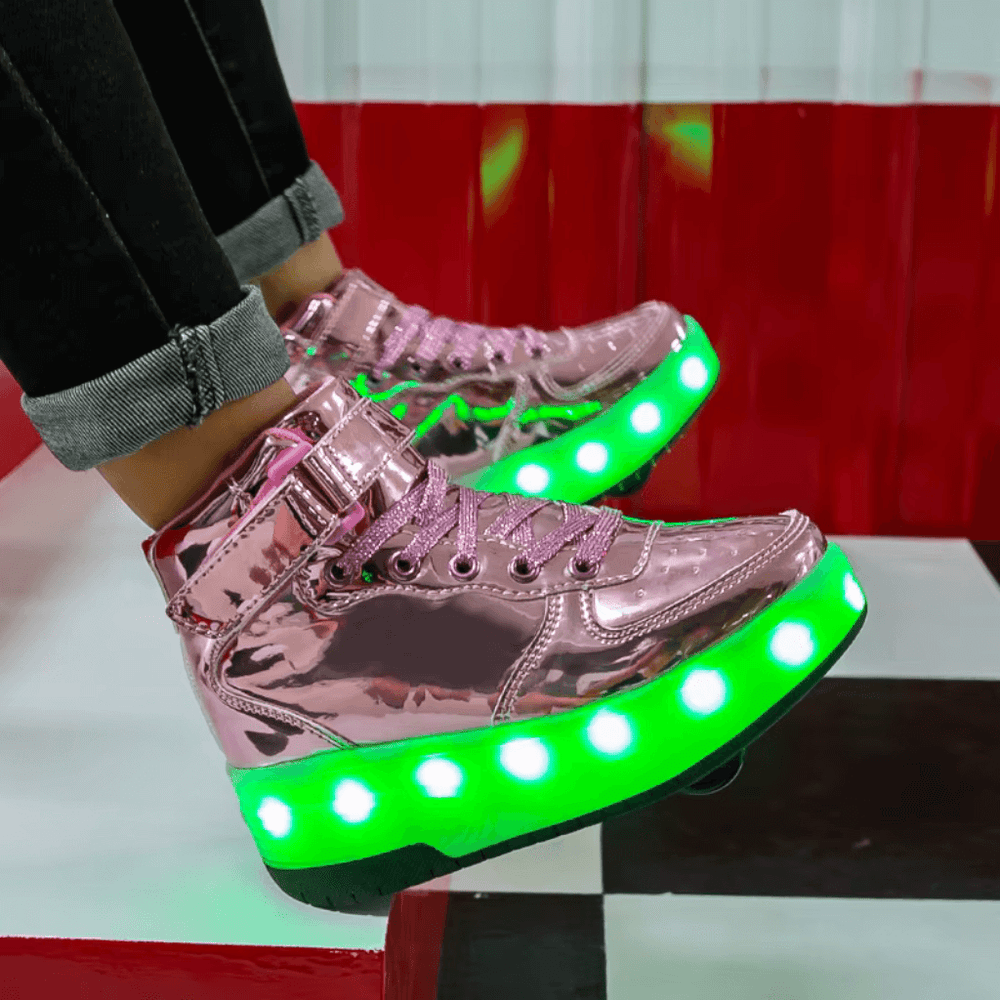
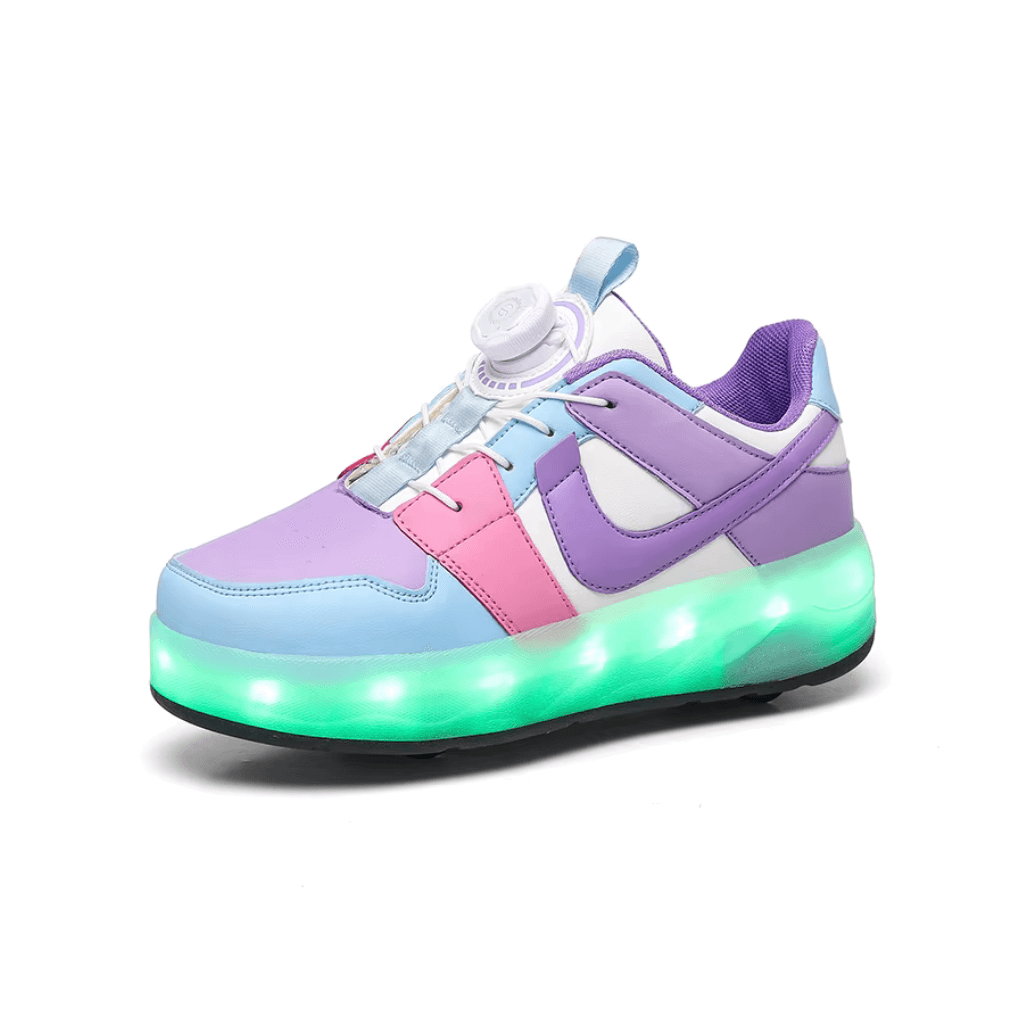
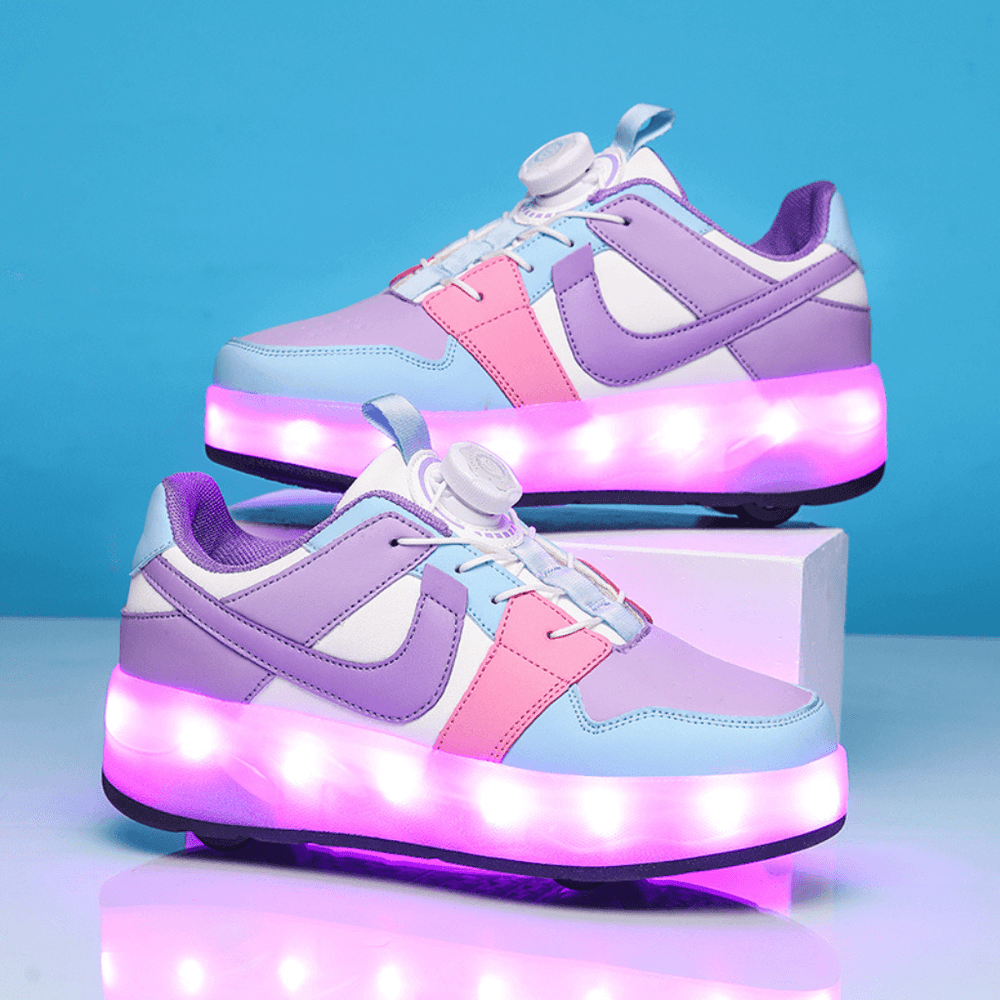
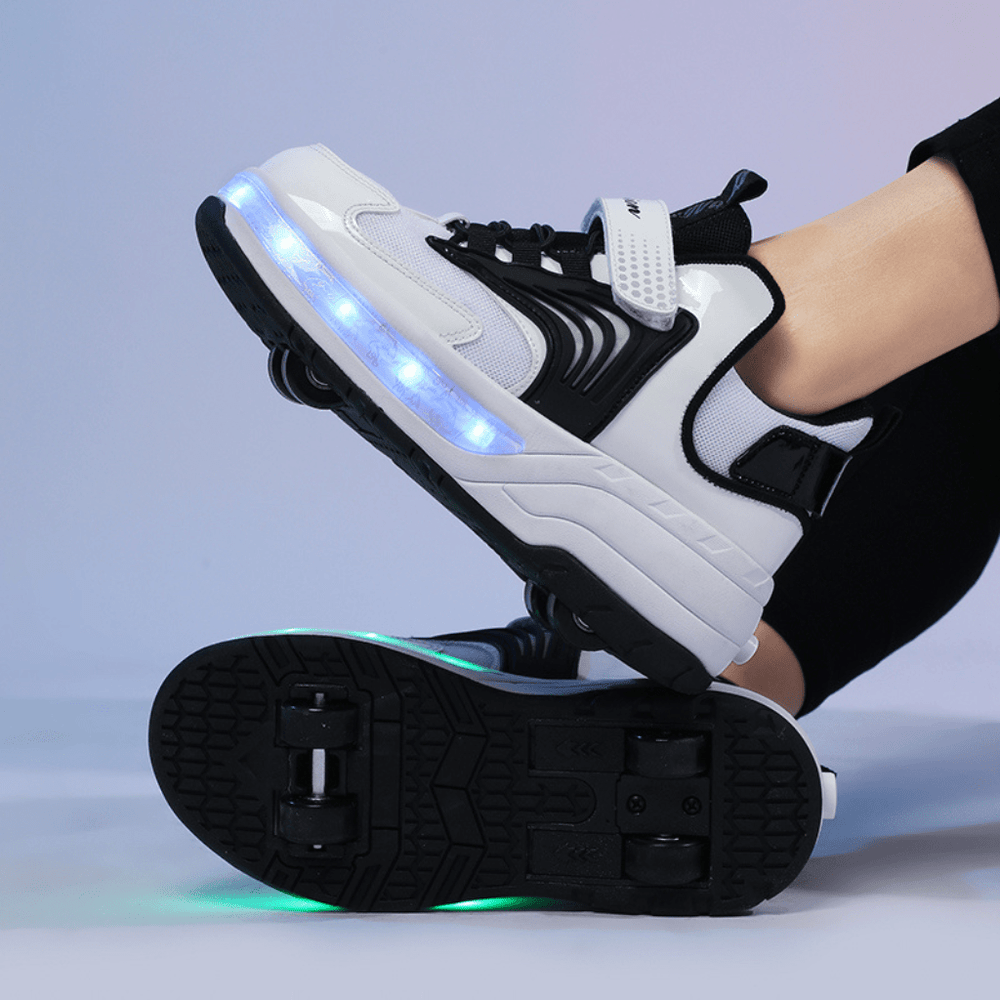
Many Kick Speed™ models feature LED light-up soles designed to make riding more visible and more fun. These light-up roller shoes are popular with kids and teens, but they also provide practical benefits beyond style.
Better visibility in low light
LED roller shoes make riders easier to notice at dusk, in shaded areas, or in indoor spaces such as skating rinks and school hallways. Protective gear is still important, but added visibility can help others spot the rider sooner.
More confidence for beginners
Light-up shoes create clear visual feedback while riding. Beginners can more easily notice balance changes, which helps some riders feel more confident while practicing.
Fun and motivation for kids
For many kids, LED shoes with wheels make practice more exciting. The lights can turn short training sessions into something kids want to repeat—helping them improve balance and control over time.
A unique style on the street
Light-up roller shoes stand out visually, especially in evening environments or urban settings.

Authentic Kick Speed™: Safety Notes and Responsible Use
Kick Speed™ shoes are designed to support controlled rolling and everyday wear, but safety still depends on correct use. Before each ride:
- Check that wheels are properly installed or fully deployed (depending on the model).
- Make sure everything feels stable—no looseness, wobble, or unusual movement.
- Use protective gear and choose a safe practice area.
For a step-by-step walkthrough and visuals, visit: how roller shoes work.
FAQ: Shoes With Wheels Safety
Below are quick answers to the most common questions about shoes with wheels safety, including beginners, kids, adults, protective gear, and where it’s safest to ride.
Are shoes with wheels safe for beginners?
They can be, as long as beginners use protective gear, practice on flat smooth surfaces, and build skill gradually. Short practice sessions are safer than trying to ride fast immediately.
Are shoes with wheels hard to learn?
Most people can learn the basics of riding shoes with wheels fairly quickly with a little practice. Beginners usually start with short controlled glides and gradually build balance and confidence.
For complete beginners or younger kids who have never skated before, heel wheel roller shoes are often the easiest place to start. This riding style is similar to Heelys-style gliding, where the rider rolls smoothly on the heel wheel while maintaining balance.
Some models can also be configured with additional front wheels, creating a more stable multi-wheel setup that can help beginners feel more comfortable while learning. Regardless of the setup, the most important factors are practicing on smooth flat surfaces, wearing protective gear, and starting slowly until balance improves.
Are shoes with wheels safe for kids?
Yes, when kids wear full protective gear, ride on safe surfaces, and have supervision during early practice. Start slowly and focus on balance and stopping.
Are shoes with wheels safe for adults?
Yes, but adults should still wear protective gear and practice technique. The biggest risk is going too fast too soon or skipping wrist guards and a helmet.
What protective gear is best for roller shoes?
Helmet and wrist guards are top priority. Knee and elbow pads are strongly recommended, especially for kids and beginners.
Where should you ride shoes with wheels?
Flat, smooth areas like courts, empty sidewalks, or driveways. Avoid hills, wet surfaces, and rough pavement—especially while learning.
Are shoes with wheels allowed in school?
It depends on the school’s rules. In many cases, shoes with wheels won’t be an issue as long as the wheels are retracted/removed and they’re used like normal sneakers—no rolling in hallways. If your school has strict footwear policies (or requires indoor shoes), then it’s best to follow those rules… unless you want your retractable wheels to turn into “confiscated wheels.”

Want to Learn How It Works (With Visuals)?
See the full guide here: How Do Shoes With Wheels Work?
If you're choosing your first pair, start on flat ground, wear a helmet and wrist guards, and pick a setup that feels stable at slow speeds.
Shop categories:
Important: This page provides general safety information for recreational use. Always follow local rules, ride responsibly, and supervise children. If you have specific medical concerns or prior injuries, consider professional guidance before starting any rolling sport.