How to Teach a Kid to Ride Shoes With Wheels in 2026: The Complete Parent's Guide to Heelys, Heel Wheel Shoes & Roller Skate Shoes With Pop-Out Wheels
Teaching a kid to ride shoes with wheels is one of those parenting moments that feels bigger than it looks. Done right, it turns into a skill your child will enjoy for years. Done wrong, it ends in scraped knees, tears, and a pair of expensive roller shoes sitting unused in the closet. The good news is that with the right approach, almost any kid can learn to ride safely and confidently in just a few short practice sessions.
This complete 2026 parent's guide will walk you through everything you need: the three main types of shoes with wheels and how each one rides differently, what age is actually realistic for starting, step-by-step teaching techniques, the right safety gear, common beginner mistakes, and how to know when your child is ready to move up to a more advanced setup. Whether you are shopping for Heelys, Kick Speed heel wheel roller shoes, or roller skate shoes with pop-out wheels, this guide will help you teach with confidence.
Start browsing here: Heel Wheel Roller Shoes, Roller Skate Shoes with Pop-Out Wheels, LED Roller Shoes, Size Guide.

Quick Answer: How Do You Teach a Kid to Ride Shoes With Wheels?
Teaching a kid to ride shoes with wheels starts with choosing the right type of shoe for their age and balance level, making sure they wear full protective gear, and practicing on a flat smooth surface in short controlled sessions. Beginners usually do best with heel wheel roller shoes that allow simple sliding movement without needing skating skills, while older or more confident kids can move up to roller skate shoes with pop-out wheels for a more skate-like ride.
The key to success is breaking the learning process into small wins: walking in the shoes first, balancing while standing, short one-second glides, controlled stops, then longer rides. Most kids can ride comfortably within three to five practice sessions when parents follow a progressive step-by-step method.
Understanding the 3 Types of Shoes With Wheels (Before You Teach Anything)
Before you can teach your child, you need to know what you actually bought. This is where most parents get confused, because all three types get grouped together online as "shoes with wheels for kids" even though they ride completely differently and require different teaching techniques. Here is the clean breakdown.
Type 1: Classic Heelys (Wheels in the Heel)
Heelys are the original heel-wheel shoe brand that most parents recognize. Most models have one wheel built into the heel of each shoe. To ride, the child shifts their weight onto their heels and lifts the toes, then glides forward on the back wheels. When they want to walk, they simply place the foot flat again, and the wheel can be pulled out by hand and replaced with a plug.
This style rewards balance and coordination. Kids who already have good body awareness often pick it up quickly, but a single heel wheel can feel tippy and unstable for first-time riders or younger children. Heelys do offer an X2 range with two wheels per shoe, which helps, but both of those wheels sit under the heel, one behind the other. It lengthens the base at the back of the shoe rather than putting anything under the front of the foot.
Type 2: Heel Wheel Roller Shoes (Kick Speed Style With a Front Wheel)
Kick Speed heel wheel roller shoes look similar to Heelys at first glance, but they give parents something Heelys do not: a wheel under the front of the foot. The shoe has a heel wheel for the classic rear-wheel glide, and all ten models in the range also take a detachable front wheel. That one difference changes the whole experience.
With just the heel wheel, the shoe rides like a regular heel-wheel setup for kids who want the traditional slide-and-glide feel. Add the front wheel and the contact spreads along the length of the foot instead of sitting under the heel alone, which makes it far easier for small kids or cautious beginners to feel balanced. This is why heel wheel roller shoes are often the best starting point for younger children who cannot skate yet and just want to slide around and have fun.
Two models, the Cloud LOW and the Pro-X LOW, also drop the heel wheel out on a button and retract it back into the sole with a second press. On the other eight the wheel unit lifts out by hand. If your child will be switching between walking and rolling several times a day, the button version saves a lot of kneeling down in car parks.

Type 3: Roller Skate Shoes With Pop-Out Wheels (Button-Activated Retractable)
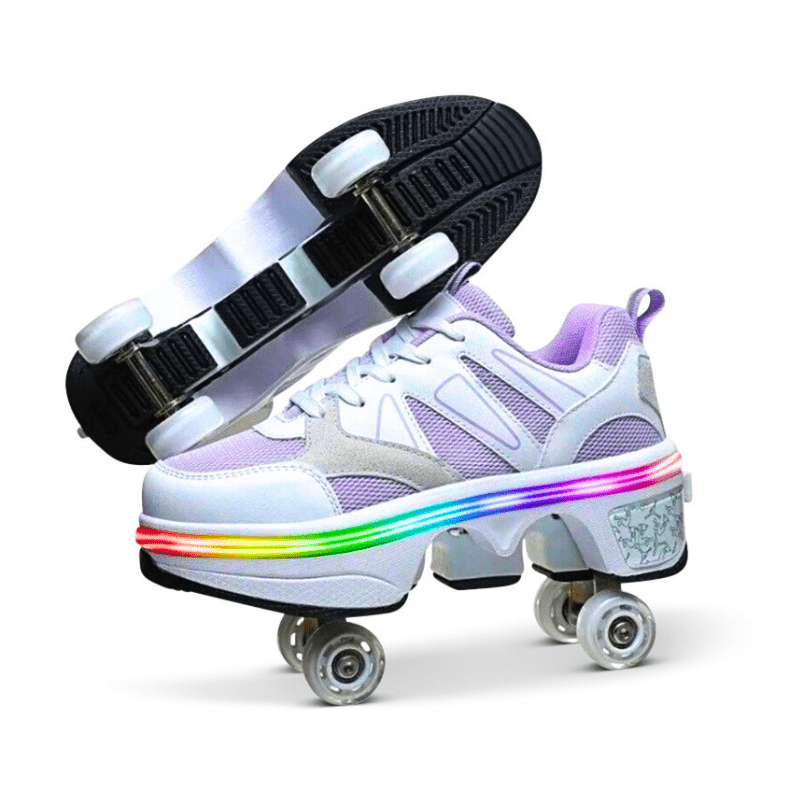
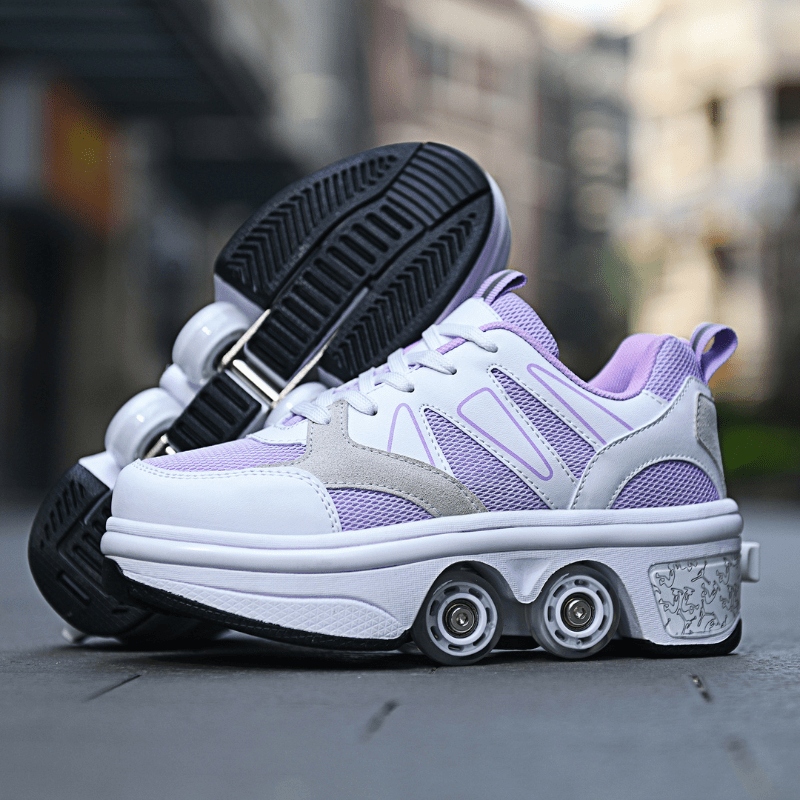
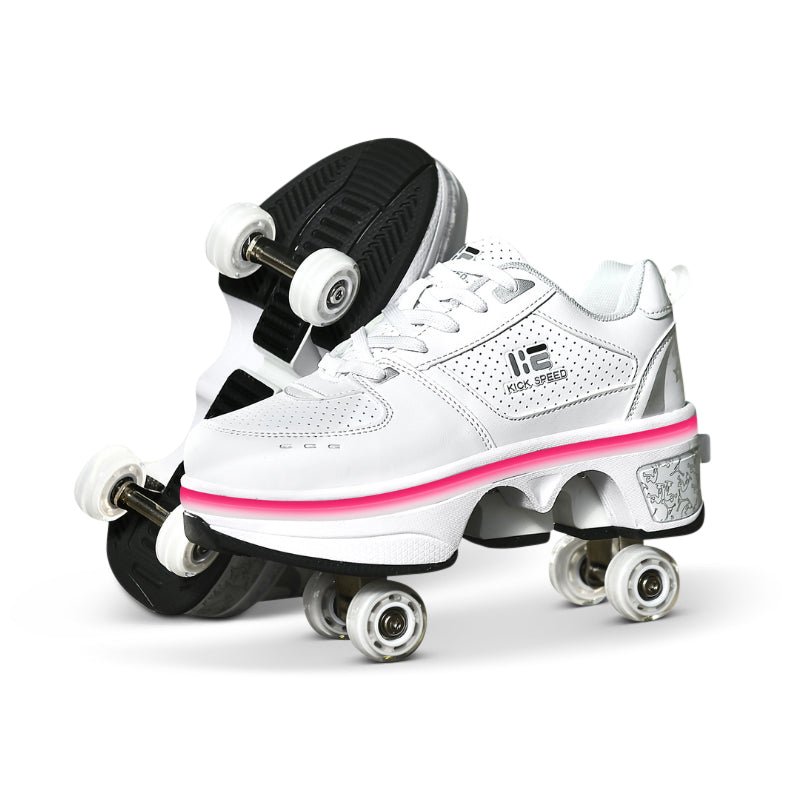
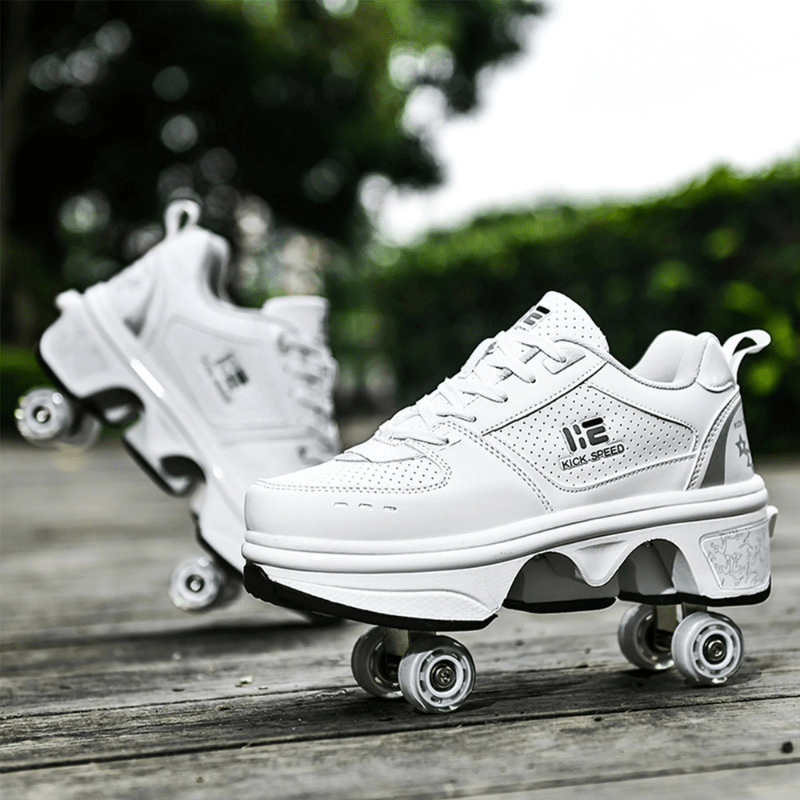
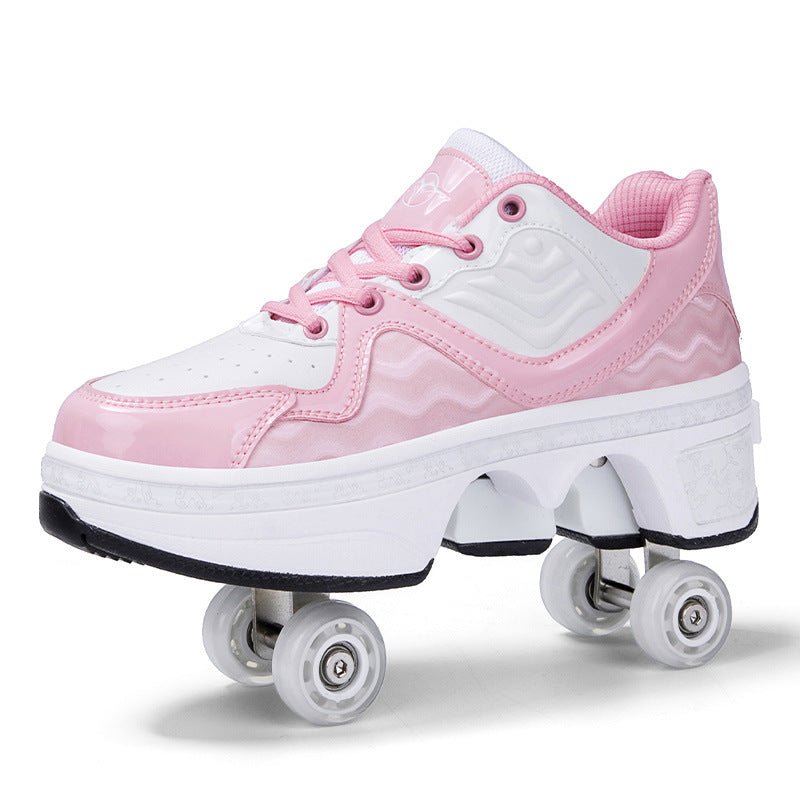
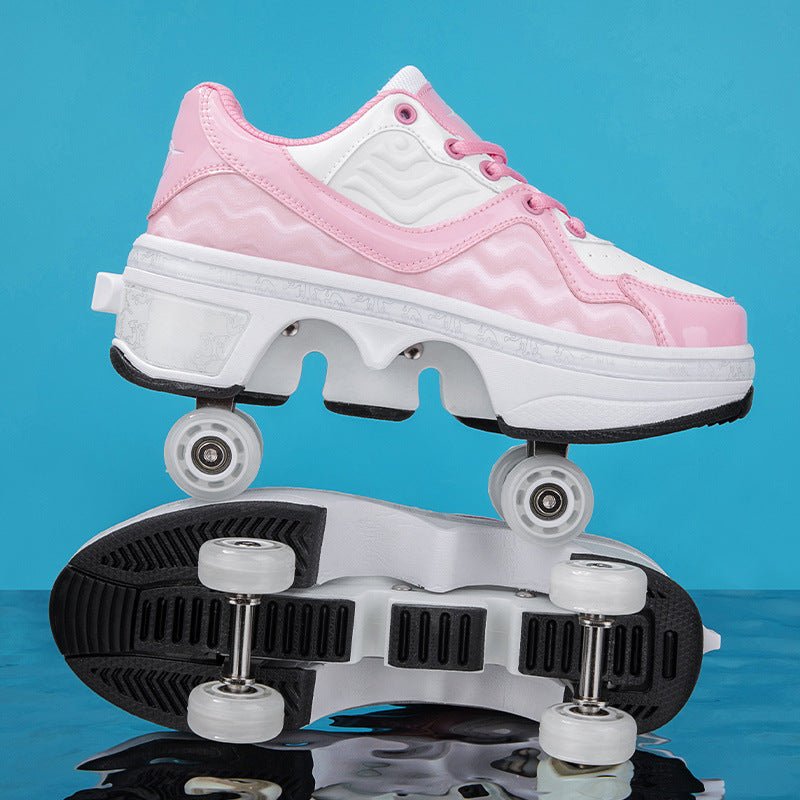
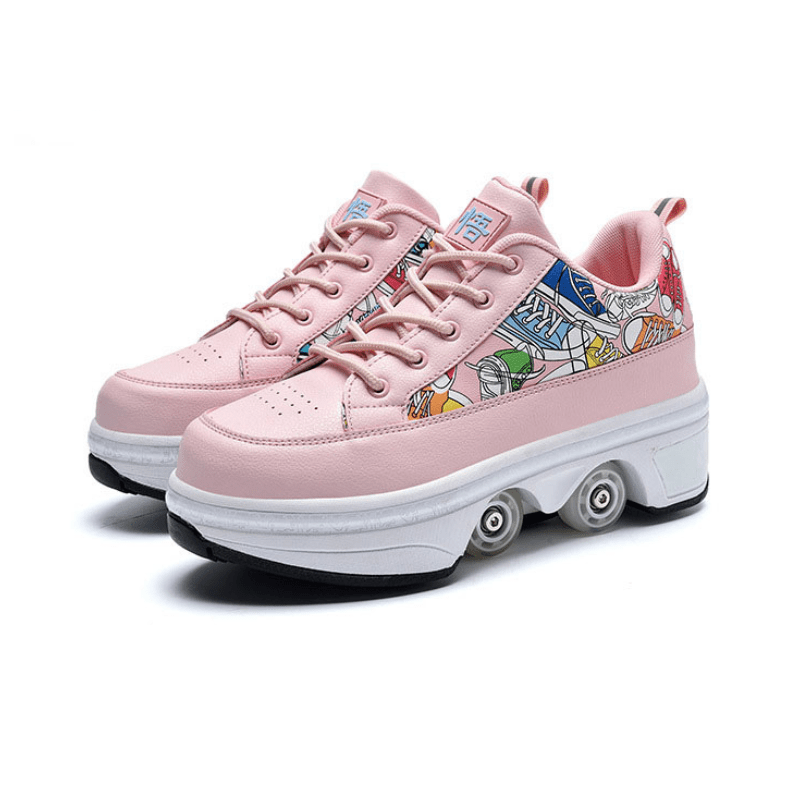
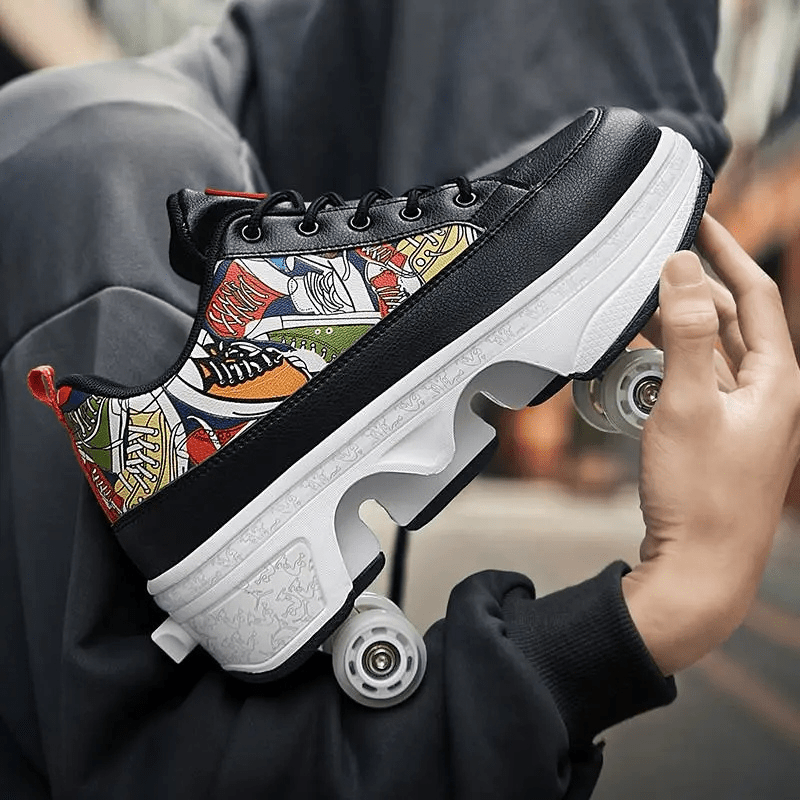
Roller skate shoes with pop-out wheels are a completely different category. These are essentially hybrid sneakers with a full set of retractable wheels built into the sole. The child presses a lock/unlock button on the heel and the wheels pop out, turning the shoe into a mini roller skate. Press it again and push the wheels back into the sole by hand so they can walk normally.
Because the shoe rides on multiple wheels, the stance is much more stable than a heel-wheel setup. It also feels closer to actual roller skating, which means the rider needs to use skating technique: pushing off, striding, turning, and controlled stopping. This makes pop-out wheel shoes ideal for slightly older or more confident children who want a real skating experience, not just a slide.
In short: heel wheel shoes are for sliding and having fun, while roller skate shoes with pop-out wheels are for actual skating. Understanding this difference is the single most important thing to get right before teaching your child. If you want the full checklist before you buy either type, our guide to what to look for in heel wheel shoes goes through nine things worth checking.
At What Age Can Kids Actually Start Riding Shoes With Wheels?
Age matters more than most parents realize, because it affects balance, strength, coordination, and most importantly the size of shoe your child can actually wear. Not every child is ready at the same age, but here is a realistic framework based on real foot sizes, learning ability, and the way each shoe type rides.
Under Age 6: Usually Too Early, but Check the Child Rather Than the Calendar
What holds most children under six back is balance, coordination and leg strength, not shoe size. Sizes do exist at this end of the range: the Kick Speed Cloud LOW starts at US 0.5 and the Photon Glow LOW from 17.6 cm (6.93 in) of internal shoe length, which fits many four and five year olds.
So the question is not whether the shoe comes small enough. It is whether your child already shows steady balance in ordinary trainers, can follow a safety instruction and stick with something that takes a few tries. If the answer is no, waiting six months costs nothing and makes the first session far more likely to end well.
Ages 6 to 7: The Beginner Zone (Start With Heel Wheel Shoes)
This is usually the age range where shoes with wheels start to make real sense. Kids this age are growing out of the "just learning to run" stage and starting to show better coordination.
The Kick Speed Photon Glow LOW Heel Wheel Roller Shoes with LED start at around 17.6 cm (about 6.9 inches) inner length and run to US 5.5, which covers this age range well at $69.99. Because size charts vary between brands, and between a child's left and right foot, always measure the actual foot length and check the official Kick Speed Size Guide before ordering.
At this stage, the goal is not real skating. It is controlled sliding and having fun. Heel wheel roller shoes with the front wheel fitted are the best starting point because they feel stable and forgiving.
Ages 8 to 10: The Sweet Spot for Learning
This is the age range where most kids truly thrive on shoes with wheels. Balance and coordination are well developed, the feet are large enough for a wider range of styles, and confidence is usually high. Kids in this range can ride heel wheel shoes comfortably and many are ready to try roller skate shoes with pop-out wheels.
The pop-out wheel range starts at US 1.5 and runs to US 10 across 29 models, so most children in this age band will find a fit. The Kick Speed Original LOW White Roller Skate Shoes cover US 1.5 to 10 at $129.99 and are a sensible first pop-out pair.
Ages 11 to 12: The Style and Confidence Years
Older kids care about style and performance. At this age, most riders have full control over basic skating movements and are ready for LED models, bolder designs, and longer rides. Many kids in this range can switch between heel-only heel wheel riding and pop-out wheel skating depending on the situation.
This is also the age where LED roller shoes often become a favorite because they look cool, show off at school, and add visibility during evening rides. For model-by-model picks in this exact age band, see our guide to the best roller skate shoes for 10-12 year olds.
Teens 13 and Up: Full Range Available
Teenagers can use any style in the range, and many start experimenting with tricks, faster glides, and classic Heelys-style riding. The heel wheel range runs to US 10 and the pop-out range to US 10 as well, so sizing is rarely the constraint until adult men's sizes. At this age, style and self-expression matter as much as performance, so the choice often comes down to whichever model the teen thinks looks best.

Before the First Ride: What Every Parent Should Prepare
The quality of your child's first few rides will shape whether they love shoes with wheels or give up on them. Preparation matters as much as technique. Here is what to get right before you even think about teaching.
Getting the Right Fit
A loose shoe is a wobbly shoe. A tight shoe is a painful shoe. Either one will ruin the learning experience. Before ordering, measure your child's foot by having them stand flat against a wall with a piece of paper on the floor. Mark the tip of the longest toe and measure from the wall to that mark in both centimeters and inches. Compare this measurement to the official Kick Speed Size Guide rather than guessing from another sneaker brand. Size charts vary, and the correct internal length matters much more than the size number.
This is also where half sizes earn their keep, and it is worth knowing before you compare brands. Heelys state on their own size guide that they do not make half sizes and recommend sizing up if you fall between two. On a shoe your child balances on, half a size too big lets the heel lift inside the shoe at exactly the moment they shift their weight back onto the wheel — which is the single most common reason a beginner loses confidence. Kick Speed runs half sizes throughout both ranges, so a foot that measures between two whole sizes has somewhere to land.
Essential Protective Gear
No parent should teach a child to ride shoes with wheels without proper safety gear. This is the single most important part of the whole process, and it should not be optional. At minimum, your child needs a helmet and wrist guards. Knee pads and elbow pads are strongly recommended as well, especially during the first few weeks.
- Helmet: Properly fitted, sitting level on the head with the strap snug under the chin.
- Wrist guards: The wrist is the most commonly injured joint in kids roller sports. Do not skip these.
- Knee pads: Reduce the pain of falls and help kids stay willing to practice.
- Elbow pads: Extra protection for side falls, especially on concrete.
Choosing the Right Practice Surface
Where you teach is as important as how you teach. For the very first sessions, look for a surface that is flat, smooth, clean, and uncrowded. Good options include an empty driveway, a quiet sidewalk, a school playground after hours, an empty basketball or tennis court, or a smooth section of a local park path. Avoid rough pavement, cracks, gravel, wet surfaces, slopes, and anywhere with cars or crowds.
The Right Clothing
Have your child wear long pants and long sleeves for the first several practice sessions. Falls feel much less painful when there is fabric between skin and pavement. Shorts and t-shirts can come later once confidence is built.
How to Teach a Kid to Ride Heel Wheel Roller Shoes (The Beginner's Path)
If your child is new to shoes with wheels, this is almost certainly where you should start. Heel wheel shoes are the most beginner-friendly because they do not require real skating technique. Your child just needs to learn how to shift their weight and glide. Here is the progression that works for most kids.
Step 1: Walk in the Shoes First
Before rolling, let your child walk around in the shoes on carpet or grass. This helps them get used to the feel and weight of the shoe, and they will instinctively learn how to avoid rolling on the heel by accident. Spend the first ten minutes just walking normally.
Step 2: Stand and Balance
Move to a smooth flat surface. Have your child stand still with knees slightly bent and arms out for balance. Ask them to gently rock forward onto the toes and back onto the heels to feel the difference. This is the exact movement that activates the wheel, so they need to feel where that tipping point is.
Step 3: The Assisted First Glide
Stand in front of your child and hold both their hands. Have them start walking toward you, then on the third or fourth step, lift the toes and let the heels roll for a brief one-second glide. Catch them if they lean back too far. The key instruction is: "lean slightly forward, not backward." Leaning back is the number one beginner mistake.
Step 4: Short Solo Glides
Once they feel the motion, let them try short glides on their own. The target is a one-to-two-second roll, then stepping back down to walking. Praise every successful glide. Do not rush them toward longer rides.
Step 5: Controlled Stops
The easiest stopping method for beginners is the step-down stop. As the glide slows, the child simply places their foot flat and walks out of the roll. Practice this repeatedly until it feels automatic. Never tell a child to just "stop suddenly," because that usually causes falls.
Step 6: Longer Glides and Gentle Turns
Once one-second glides feel comfortable, extend to three seconds, then five. Introduce very wide gentle turns by shifting weight slightly to one side. Sharp turns should wait until much more experience is built.
Tip: Start With the Front Wheel Attached
Every Kick Speed heel wheel model takes a front wheel, so fit it for the first several sessions whichever model you chose. The extra point of contact makes balance dramatically easier and gives your child the confidence to keep trying. You can remove the front wheel later once they are comfortable on the heel wheel alone.
How to Teach a Kid to Ride Roller Skate Shoes With Pop-Out Wheels
Pop-out wheel shoes ride like actual roller skates. If your child already has some skating experience or is comfortable with heel wheel shoes, this is the natural next step. The technique is different, so do not assume it will be automatic.
Step 1: Practice the Button Mechanism First
Before any riding, have your child practice deploying and retracting the wheels several times while sitting down. They need to feel confident pressing the heel button and hearing the wheels lock into place. Make sure the wheels are fully deployed and secured before they stand up.
Step 2: Stand With Support
Deploy the wheels and let your child stand holding a wall, fence, or your hand. The stance is different from normal shoes because the feet roll easily. Have them get used to the sensation of standing still on wheels.
Step 3: Walk Like a Duck
The first forward movement on pop-out wheel shoes is the duck walk. Have your child point their toes outward in a V shape and take small stepping movements forward. This prevents the wheels from rolling backward and builds the basic pushing-off motion that real skating uses.
Step 4: The First Push and Glide
From the duck walk, teach them to push gently with one foot while the other foot rolls forward. Keep knees bent, body leaning slightly forward, and arms relaxed for balance. The first push-glide should be very short. Repeat many times before extending.
Step 5: Alternating Push and Glide
Once single pushes feel stable, teach alternating pushes: push with the left foot while gliding on the right, then switch. This is real skating motion and it takes practice. Expect wobbles and be patient.
Step 6: Stopping on Pop-Out Wheels
Come to a complete stop before changing the wheel position. Never deploy or retract the wheels while moving. Use the stopping method specified for your exact model and wheel configuration.
Step 7: Turning
Wide sweeping turns come first. Have your child lean their body gently in the direction they want to turn while keeping the knees bent. Avoid sharp turns entirely until after several successful practice sessions.
How to Teach a Kid to Ride Classic Heelys (Heel Wheel Only)
Classic Heelys use the same basic technique as heel wheel roller shoes, but with nothing under the front of the foot. Their X2 range adds a second wheel behind the first, which lengthens the base at the heel and helps a little, but it does not give the same fore-and-aft spread as a forefoot wheel. Either way the learning curve is steeper. If your child is new to shoes with wheels, we recommend starting with Kick Speed heel wheel roller shoes with the front wheel attached, then progressing to single-heel riding once balance is strong.
If you are teaching classic Heelys directly, follow the same step-by-step process as heel wheel roller shoes, but expect more wobble and longer learning times. Extra focus should go into balance drills before any rolling: standing on one foot, walking in a straight line, and shifting weight smoothly.
Common Beginner Mistakes and How to Fix Them
Almost every kid makes the same mistakes when learning shoes with wheels. Recognizing them early lets you correct them before they turn into bad habits or painful falls.
Mistake 1: Leaning Too Far Back
When the wheel rolls, kids instinctively lean backward to "catch" themselves, which actually makes them fall backward. The fix is constant reminders to lean slightly forward from the hips with knees bent. This is the single most important correction for all three types of shoes with wheels.
Mistake 2: Looking Down at the Feet
Kids want to watch what their feet are doing. Unfortunately, looking down throws off balance and reduces awareness of obstacles. Teach them to look forward in the direction they are going, just like riding a bike.
Mistake 3: Trying to Go Too Fast Too Soon
Speed is addictive, and once a child feels their first successful glide they will want to push harder. Slow this down deliberately. Short glides mastered perfectly are worth more than long glides attempted recklessly.
Mistake 4: Stiff Legs
Straight, locked knees turn every bump into a balance disaster. Keep reminding your child to bend their knees. A slightly crouched athletic stance absorbs surface changes and keeps the center of gravity low and stable.
Mistake 5: Skipping Wrist Guards
Kids fall forward. When they do, they catch themselves with their hands, and the wrist takes the load. Wrist guards are not negotiable for beginners, no matter how much your child argues.
Mistake 6: Practicing on Bad Surfaces
Gravel, cracks, wet pavement, slight slopes, and leaves all make learning much harder than it needs to be. If your child is struggling, check the surface before you assume it is a technique problem.
Mistake 7: Practicing Too Long in One Session
Learning shoes with wheels is physically tiring, especially for younger kids. Tired legs equal wobbly rides and preventable falls. Keep early sessions to fifteen or twenty minutes maximum, then take a break.
Mistake 8: Buying the Wrong Size to "Grow Into"
It is tempting to size up so the shoes last another year. On a shoe your child balances on, that backfires: the heel lifts inside the shoe at the exact moment they shift their weight onto the wheel, and they lose the feedback they need. Add about half a centimetre of growing room and no more, and use a half size rather than rounding up a whole one.
A Realistic Week-by-Week Progression Plan
Most kids do not learn shoes with wheels in a single afternoon, and pushing them to master everything at once leads to frustration. Here is a realistic timeline that works for most beginners.
Week 1: Confidence and Balance
Short sessions of fifteen minutes, two or three times across the week. Focus on walking in the shoes, standing balance, and very short assisted glides with you holding their hands. No solo riding yet.
Week 2: Short Solo Glides
Extend sessions to twenty minutes. Work on one-to-two-second solo glides, the step-down stop, and very gentle turns. Expect falls. Praise effort more than results.
Week 3: Connecting Glides
Longer sessions up to thirty minutes. Focus on linking multiple glides together, consistent stopping, and slightly wider turns. Most kids start to feel comfortable around this point.
Week 4 and Beyond: Independence
By now your child should feel confident on flat open surfaces. This is when you can start introducing longer rides, slightly varied terrain, and experimenting with taking the front wheel out for a more advanced single-wheel feel.
When Is Your Child Ready to Upgrade?
Many families start with one type of shoe and later upgrade as skills grow. Here are the signals that tell you it is time to move up.
Ready to Remove the Front Wheel
If your child is riding heel wheel shoes with the front wheel attached and can glide for five or more seconds consistently, stop smoothly, and turn with control, they are probably ready to try heel-only riding. Start on a familiar flat surface and expect a short adjustment period. The wheel goes straight back in if it turns out to be too soon.
Ready to Move From Heel Wheel to Pop-Out Roller Skate Shoes
If your child is comfortable on heel wheel shoes without the front wheel, rides for long periods without wobbling, and is asking for "more skating" rather than sliding, they are ready for roller skate shoes with pop-out wheels. Treat this as learning a new skill, because the technique is different.
Ready for Classic Heelys-Style Single Wheel
Once a rider can glide, stop, and turn confidently on heel wheel shoes without the front wheel, they can handle single-wheel classic Heelys-style riding on any shoe. The difference at that point is mostly style preference, not skill.

Comparison: Which Shoe Type Should You Teach Your Kid On?
If you are still deciding which shoe to start with, this comparison table makes the decision easier.
| Feature | Classic Heelys | Kick Speed Heel Wheel Roller Shoes | Roller Skate Shoes With Pop-Out Wheels |
|---|---|---|---|
| Ride style | Heel glide on one wheel, or two on the X2 range | Heel wheel sliding with a detachable front wheel | Full skating on multiple retractable wheels |
| Wheel under the front of the foot | No | Yes, on all ten models | Yes, part of the full wheel set |
| Learning difficulty | Moderate to hard for beginners | Easy with the front wheel, moderate without | Moderate, requires skating technique |
| Best age range | Kids with existing balance skills | Younger beginners and cautious riders | Older kids ready for real skating |
| Size range | Whole sizes only, no half sizes | US 0.5 to 10, half sizes throughout | US 1.5 to 10, half sizes throughout |
| Switching to walking | Pull the wheel out, fit a plug | Button on two models, by hand on the other eight | Press the button and push the wheels into the sole |
| Skating skill required | Some balance needed | Minimal with the front wheel | Yes, teaches real skating |
Safety Rules Every Parent Should Set From Day One
Establishing rules early prevents arguments later. Kids respect clear boundaries when they understand the reason, and these rules come directly from the most common injury patterns for shoes with wheels. For a deeper look at safety, read our full guide on whether roller skate shoes are safe for kids.
- No shoes with wheels without full safety gear. No exceptions, even for quick rides.
- No riding on hills, slopes, or declines. Until your child can demonstrate consistent controlled stopping on flat ground.
- No riding near traffic or in parking lots. Cars and kids on wheels do not mix.
- No riding on wet surfaces. Water dramatically reduces wheel grip.
- No riding in crowded areas. Sudden stops in crowds cause the most falls.
- No tricks until basics are mastered. Jumps, spins, and stunts come later, not in the first month.
- Retract or remove wheels before going indoors. Especially at school, where wheels often violate dress codes and can damage flooring.
What to Do When Your Child Wants to Give Up
Almost every kid hits a frustration point, usually after their first real fall. How you handle this moment determines whether they push through or abandon the shoes entirely. Here are the approaches that work.
First, validate the frustration. Do not dismiss it with "you are fine, keep going." Acknowledge that it is hard and that falling hurts. Second, shorten the session. A child who is frustrated after fifteen minutes needs to stop, not push through for thirty. Third, return to an easier skill. If they are failing at glides, go back to standing balance. Small wins rebuild confidence fast. Fourth, take a day off. Sometimes the best thing a parent can do is put the shoes away for twenty-four hours and come back refreshed.
Finally, check two practical things before you blame the child: the fit and the front wheel. A shoe half a size too big will defeat a competent rider, and a child struggling on a single heel wheel often improves within minutes once the front wheel goes in. Sometimes the problem is not the kid. It is the setup.
Indoor vs Outdoor Learning: Where to Practice
Most parents think shoes with wheels are outdoor-only, but indoor practice has real advantages for beginners. Indoor surfaces are usually smoother, there is no weather to worry about, and the controlled environment reduces distractions.
Best Indoor Locations
School gyms, indoor roller rinks, large hallways at home with clear space, and some community centers allow shoes with wheels during off-hours. Always check rules first and make sure the floor surface is appropriate.
Best Outdoor Locations
Empty basketball and tennis courts are the gold standard. Flat smooth sidewalks in quiet neighborhoods, school playgrounds after hours, and flat park paths also work well. Avoid skate parks until your child is advanced because those are designed for experienced skaters.
When LED Roller Shoes Help the Learning Process
LED roller shoes are more than just fun. For many kids, the lights provide real motivation to practice. A child who is excited to show off their light-up shoes will practice more often and more willingly than a child wearing plain sneakers. More practice equals faster skill development.
LEDs also add visibility during evening rides, which is a genuine benefit during shorter winter days or after-school practice. And for kids who are nervous about falling, the excitement of wearing something that looks cool often helps them push past that fear.
Shop Shoes With Wheels for Kids by Stage
Use this quick shopping guide to match the right shoe type to your child's current stage. Still comparing models? See the full guide to the best shoes with wheels for kids, or our comparison of the best Heelys alternative for kids.
- Brand new beginner, ages 6 to 7: Start with Kick Speed heel wheel roller shoes with the front wheel fitted. The Photon Glow LOW at $69.99 is a strong starting point.
- Smallest feet, or a child who will switch to walking often: The Air Pegasus MID starts at 16.7 cm, the smallest size in the range, and the Cloud LOW drops the wheel out on a button rather than by hand.
- Confident beginner, ages 8 to 10: Try heel wheel roller shoes without the front wheel, or step up to roller skate shoes with pop-out wheels.
- Style-focused rider, ages 11 to 12: Pick an LED roller shoe in either heel wheel or pop-out style, depending on preference.
- Teen and advanced rider: Any style works. Choose based on design preference and the ride feel they want.
Frequently Asked Questions
What is the easiest type of shoes with wheels for a beginner kid?
Kick Speed heel wheel roller shoes with the front wheel fitted are generally the easiest starting point for beginners. The wheel under the front of the foot spreads the contact along the length of the foot instead of concentrating it under the heel, which makes balance and gliding feel more natural for younger or cautious riders. Every model in the range takes one.
What is the difference between heel wheel shoes and roller skate shoes with pop-out wheels?
Heel wheel shoes have a wheel in the heel and you ride by sliding forward on it. Roller skate shoes with pop-out wheels have a full set of retractable wheels that pop out with a heel button, turning the shoe into a mini roller skate for real skating movement. On both types the wheels come out or retract so the shoe can be walked in normally. Heel wheel shoes are for sliding fun, while pop-out wheel shoes are for actual skating.
Are Kick Speed heel wheel shoes the same as Heelys?
They are similar in that both use a heel wheel for the classic glide style, but Kick Speed adds a detachable wheel under the front of the foot on all ten models, and makes half sizes. Heelys make whole sizes only, and their two-wheel X2 range puts both wheels under the heel rather than one at the front.
At what age should a kid start using shoes with wheels?
Most kids are ready around age six or seven at the earliest. What holds younger children back is balance, coordination and the ability to follow a safety instruction rather than shoe size, since the Kick Speed heel wheel range starts at US 0.5 and from 16.7 cm of internal shoe length. If your child is already steady on their feet and willing to keep trying after a fall, they are probably ready.
How long does it take to learn to ride shoes with wheels?
Most kids can perform short controlled glides within one or two practice sessions and feel genuinely comfortable within three to four weeks of regular practice. Heel wheel shoes with the front wheel fitted have the shortest learning curve, while single-heel riding and pop-out wheel skating take longer.
Do kids really need wrist guards for shoes with wheels?
Yes. The wrist is the most commonly injured joint in kids roller sports because children instinctively catch themselves with their hands during forward falls. Wrist guards are the single most important piece of protective equipment for beginners, alongside a helmet.
What is the best surface for teaching a kid to ride shoes with wheels?
An empty basketball or tennis court is ideal because the surface is smooth, flat, and predictable. Quiet sidewalks, flat driveways, and school playgrounds after hours also work well. Avoid gravel, cracks, wet surfaces, slopes, and any area with traffic.
How do I pick the right size shoes with wheels for my child?
Measure your child's foot length in centimeters and inches, then compare the measurement to the official Kick Speed Size Guide. Size charts vary between brands, so do not guess based on another sneaker size. If the measurement falls between two whole sizes, take the half size rather than rounding up: a snug, secure fit through the heel is critical for balance and control.
Can shoes with wheels be worn to school?
It depends on the school's rules. Many schools allow roller skate shoes with pop-out wheels or heel wheel shoes as long as the wheels stay retracted or removed during school hours. Always check with the school first, and make sure your child knows not to roll in hallways even if the shoes are allowed.
My child is scared after falling. What should I do?
Validate their feelings, shorten the session, and go back to an easier skill where they can have some quick wins. Sometimes a short break of a day or two helps a lot. Before you blame the child, check the fit and fit the front wheel if it is not already in, because a shoe half a size too big or a heel-only setup defeats a lot of capable beginners.
Final Thoughts: Patience Beats Everything
Teaching a kid to ride shoes with wheels is not about pushing them to be fast or impressive. It is about giving them a positive learning experience that builds confidence, coordination, and a skill they will enjoy for years. The parents who succeed are not the most athletic or the most experienced. They are the ones who break the learning process into small steps, celebrate every small win, insist on safety gear, and know when to take a break.
Choose the right shoe type for your child's age and confidence level. Get the size right, down to the half size. Start on smooth flat ground with full protective gear. Follow the step-by-step progression. Be patient when things get frustrating. And remember that almost every kid who sticks with it ends up loving the experience.
Ready to start? Browse beginner-friendly heel wheel roller shoes, explore roller skate shoes with pop-out wheels, check LED roller shoes, and review the official size guide before ordering.
Shop Kick Speed Shoes With Wheels
- Heel Wheel Roller Shoes
- Roller Skate Shoes With Pop-Out Wheels
- LED Roller Shoes
- Low-Top Roller Shoes
- Mid-Top Roller Shoes
- Size Guide
- FAQs
- Shipping Policy
- Contact Us