Are Shoes With Wheels Bad for Kids' Feet and Ankles? What the Research and Podiatrists Actually Say
The Straight Answer: It's How They're Worn, Not the Shoe
If you have searched are shoes with wheels bad for your feet, you have probably found a confusing mix of scary headlines and reassuring sales pages. Parents deserve a straight answer, so here it is: roller shoes are not inherently bad for healthy kids' feet, but wearing them in active wheel mode all day, every day is not ideal for a growing foot, and that is the part most parents get wrong. The footwear itself is rarely the problem. How and how often it is used is what matters.
This article focuses on the two questions parents actually worry about: whether shoes with wheels are bad for a child's feet and ankles, and whether they are dangerous. We will look at what the injury research and foot-health experts genuinely say, separate real concerns from myths, and show how the right setup keeps the fun while protecting growing feet. For the practical, step-by-step "how to ride safely" checklist, see our full shoes with wheels safety guide.
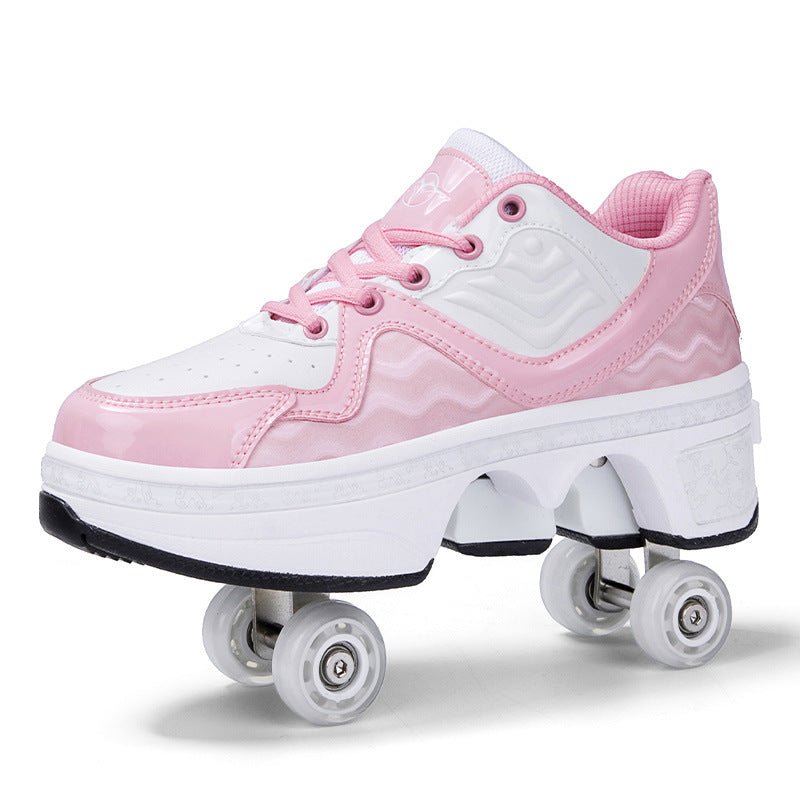
Quick note on terms: this guide covers shoes with wheels in general, including the classic heel-wheel style many parents know from the Heelys brand. Kick Speed is a different product line, with two designs we will explain below: roller skate shoes with button-activated pop-out wheels and heel wheel roller shoes that can take a front wheel as well as the rear one.

Quick Answer: Are Shoes With Wheels Bad for Your Feet?
For most healthy children, occasional, supervised riding on shoes with wheels is not bad for the feet. The concern foot-health experts raise is about constant, all-day use in active wheel mode. Balancing on a wheel changes how a child stands and walks, shifting weight forward and loading the forefoot and heel differently than a normal sneaker. Done occasionally, that is just part of an active hobby like skating or cycling. Done all day, every day, in shoes a child may have outgrown, it is not ideal for a developing foot.
The practical fix is simple and is the same thing podiatrists tend to recommend: keep the wheels disabled when your child is not actually skating, so the shoe behaves like a normal supportive sneaker the rest of the time. That single habit removes most of the foot-health worry while keeping all the fun, and as you will see, it is much easier with some designs than others.
Are Shoes With Wheels Dangerous? What the Injury Research Says
The second half of "are shoes with wheels bad for kids" is really about injury risk, not just foot health. Here the research is actually reassuring for prepared parents, because it shows the risk is concentrated and preventable rather than random.
Most injuries are to the wrists, hands, and arms
Reviews of emergency-room data on wheeled footwear consistently find that the upper body, especially the wrists, hands, and arms, accounts for most injuries, with fractures common in that group. Kids fall forward and catch themselves with their hands. This is exactly why wrist guards are the single most valuable piece of protective gear, and why the feet and ankles are actually not the most commonly injured area.
The first few rides are the riskiest
Safety studies have noted that a large share of injuries, in some reviews around 70 percent, happened when a child had used the shoes fewer than about five times, while they were still learning to balance. The danger is front-loaded into the learning phase. Slowing down those first sessions and supervising them removes much of the total risk.
Most injured kids were not wearing safety gear
One of the most repeated findings is that very few injured children were wearing any protective equipment at the time. In other words, many of these were not freak accidents but ordinary falls that gear would have softened. The conclusion is clear: shoes with wheels are far safer with a helmet and wrist guards, and noticeably more dangerous without them.

What Podiatrists Say About Shoes With Wheels and Foot Development
Foot-health experts make a fair, specific point that is worth understanding rather than fearing. It is not "roller shoes will ruin your child's feet." It is about how a wheel under the foot changes movement, and what that means with heavy daily use.
They can change a child's natural gait
To ride, a child shifts weight onto the wheel and adjusts their posture, often bending the knee more and leaning differently than in normal walking. Worn constantly, that altered gait pattern can contribute to knee, ankle, or Achilles discomfort in some children. Occasional riding is unlikely to matter; living in the shoes in wheel mode is the scenario experts caution against.
They add pressure to the forefoot and heel
Walking and balancing on a wheel increases pressure on the front and back of the foot compared with a flat, supportive sneaker. A growing foot does best with plenty of normal, well-supported walking, so wheeled shoes should supplement that, not replace it.
Outgrown shoes make it worse
The biggest foot-health red flag is a child riding in shoes they have outgrown, for long periods, in wheel mode. An ill-fitting wheeled shoe combines poor support with altered movement. Checking sizing as your child grows, using the official Kick Speed Size Guide, is one of the easiest ways to protect both comfort and foot health.
Are Heelys Bad for Feet, and How Are Kick Speed Shoes Different?
Many parents specifically search are Heelys bad for your feet, because Heelys is the brand most people picture when they hear "shoes with wheels." The foot-health points above apply to any wheeled shoe, classic Heelys included. But the design of the shoe changes how easy it is to follow the healthy-use advice, and this is where Kick Speed differs from a traditional single-heel-wheel Heely.
Classic single-wheel design makes "wheels off" harder
On many classic Heelys, switching to a true walking-only setup means physically removing the heel wheel with a tool and inserting a plug. Because that takes effort, kids often just keep the wheel in and keep rolling, which is exactly the all-day wheel-mode scenario foot experts warn about.
Kick Speed roller skate shoes: button pop-out wheels
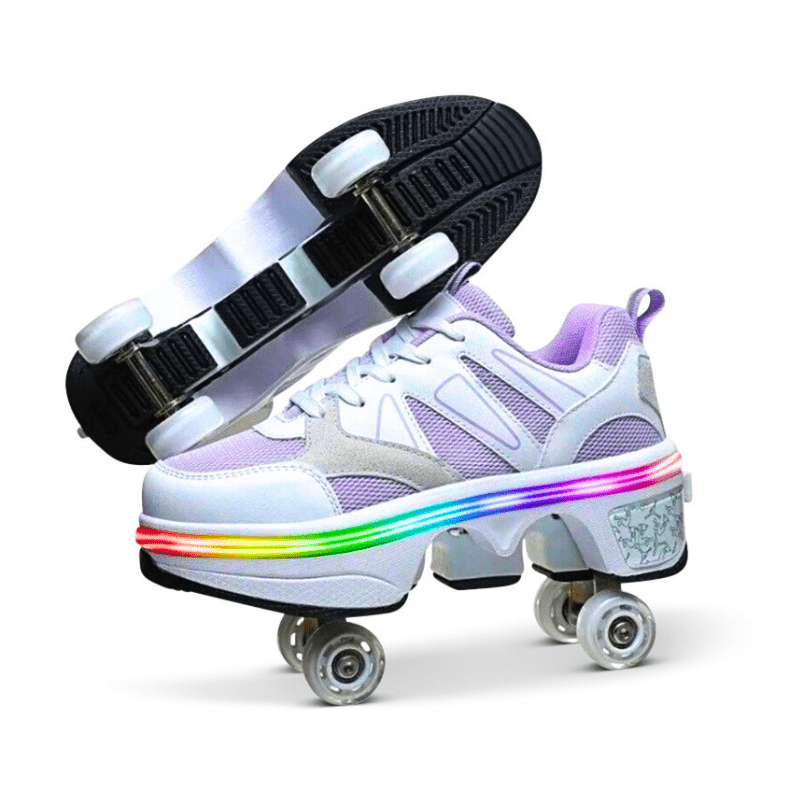
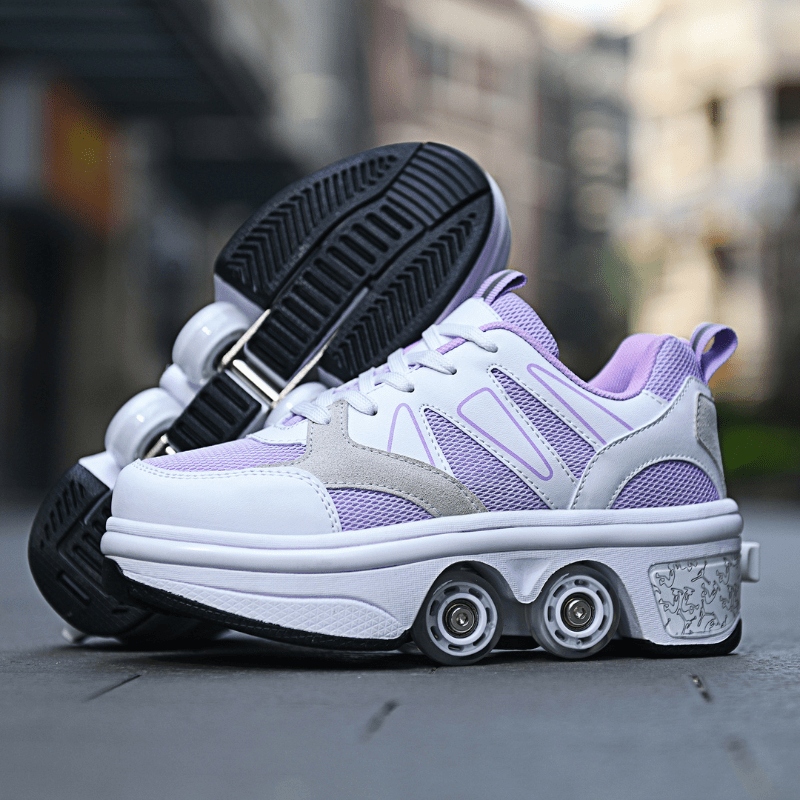
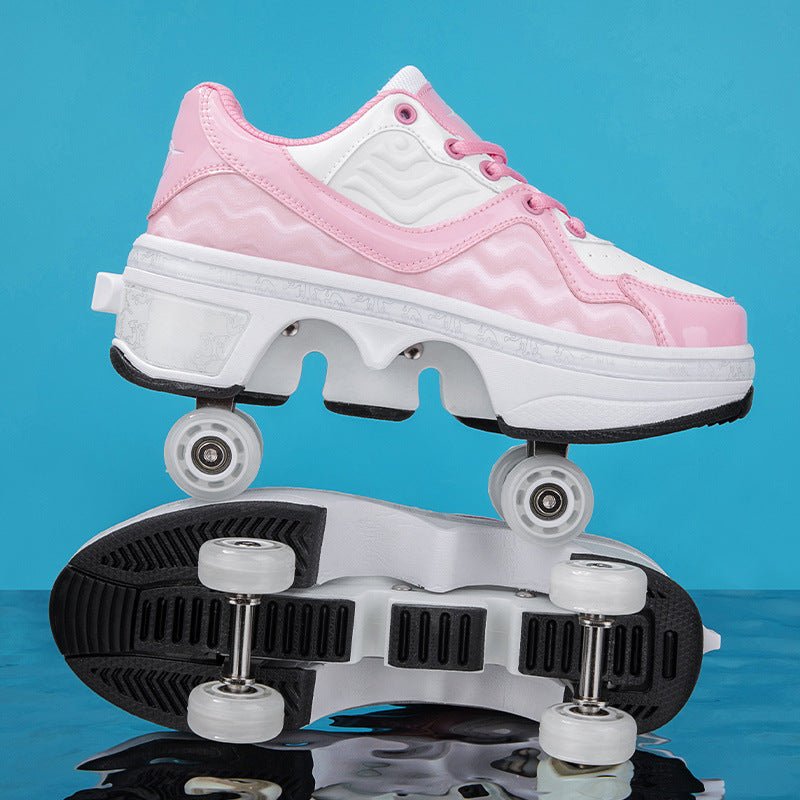
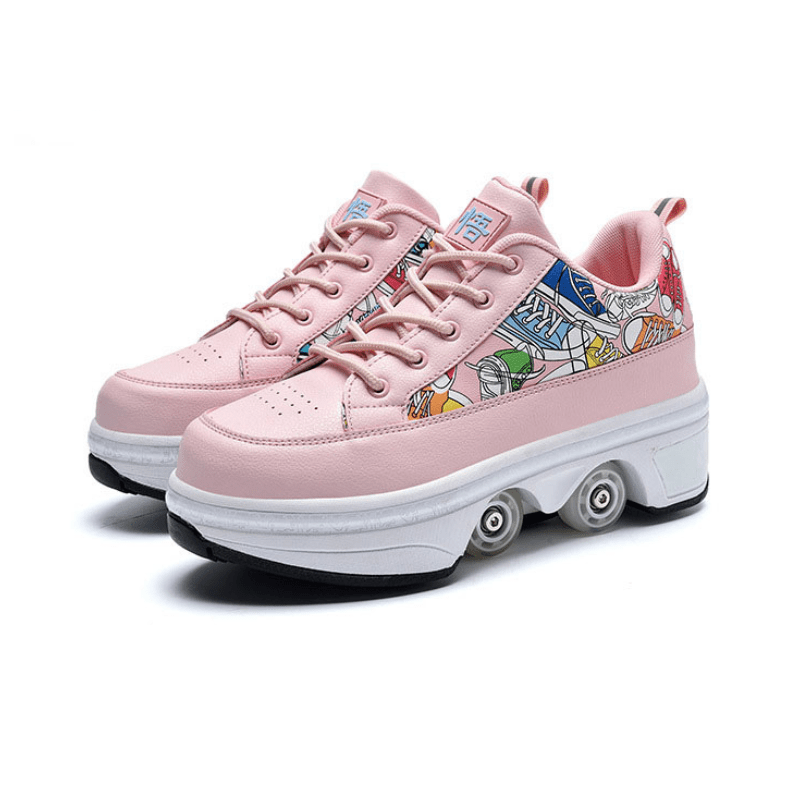
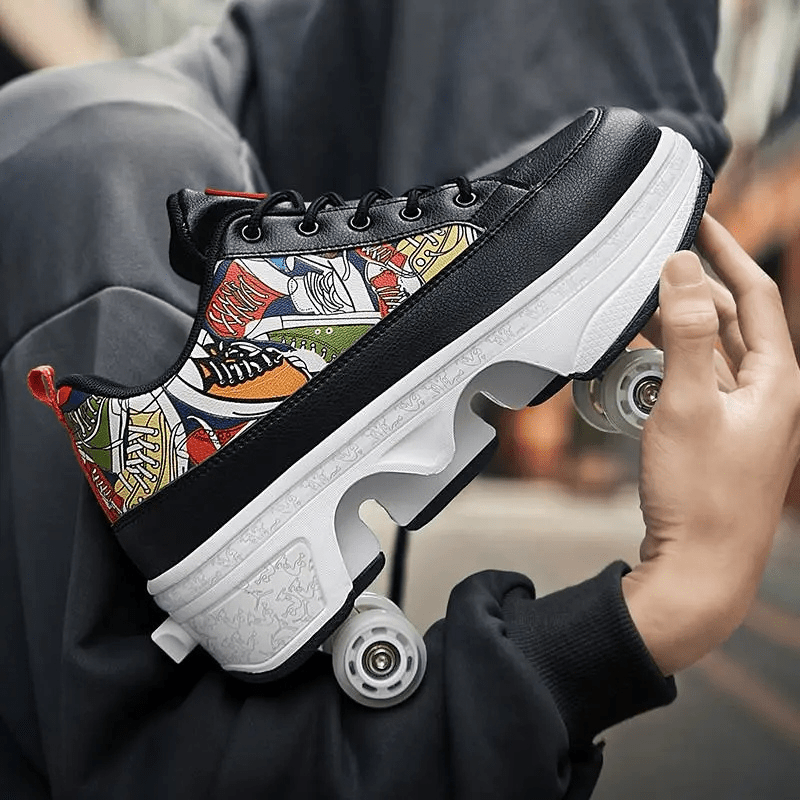
Kick Speed roller skate shoes with pop-out wheels work more like a hybrid sneaker and roller skate. A heel button deploys the wheels, and the button plus a push by hand retracts them into the sole, so the shoe becomes a normal walking sneaker in seconds and a roller setup only when your child is in a safe, permitted place to skate. That makes the "wheels off when not skating" habit effortless, which is better for growing feet and for following school and indoor rules.
Kick Speed heel wheel shoes: rear glide plus an optional front wheel
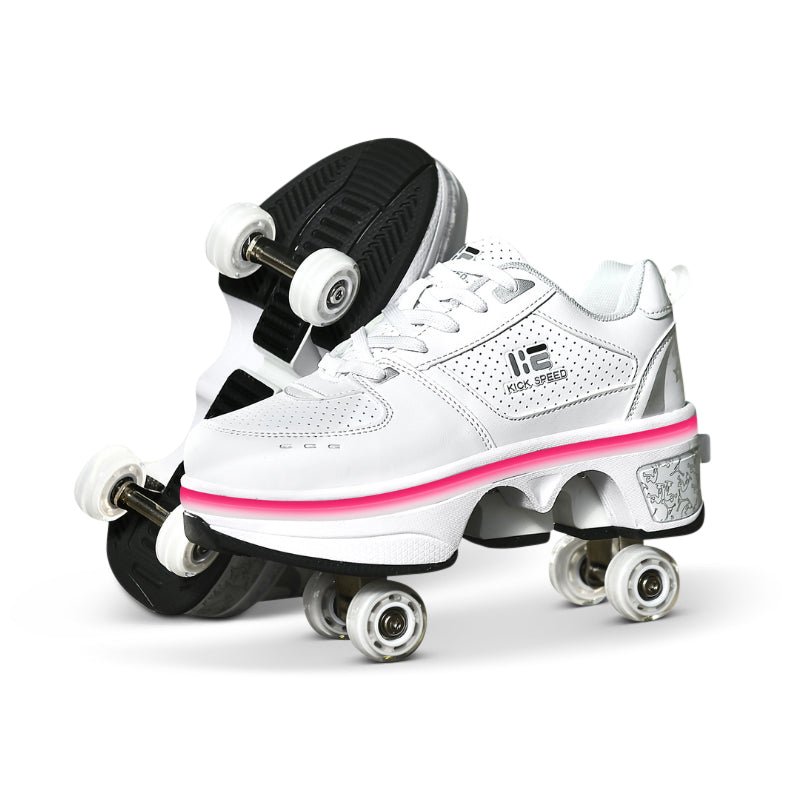
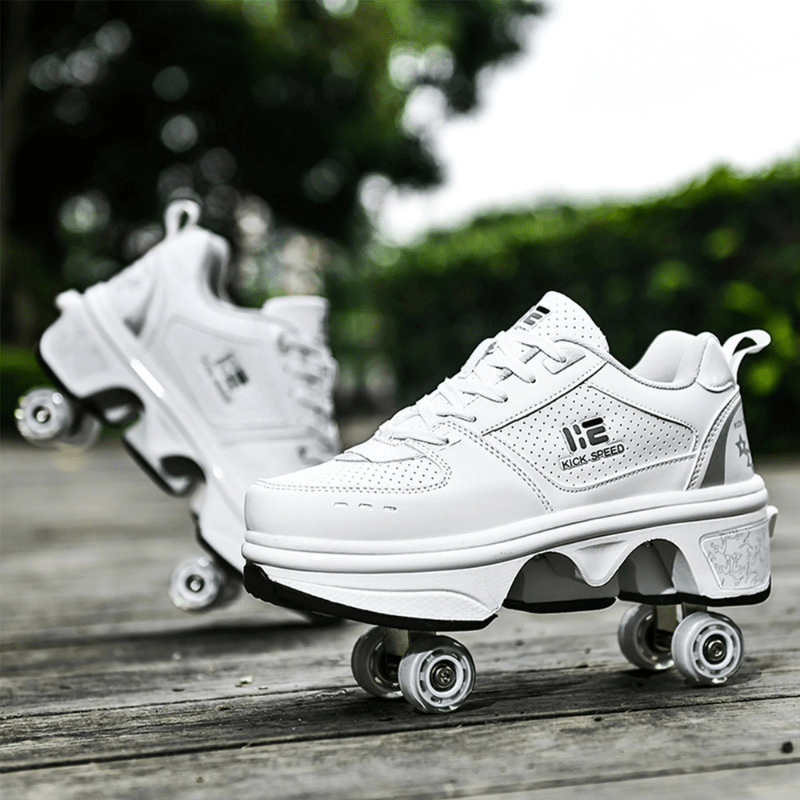
Kick Speed heel wheel roller shoes give the same kind of rear-wheel glide people associate with Heelys, but selected models also let you add a front wheel, not just the rear one. That extra point of contact makes balance more stable for beginners and cautious riders, which means fewer wobbles and falls during the high-risk learning phase. It is the same heel-wheel fun with more control.
| Design | Switching to walking mode | Beginner stability | Foot-friendly everyday use |
|---|---|---|---|
| Classic single-wheel Heelys | Remove the heel wheel with a tool and add a plug | Lower, a single heel wheel can feel tippy at first | Harder, so kids often just keep rolling all day |
| Kick Speed heel wheel roller shoes | Wheels come off easily, with an optional front wheel for stability | Higher with the front wheel added for a two-point ride | Easy, take the wheels off for normal sneaker wear |
| Kick Speed pop-out roller skate shoes | The heel button and a push by hand retract the wheels into the sole in seconds | Planted, skate-like multi-wheel stance | Easiest, instant switch to a normal walking sneaker |

The Key Habit: Wheels Off When Not Skating
Almost every foot-health and safety recommendation about wheeled shoes points to the same habit: disable the wheels whenever your child is not actively and safely skating. That way the shoe spends most of the day as a normal sneaker and only becomes a roller setup during intentional, supervised riding. The easier that switch is, the more likely your child actually does it, which is why a pop-out or removable-wheel design beats a setup that needs tools every time.
At What Age Are Shoes With Wheels Okay for Kids' Feet?
Age matters because it affects balance, foot size, and how much support a developing foot still needs. There is no single magic number, but this framework helps most parents.
Under age 6: usually too early
Younger children are still developing balance and coordination, and their feet are often too small for the smallest roller shoe sizes. For most families it is better to wait, both for safety and for foot development.
Ages 6 to 7: gentle, occasional, supervised use
This is usually the earliest sensible age, with close supervision and short sessions. Beginner-friendly heel wheel roller shoes with the front wheel added let a child slide and balance gently rather than perform demanding skating technique.
Ages 8 to 12: the strongest window
Balance, coordination, and foot size all come together well, and many kids can move up to roller skate shoes with pop-out wheels. If your child is in this range, see our guide to the best roller skate shoes for 10 to 12 year olds. At every age, the foot-health rule is the same: plenty of normal walking in supportive shoes, with wheel mode reserved for active play.
How to Keep Shoes With Wheels Foot-Friendly
You do not have to choose between letting your child have fun and protecting their feet. A few simple habits cover both.
- Keep wheels off for daily walking. Use wheel mode only during active, supervised skating, not all day at school or around the house.
- Get the fit right and recheck it. A snug, current-size fit supports the foot and improves control. Compare to the size guide rather than guessing.
- Balance with normal footwear. Make sure most of your child's walking still happens in regular supportive sneakers.
- Watch for complaints. Occasional tiredness is normal, but ongoing knee, ankle, or heel pain is a reason to cut back and, if it persists, check with a professional.
- Use protective gear for riding. A helmet and wrist guards protect the body parts that actually get injured most.

Are Shoes With Wheels Bad for Ankles Specifically?
Ankles come up a lot because riding on a wheel does load the ankle differently and a bad fall can sprain it. But remember that injury data shows the wrists and hands, not the ankles, are the most commonly hurt area. For the ankles specifically, the protective factors are familiar: a secure, correctly sized shoe, a smooth flat surface, learning to stop before building speed, and avoiding hills and rough ground. A wobbly, oversized shoe on cracked pavement is what turns an ankle, far more than the wheel itself. This is another reason the added stability of a heel wheel shoe with a front wheel, or the planted stance of a pop-out roller skate shoe, can help beginners.

A Balanced Verdict for Parents
So, are shoes with wheels bad for kids' feet and ankles? Not inherently. For a healthy child, occasional and supervised riding is a normal active hobby, no more harmful than learning to skate or ride a bike. The genuine cautions are specific and manageable: do not let your child live in the shoes in wheel mode all day, do not let them ride in outgrown shoes, and do not skip protective gear or skip learning to stop. Honor those, and the foot-health and injury concerns shrink to a reasonable, well-managed level.
The smartest setup is a shoe that makes the healthy habit effortless. Because Kick Speed pop-out wheel shoes retract into a normal sneaker in seconds, and Kick Speed heel wheel shoes add front-wheel stability for beginners, they make the foot-friendly habits easy to follow. Pair that with the right size and a helmet and wrist guards, and you get the fun with the worry managed.
Read Next: The Practical Safety Guide
This article covers the foot-health and injury research side. For the hands-on checklist, protective gear list, safest surfaces, and beginner riding steps, read our complete shoes with wheels safety guide. Together they give you the full picture before your child's first ride.
More helpful reads for parents:
- Are Shoes With Wheels Safe? The Complete Safety Guide
- What Are the Best Shoes With Wheels for Kids?
- Best Roller Skate Shoes for 10 to 12 Year Olds
- Kick Speed Size Guide
Shop Foot-Friendly Kick Speed Shoes With Wheels
- Roller Skate Shoes With Pop-Out Wheels
- Heel Wheel Roller Shoes
- LED Roller Shoes
- Low-Top Roller Shoes
- Mid-Top Roller Shoes
- Safety & Tips
- Size Guide
- FAQs
- Contact Us
Frequently Asked Questions
Are shoes with wheels bad for your feet?
For most healthy kids, occasional supervised riding is not bad for the feet. The concern is constant all-day use in active wheel mode, which can change a child's gait and add pressure to the foot. Keeping the wheels disabled when not skating, and using a correctly sized shoe, removes most of that worry.
Are Heelys bad for your feet?
The same foot-health points apply to any wheeled shoe, including classic Heelys: heavy all-day use in wheel mode is the real concern, not occasional riding. The difference is design. Classic single-heel-wheel Heelys often need a tool to disable the wheel, while Kick Speed roller skate shoes retract the wheels with the heel button and a push by hand, and Kick Speed heel wheel shoes can add a front wheel for extra stability, making foot-friendly use easier.
Are shoes with wheels bad for your ankles?
Riding does load the ankle differently, and a bad fall can sprain it, but injury data shows the wrists and hands are hurt far more often than the ankles. A secure, correctly sized shoe, a smooth flat surface, and learning to stop before going fast are the best ways to protect the ankles.
Can wearing roller shoes all day affect foot development?
Heavy, all-day use in wheel mode, especially in outgrown shoes, is the scenario foot-health experts caution against, because it combines altered movement with reduced support. Using wheel mode only for active play and keeping most daily walking in normal supportive sneakers protects a growing foot.
What age is okay for shoes with wheels?
Most children are ready around age six or seven at the earliest, with supervision, and the strongest window is roughly ages eight to twelve. Maturity matters as much as age, because the child needs to follow rules and learn to balance and stop.
How can I make shoes with wheels healthier for my child's feet?
Keep the wheels disabled for everyday walking, check the fit against the official size guide as your child grows, balance riding with plenty of normal footwear, and use a helmet and wrist guards when skating. Pop-out wheels and removable heel wheels make the wheels-off habit easy.
Are pop-out roller skate shoes better for foot health than classic heel-wheel shoes?
They can be easier to use in a foot-friendly way, because the wheels retract into the sole with the heel button and a push by hand, so the shoe walks like a normal sneaker. That makes it simple to keep the wheels off except during active skating, which is what foot experts recommend.