Are Shoes With Wheels Safe for Kids in 2026? The Complete Parent Safety Guide
A Parent's Honest Safety Guide to Roller Shoes, Heelys & Pop-Out Wheels
If you are wondering are shoes with wheels safe for kids, you are asking exactly the right question before you buy. The honest answer is that shoes with wheels are reasonably safe for kids when they are used with the right gear, on the right surface, at the right age, and with clear rules. Like cycling, scootering, or roller skating, they carry some risk, but most of that risk is predictable and preventable. This guide walks you through what the safety research actually says, where injuries really come from, and how to make Heelys, heel wheel shoes, and pop-out roller skate shoes as safe as possible for your child.
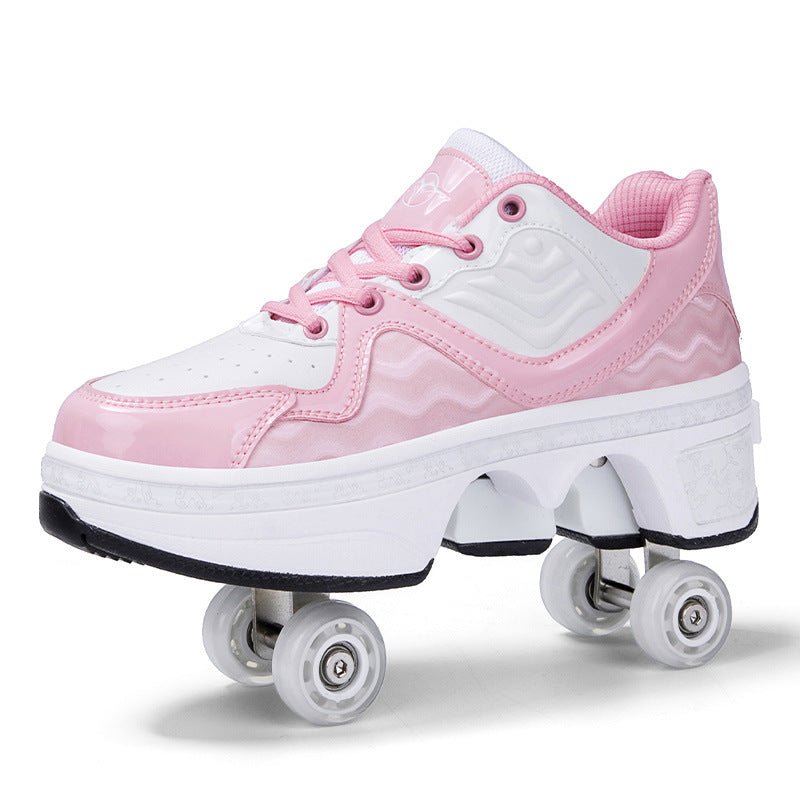
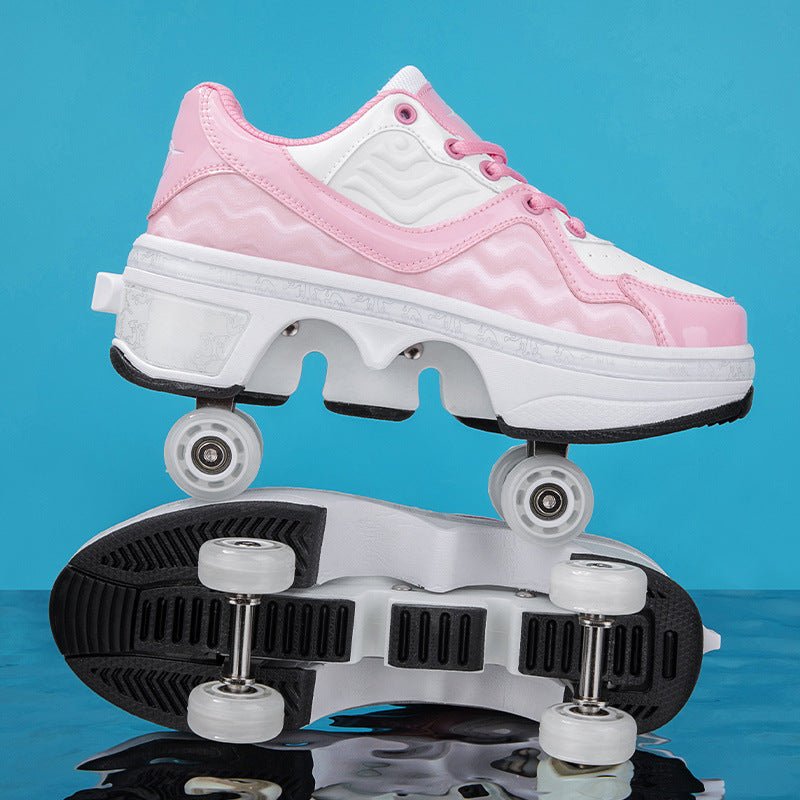
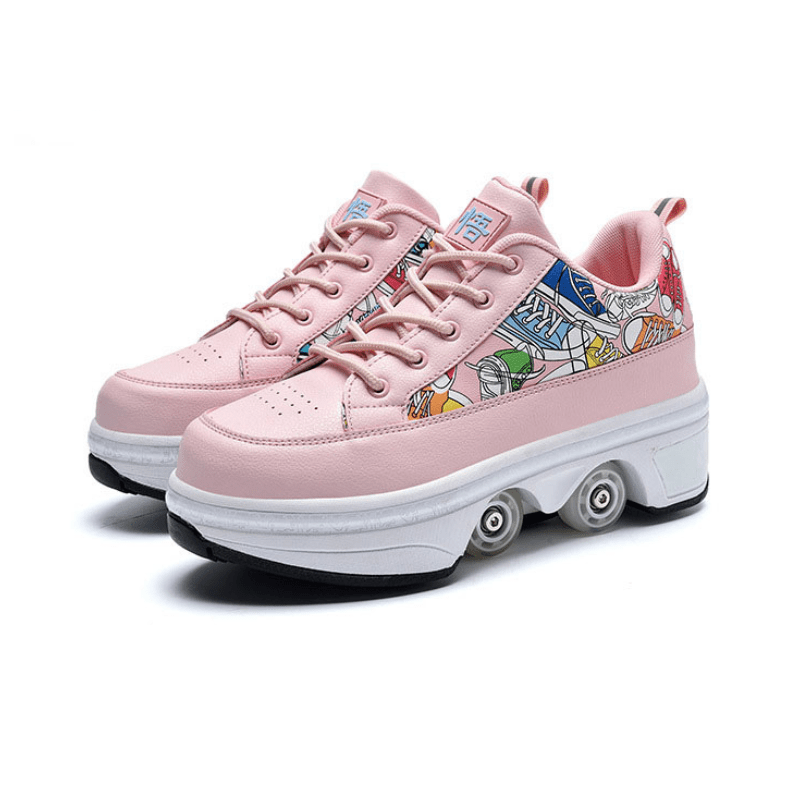
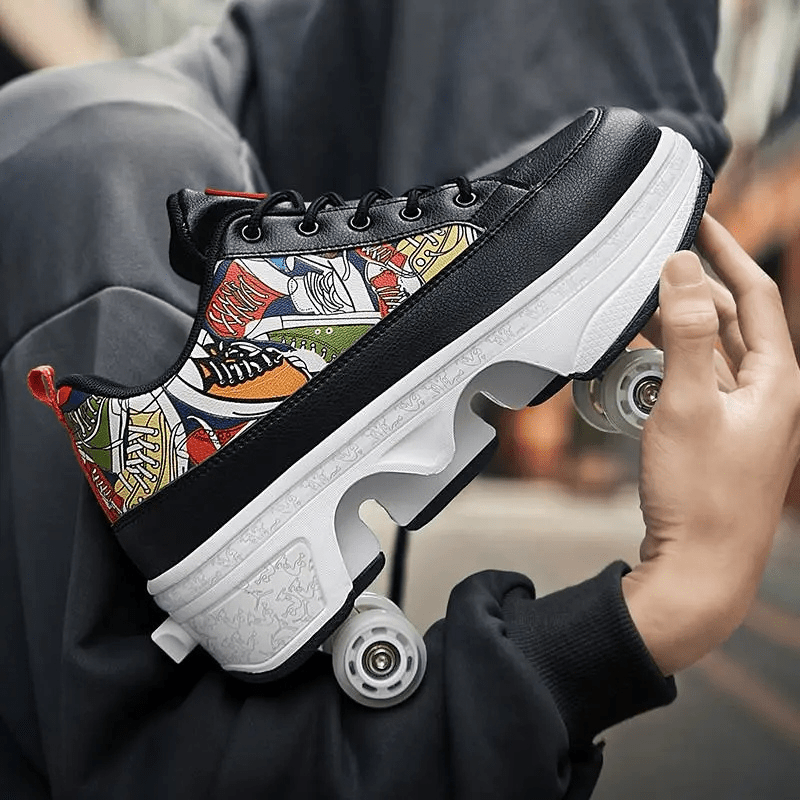
We will also explain why the retractable wheel design on Kick Speed roller skate shoes with pop-out wheels lines up well with the single most repeated piece of expert safety advice: keep the wheels disabled whenever your child is not actively and safely skating.
Start browsing here: Roller Skate Shoes With Pop-Out Wheels, Heel Wheel Roller Shoes, LED Roller Shoes, Size Guide, Safety and Tips.

Quick Answer: Are Shoes With Wheels Safe for Kids?
Yes, shoes with wheels are safe enough for most kids when parents manage the risk properly. They are not toys to be worn carelessly, and they are not unusually dangerous either. The key is that almost every serious problem traces back to a small list of avoidable causes: no protective gear, the wrong surface, going too fast too soon, riding in crowds or near traffic, and using the shoes before learning to balance and stop.
Safety research on wheeled footwear points to a clear and useful pattern. A large share of injuries happen in the very first few uses, while children are still learning to balance, and in many injury cases the child was not wearing any protective gear at all. That is actually good news for parents, because it means the highest-risk window is short and the most effective fixes are simple: full gear, supervised practice, smooth flat ground, and a steady learning curve.
What the Safety Research Actually Says About Shoes With Wheels
It helps to separate fear from facts. Wheeled shoes have been studied by hospitals and researchers for years, and the findings are consistent enough to give parents practical guidance rather than panic.
Most injuries are to the wrists, hands, and arms
When children fall on shoes with wheels, they usually fall and reach out to catch themselves. That is why reviews of emergency-room data have found that the upper body, especially the wrists, hands, and arms, accounts for most injuries, and fractures are common within that group. This single pattern is the strongest argument in the world for wrist guards. They protect the exact body part that gets hurt the most.
The first few rides are the riskiest
Studies have suggested that a large majority of injuries happen when a child has worn the shoes only a handful of times. In other words, the danger is concentrated in the learning phase, before balance and stopping become automatic. Slowing down those first sessions and keeping them supervised removes much of the total risk.
Most injured kids were not wearing safety gear
One of the most repeated findings in injury reviews is that very few of the injured children were using protective equipment at the time. This matters because it suggests many of these injuries were not freak accidents but predictable falls that gear would have softened. Safety gear is not optional decoration for wheeled shoes. It is the core safety system.

Are Heelys and Shoes With Wheels Bad for a Child's Feet?
Beyond falls, many parents ask a second safety question: are Heelys bad for your feet and ankles? Foot-health experts raise a fair point here. Walking and balancing on a wheel shifts a child's weight differently than a normal sneaker, which can change their natural gait and add pressure to the forefoot and heel. Worn constantly, all day, every day, that altered movement pattern is not ideal for a growing foot.
The practical takeaway from podiatry guidance is not "never use them." It is "do not let your child live in roller shoes in active wheel mode all day." The widely repeated expert recommendation is to keep the wheels disabled when your child is not actually skating, so the shoe behaves like a normal sneaker the rest of the time. This is exactly where the design of the shoe matters for everyday safety.
Why retractable pop-out wheels fit the expert advice
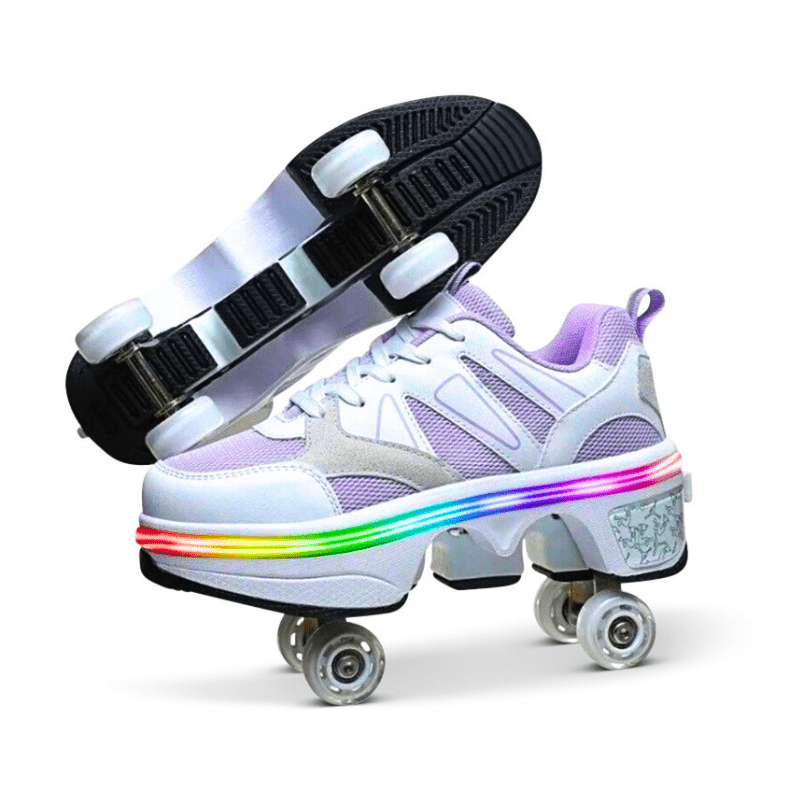
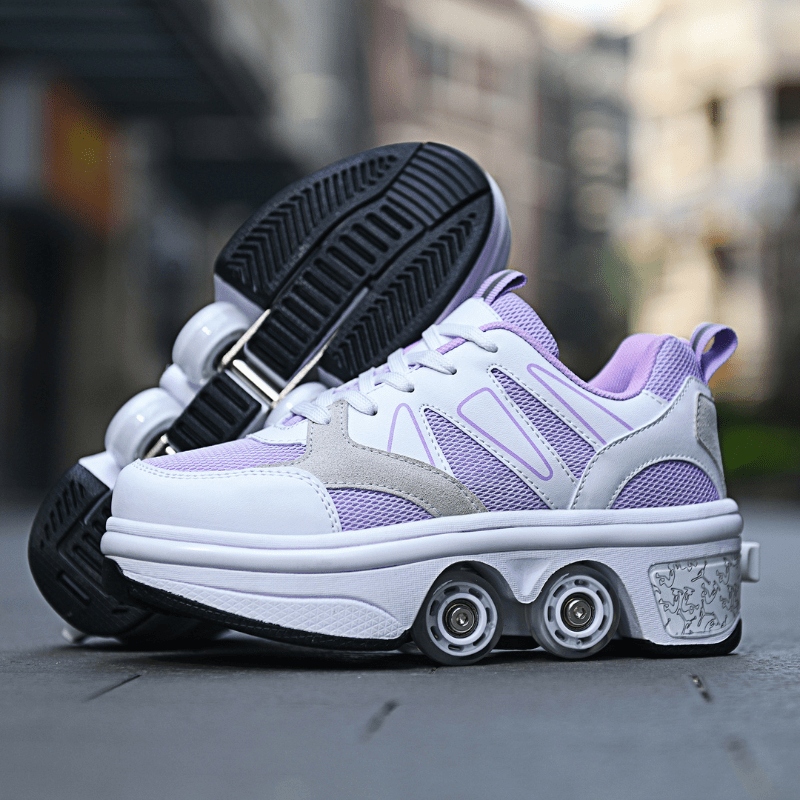
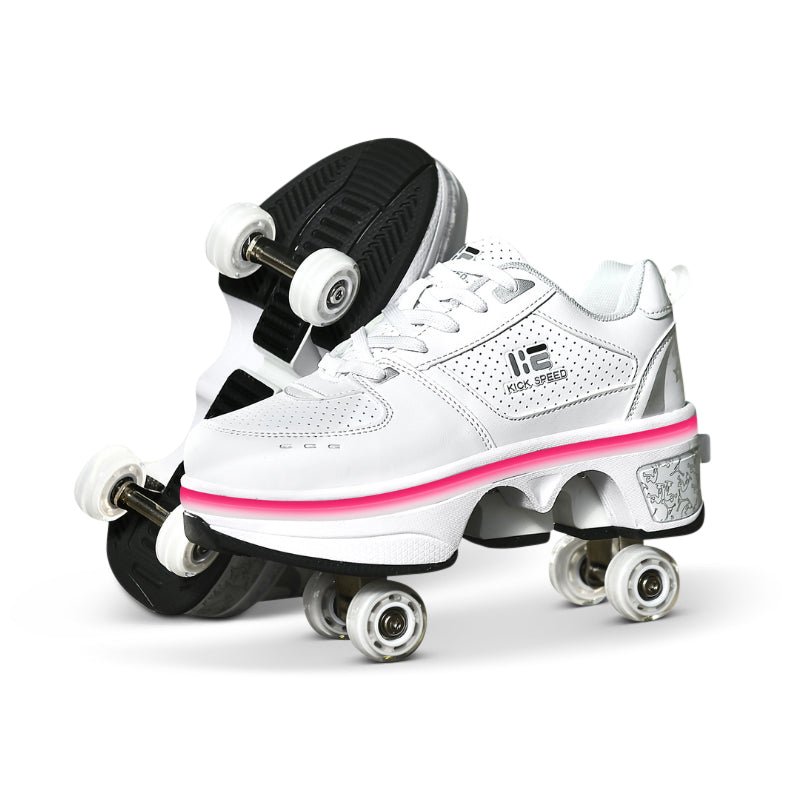
With classic single-wheel Heelys, switching to a true walking-only setup can mean physically removing the wheel with a tool. That extra effort means kids often just keep rolling. Kick Speed roller skate shoes with pop-out wheels are built so the wheels retract into the sole with a button. The shoe becomes a normal walking sneaker in seconds and an actual roller setup only when your child is in a safe, permitted place to skate. That makes it far easier to follow the core safety principle of disabling the wheels except during supervised, intentional riding.

The Essential Safety Gear for Shoes With Wheels
If you only remember one thing from this guide, remember this: shoes with wheels are much safer for kids when they wear protective gear, and much more dangerous without it. Because falls land on the hands and head, the gear list is not complicated. It is just non-negotiable for beginners.
- Helmet: A properly fitted helmet sits level on the head with the chin strap snug, not loose. This protects against the most serious head injuries.
- Wrist guards: The single most important piece for wheeled shoes, because wrists and hands are the most commonly injured body part. Do not skip these.
- Knee pads: Reduce the sting of falls and, just as importantly, keep kids willing to get back up and keep practicing.
- Elbow pads: Extra protection for side and backward falls, especially on concrete.
Set the rule on day one and never bend it: no shoes with wheels without full safety gear, even for a quick ride. Kids respect a clear, consistent boundary far more than a rule that changes every day.
Choosing a Safer Surface for Kids to Ride On
Where your child rides is just as important for safety as what they wear. The safest places for shoes with wheels are smooth, flat, dry, and uncrowded. The most dangerous places combine speed, hard impacts, and people or cars.
Safer surfaces for shoes with wheels
- Empty basketball or tennis courts, which are smooth, flat, and predictable
- Quiet sidewalks in calm neighborhoods with no traffic
- Flat driveways and school playgrounds after hours
- Smooth, level park paths away from crowds
Surfaces and situations to avoid
- Hills, slopes, and any decline, until your child can stop reliably on flat ground
- Wet, icy, or leaf-covered ground, which destroys wheel grip
- Gravel, cracks, curbs, and rough pavement that catch wheels and cause sudden stops
- Roads, parking lots, and crowded areas where falls and collisions are most likely

What Age Is Safe for Shoes With Wheels?
Age affects safety because it affects balance, leg strength, judgment, and foot size. There is no single magic number, but there is a realistic framework most parents can use.
Under age 6: usually too early
Children under six often lack the balance, coordination, and impulse control needed to ride safely and follow rules. Their feet are also frequently too small for the smallest roller shoe sizes. For most families, it is safer to wait.
Ages 6 to 7: the careful beginner stage
This is usually the earliest age where shoes with wheels make sense, and only with close supervision and full gear. Beginner-friendly heel wheel roller shoes, especially models that allow a front wheel to be added for extra stability, are the gentlest starting point because the child can slide and balance rather than perform real skating technique.
Ages 8 to 12: the strongest window
Balance and coordination are well developed, judgment is better, and feet fit a wider range of styles. Many kids in this range can safely progress from heel wheel shoes to roller skate shoes with pop-out wheels. Gear and surface rules still apply at every age.
Whatever the age, maturity matters as much as the number. A child who can follow safety rules, keep the wheels disabled when asked, and practice patiently is ready. A child who cannot is not, regardless of age.
Heelys vs Heel Wheel Shoes vs Pop-Out Roller Shoes: Which Is Safest?
All three main types of shoes with wheels can be ridden safely, but they do not all carry the same learning curve. Stability during the early sessions is the biggest safety difference, because that first learning window is where most injuries happen.
| Type | Wheel setup | Beginner stability | Safety notes |
|---|---|---|---|
| Classic Heelys | Single wheel in the heel | Lower, can feel tippy at first | Steeper learning curve; wheel must be removed with a tool for a true walking-only setup |
| Kick Speed Heel Wheel Roller Shoes | Heel wheel with optional front wheel on selected models | Higher with the front wheel added | Extra point of contact makes early balance easier and falls less likely for cautious riders |
| Kick Speed Pop-Out Roller Skate Shoes | Multiple wheels that retract into the sole | More planted, skate-like stance | Button retracts wheels in seconds, so walking mode is effortless and rules are easy to follow |
For nervous first-timers, the easiest and most forgiving path is usually a heel wheel roller shoe with the front wheel attached, then progressing to single-heel or pop-out riding once balance is solid. The more stable the shoe feels in week one, the fewer falls your child collects while learning.

How to Make the First Rides as Safe as Possible
Because most injuries cluster in the first handful of rides, the smartest safety investment is a careful, slow start. Here is the progression that keeps beginners safest.
- Gear up first, every time. Helmet and wrist guards at minimum, knee and elbow pads strongly recommended.
- Walk before rolling. Let your child walk in the shoes on carpet or grass to feel the weight and learn to avoid accidental rolling.
- Practice stopping before speed. The step-down stop, where the child simply places a foot flat and walks out of the glide, should be learned before any long rides.
- Hold hands for the first glides. Short one-second glides with a parent holding both hands build confidence without big falls.
- Keep sessions short. Tired legs cause wobbly rides. Fifteen to twenty minutes is plenty for early sessions.
- Lean slightly forward, not back. Leaning back to "catch" a roll is the number one beginner mistake and the most common cause of backward falls.
For more on getting started, keep this safety checklist handy and review it before every session, and see our Safety and Tips page for the essentials at a glance.
Safety Rules Every Parent Should Set From Day One
Clear rules prevent the situations that cause the worst falls. Set these before the first wear and keep them consistent.
- No riding without full safety gear. No exceptions, even for short rides.
- No skating indoors or at school. Keep the wheels retracted or removed on hard indoor floors, in hallways, and anywhere crowded.
- No hills until stopping is mastered. Flat ground only until your child can stop on command.
- No traffic, parking lots, or crowds. Cars and crowds are where the most serious incidents happen.
- No wet or rough surfaces. Grip disappears on water, gravel, and cracks.
- No tricks early. Jumps and stunts wait until the basics are completely solid.
- Wheels off when not skating. Disable or retract the wheels for normal daily walking to protect both safety and growing feet.

The Right Fit Is a Safety Feature, Not Just Comfort
A loose shoe wobbles and a tight shoe throws off balance, and both make riding less safe. Getting the size right is one of the easiest ways to reduce falls. Measure your child's foot length in centimeters and inches by having them stand flat against a wall, then compare the measurement to the official Kick Speed Size Guide rather than guessing from another sneaker brand. A secure, snug fit gives your child the control they need to balance and stop.
Fit is also a long-term foot-health issue. Riding in shoes that a child has outgrown, for long periods in wheel mode, is exactly the kind of use foot experts warn against. Check sizing as your child grows, and keep daily walking in plain sneaker mode with the wheels disabled.
Are LED Shoes With Wheels Safe for Kids?
LED roller shoes are just as safe as non-LED models, and the lights can add a small real-world benefit: better visibility in low light during evening or winter rides. The lights are not a substitute for safety gear, but they do help your child be seen. If your child's school has a strict dress code, a no-LED model in a neutral color is the safer social choice for school-day wear, while keeping the same retractable wheel function.
Best Choices for Safety-Minded Parents
The most reassuring options for cautious parents combine an easy walking mode, a stable ride, and a clean sneaker look that works as everyday footwear.
- Best for easy walking mode: Kick Speed roller skate shoes with pop-out wheels, because the button retracts the wheels into the sole in seconds.
- Best for nervous beginners: Kick Speed heel wheel roller shoes with a front wheel added for extra stability.
- Best for strict dress codes: no-LED models in neutral colors that still keep the retractable wheel function.
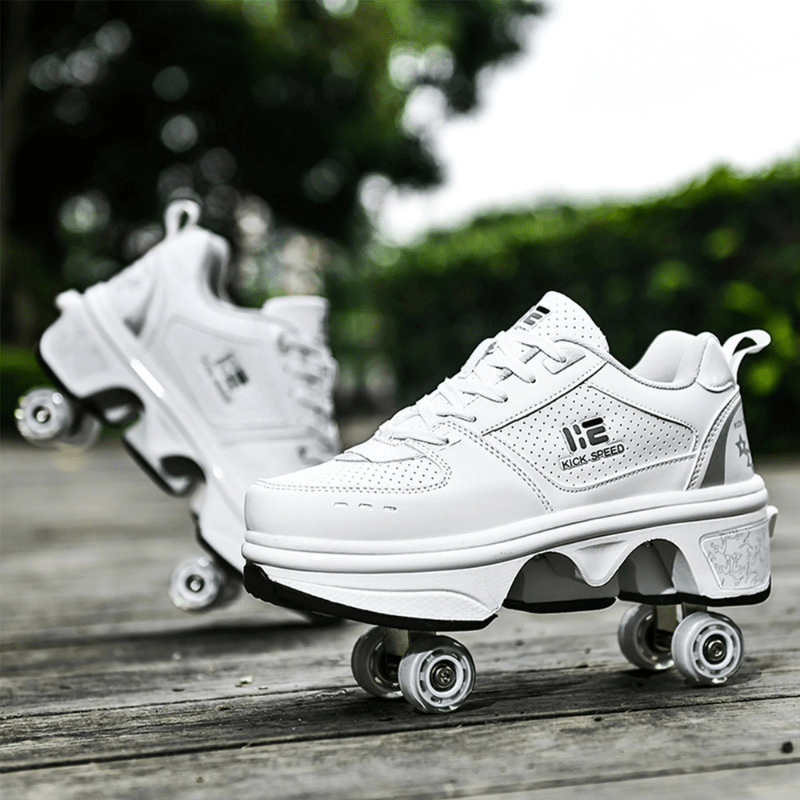
- Best clean everyday look: the Kick Speed Original LOW White Roller Skate Shoes, a low-top sneaker shape with a retractable wheel system.
Final Verdict: Are Shoes With Wheels Safe for Kids?
So, are shoes with wheels safe for kids in 2026? Yes, for most children, when the risk is managed. They are an active outdoor activity, not a guaranteed-safe everyday shoe, and they deserve the same respect you would give a bike or a scooter. The data is actually encouraging for prepared parents: most injuries happen in the first few rides, mostly to the wrists and hands, and mostly when no protective gear was worn. Every one of those risk factors is something you can control.
Give your child full safety gear, a smooth flat surface, a slow and supervised start, and a shoe that makes it easy to disable the wheels when they are not skating. Do that, and shoes with wheels become one of the most fun and rewarding ways for a child to stay active. The retractable pop-out wheel design from Kick Speed is built around exactly that principle, which is why it is a strong choice for safety-minded families.
Shop Kick Speed Shoes With Wheels
- Roller Skate Shoes With Pop-Out Wheels
- Heel Wheel Roller Shoes
- LED Roller Shoes
- Without LED Models
- Low-Top Roller Shoes
- Mid-Top Roller Shoes
- Size Guide
- Safety and Tips
- FAQs
- Contact Us
Frequently Asked Questions
Are shoes with wheels safe for kids?
Yes, shoes with wheels are safe enough for most kids when used with full protective gear, on a smooth flat surface, at an appropriate age, and with clear rules. Most injuries happen in the first few rides and to the wrists and hands, so wrist guards, a helmet, and a slow supervised start dramatically reduce the risk.
What safety gear do kids need for shoes with wheels?
At a minimum, kids need a properly fitted helmet and wrist guards, because the head and wrists are the most commonly injured areas. Knee pads and elbow pads are strongly recommended too, especially during the first few weeks of learning.
Are Heelys bad for your feet?
Worn constantly in active wheel mode, Heelys and other wheeled shoes can change a child's natural gait and add pressure to the foot, which foot-health experts advise against. The common recommendation is to disable or retract the wheels when the child is not actually skating, so the shoe behaves like a normal sneaker the rest of the time.
What age is safe for shoes with wheels?
Most children are ready around age six or seven at the earliest, with close supervision, and the strongest window is roughly ages eight to twelve. Maturity matters as much as age, because the child needs to follow safety rules and learn to balance and stop before riding in public.
Where is the safest place for kids to ride shoes with wheels?
The safest places are smooth, flat, dry, and uncrowded, such as an empty basketball or tennis court, a quiet sidewalk, a flat driveway, or a level park path. Avoid hills, wet or rough ground, traffic, parking lots, and crowds.
Why are the first few rides the most dangerous?
Safety reviews have found that a large share of injuries happen in the first several uses, while the child is still learning to balance and stop. Keeping early sessions short, supervised, and on flat ground, with full gear, removes most of that early risk.
Are pop-out roller skate shoes safer than classic Heelys?
Both can be ridden safely, but pop-out roller skate shoes make it much easier to follow safety advice because the wheels retract into the sole with a button. That means the shoe walks like a normal sneaker instantly and only becomes a roller setup when your child is in a safe place to skate.
How do I choose the right size for safety?
Measure your child's foot length and compare it to the official Kick Speed Size Guide rather than guessing from another brand. A snug, secure fit is a safety feature because it gives your child the control needed to balance and stop, while a loose or outgrown shoe makes falls more likely.