Heelys Tricks List: Trick Names and What They Mean
This is a glossary of heeling trick names — what each one means and what equipment it assumes. It covers shoes with a wheel in the heel. It is not a training programme, and it is not confirmation that any particular shoe is suitable for any particular move.
Most of these names come from the Heelys "Tricktionary", an official glossary that is no longer published, plus vocabulary riders built around it. Where a name is used inconsistently or we could not find a description we can point you to, we list the name without one. See sources and terminology notes.
The Four Categories of Heeling Tricks
The Wikipedia entry on Heelys, citing the original Heelys Tricktionary, groups heeling into four categories. The grouping is about where you are and what is touching the ground.
| Category | What it means |
|---|---|
| Ground | The main body of heeling. Flat ground, wheels on the floor. Most named tricks sit here. |
| Stalling | Getting onto a raised object, holding a position on it, then coming back off. |
| Vert | Anything ridden on a ramp. |
| Grinding | Landing on a rail or ledge and sliding along it on a grind plate built into the sole, rather than on the wheel. See grind names and equipment. |
Wikipedia lists a fifth informal group, flips, performed onto a trampoline or a soft landing surface. There is no established named vocabulary for them, so they are not listed here.
Rolling and Stopping
These are not tricks. They are the terms the trick names assume you already know.
- Heeling — the transition itself: moving from walking or running to rolling by shifting weight back onto the heels.
- Push off — starting the roll. The official Heelys riding page describes stepping and pushing with the back foot, then lifting the front toe so only the wheel is down.
- Sonic Stop — a stop taken with both feet together and both brakes engaged at the same moment.
- Manual Heel Stop — stopping out of a one-footed roll, braking with only the foot that is on the ground.
- Back-foot drag — scrubbing speed by dragging the rear sole. Riders also apply the name T-stop to a version with the back foot turned sideways behind the leading one.
- Turning — riders distinguish turning toward the lead foot from turning against it, and treat the second as the harder one. Their descriptions centre on leaning into the corner and steering with the rear wheel rather than the shoulders.
Stopping instructions are model-specific and should come from the manufacturer, not from a glossary. For Heelys, follow the brand's official stopping instructions. For Kick Speed heel wheel roller shoes, the How to Brake section on each product page sets out the heel brake and, where front wheels are fitted, the T-stop. Do not carry a technique across from one brand or configuration to another.
Ground Tricks: Switching, Manuals and Backward Rolling
- Switching — swapping which foot leads while still rolling. The back foot becomes the front foot. A large part of the vocabulary below is defined in terms of it.
- Shuffling — switching the lead foot repeatedly and quickly rather than once.
- Heeling Backwards (also Heeling Reverse) — rolling backwards rather than forwards.
- Revert — changing from backwards to forwards or the other way round.
- Manual (also Footy, Uni) — rolling on one foot with only the wheel touching the ground.
- Reverse Manual (also Reverse Footy) — a one-footed roll going backwards. Some riders also call this cheating death.
- Off-leg Footy — a rider term for a one-footed manual performed on the rider's non-preferred foot.
- Fish-Tail — building momentum by moving the feet side to side without changing which foot leads. Riders describe the motion as a tight slalom.
- AOD (Angel of Death) — rolling forward with both feet together and both arms straight out to the sides in a T shape. Heelys called this trick The Angel.
- DOA (Dead On Arrival) — a rider term for the same shape rolling backwards.
- Weaving — performing any ground trick through a line of obstacles, usually cones.
- Footy Weave — a rider term for weaving on one wheel.
- Foot Tap — a rider term for lifting the front foot mid-roll and tapping it down without planting it.
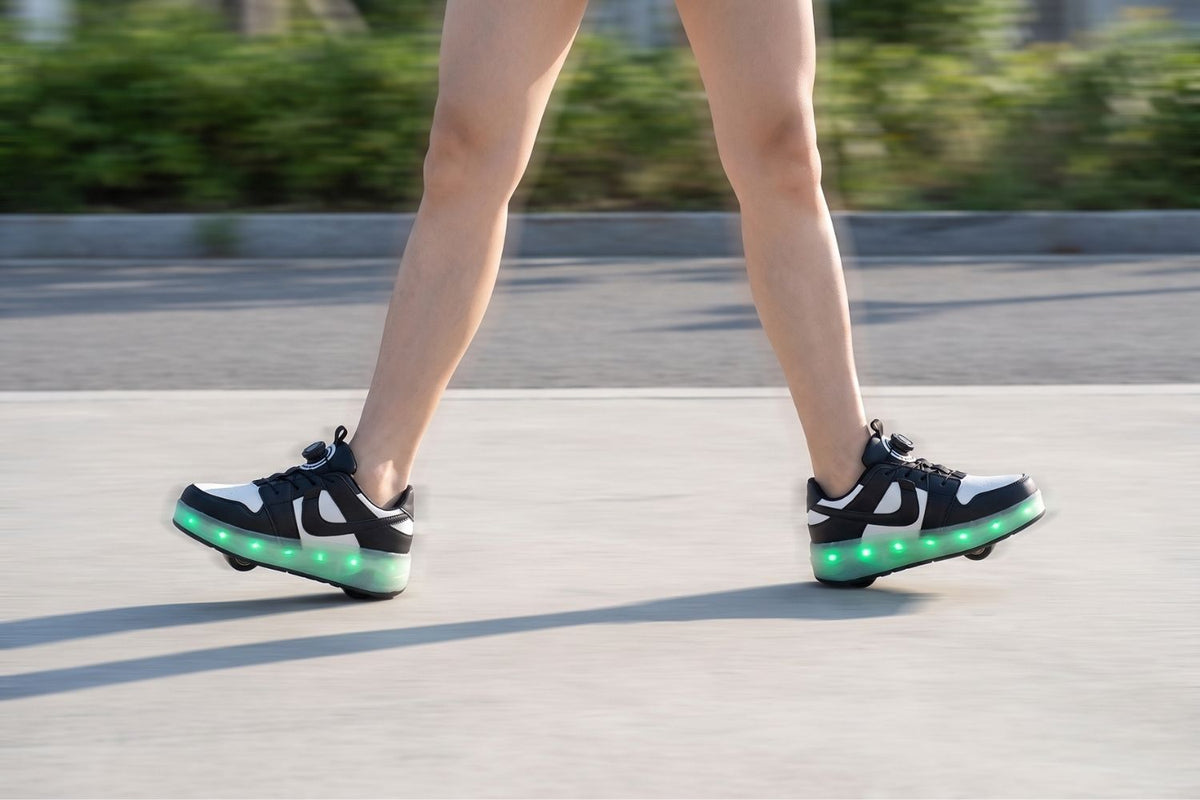
Spins and Footwork Tricks
- 180 — a half spin performed on the wheels. The rider enters rolling forwards and exits rolling backwards.
- Inverse 180 — a half spin that finishes with the same foot leading rather than the opposite one. Riders describe it as a variation on the 180 rather than a separate trick.
- 360 — a full spin on the wheels, exiting in the direction of entry.
- Psycho — four or more consecutive 360s.
- Footy 360 — a full spin performed on one wheel.
- Footy Psycho — a rider term for consecutive 360s on one wheel.
- Footy Corner — a rider term for roughly a quarter turn on one wheel.
- Crabwalk — travelling sideways with both feet turned outward and the knees bent.
- Pipeline — the same sideways position with the legs straight. The knee bend is the only thing separating the two names.
- Crabline — a rider term for one leg in the crabwalk bend and the other locked out.
- Can-Opener — a footy 360 landed directly into a pipeline or crabwalk. Riders treat it as a single continuous move; landing and then getting into the position does not count.
- Toe Jam — planting the back foot to stop forward momentum without dropping the front toe, then pushing off that planted foot in a new direction. Riders note the redirect can be any direction, not only a reversal.
- Power Slide — a 180 followed by dropping the toes so the soles drag and bring the rider to a stop.
- Propulsion Switch — generating momentum through the switch itself by pushing off a wheel edge as the feet swap. Riders point out the name is misleading and that it describes a run of fast switches rather than a single move.
- Kickswitch — a rider term for a switch in which the front foot plants and kicks through to push, then replants the wheel. Riders associate it with building speed.
- Propulsion 180 — a rider term for using the point mid-spin where a wheel sits sideways to the direction of travel as a push-off.
- Double Acceleration — a rider term borrowed from inline speed skating, describing additional pushes after the initial one.
- Twisted Turn — a rider term for hopping and turning 180 at the top of a slope so as to come back down facing forwards.
Stall Names and Terminology
This is the least well documented part of the vocabulary. The Heelys Tricktionary had a stalling category; we have not been able to verify reliable descriptions for most of the historical stall names. They circulate on the forums — Footy Stall, Backside Stall, Savannah Stall, Kobayashi and others — but we are not going to attach invented descriptions to them.
Two entries we can point you to:
- Joe Stall — described by a rider as landing on one foot sideways on the object, with the back foot either tapped against it or crossed behind.
- Tru — a modifier rather than a trick. A "tru" entry means rolling straight into the move off the wheels; taking a step or two into it makes it planted rather than tru. Riders use the same modifier for stalls, vert and grinds.
If you ride and can describe a stall accurately, send it to us and we will add it with a credit.
Ramp and Vert Trick Names
Ramp and vert terms describe riding on ramps and transitions. The entries below explain terminology; they are not instructions for attempting these moves.
- Drop In — entering the ramp from the lip rather than rolling in from the flat. Rider account.
- Pumping — gaining height through the transition without planting a foot. Rider account.
- Fakie — riding back down the transition backwards. Rider account.
- Foot Switch on vert — going up in one stance and coming back down in the other. Rider account.
- Frontside and Backside — direction conventions rather than tricks. Which is which depends on the rider's planted foot and whether the entry was tru or planted. Rider account.
- Power Plant — an entry planted twice rather than once. Riders describe it as an older style and note that it changes the direction of rotation.
- Halo — described by a rider as a 360 onto the rail in a halfpipe.
- Manplant — described by a rider as a grab performed on an extension or over vert.
Vert names that circulate without a description we can point you to include Spine Transfer, Acid Drop, Handplant, Christ Air, Wallride, Rock to Fakie and a long tail of spin counts. They are listed here as names only.
Grind Names and Equipment
Grinding is defined by equipment, not by skill level. A grind is performed on a grind plate — a smooth, low-friction panel built into the sole of the shoe — and not on an ordinary rubber outsole. Wikipedia, citing the original Heelys Tricktionary, states that grind tricks can only be performed if the model has that pad in the shoe.
Some historical Heelys models included grind plates. Check the specifications of the exact model: a heel wheel alone does not make a shoe suitable for grinding. A standard rubber outsole is not a substitute. Kick Speed heel wheel roller shoes are not specified with a grind plate and we do not recommend grinding on them. Riders who describe attempting grinds on an unplated sole, using wax, describe it as a bad idea.
The grind names below are listed for reference.
- Rail grind — the base move: getting onto a rail and sliding along it on the plate. Rider account.
- Railflip — described by a rider as a 180 performed on the rail itself, changing a frontside grind into a backside one.
- V Slide — a proposed community grind name. The original discussion contains conflicting descriptions of the foot position, and riders in it disagreed over whether the move was distinct from existing grinds, so no single definition is given here.
Grind names that survive without a description we can point you to include Bloodstain, Loony Princess, Cheese Grater, Unity, Half-and-Half, Soul, Royale, 50-50, Footy Grind, UFO and Cab Driver.
What Equipment Each Group Assumes
The vocabulary above developed on shoes with a single wheel in the heel and nothing under the toe. That matters when you read it against a shoe that also takes a front wheel.
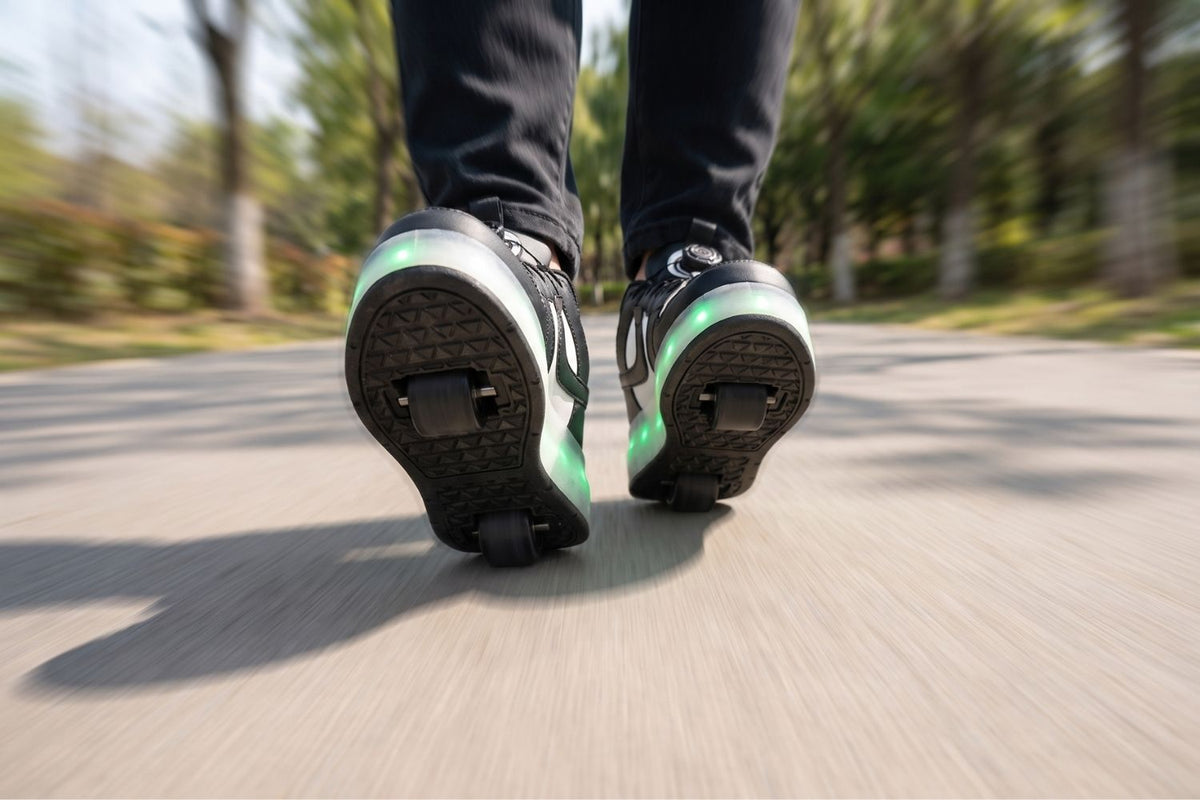
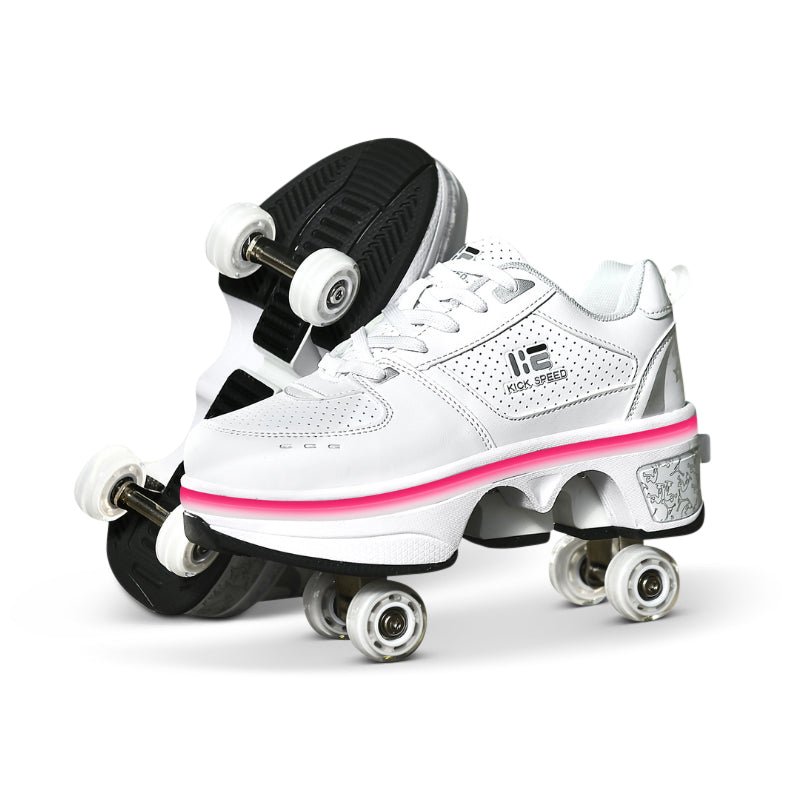
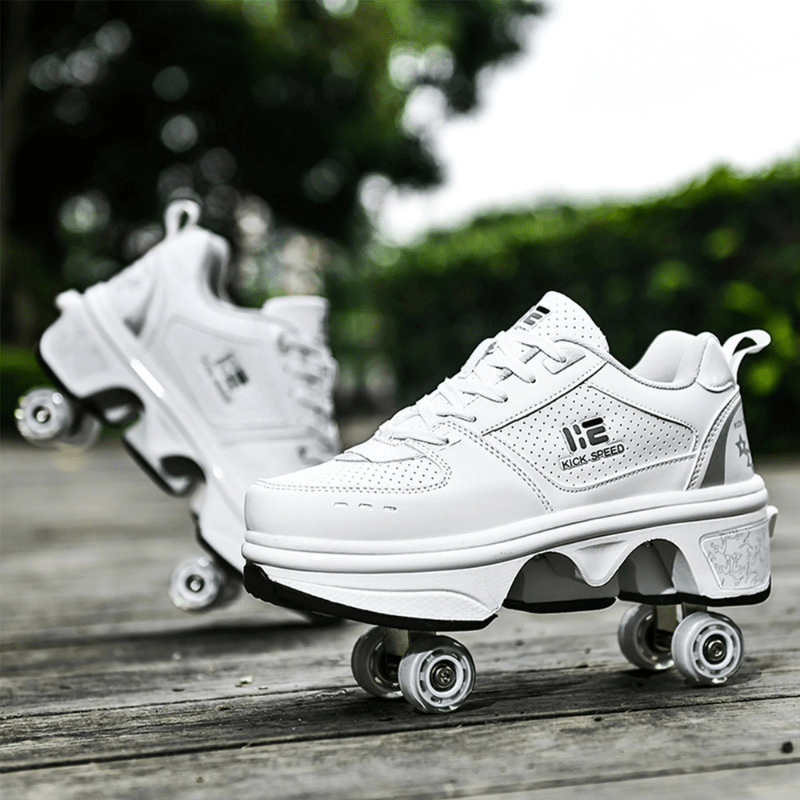
Heel-only configuration. This is the arrangement the trick names were coined around: a wheel in the heel, nothing under the toe. Kick Speed heel wheel roller shoes can be ridden this way by leaving the front wheel out.
Front wheel fitted as well. The rider is then rolling on two points spread along the length of the foot rather than one, which is a different ride. Names that describe planting or dragging the toe were not coined for this configuration.
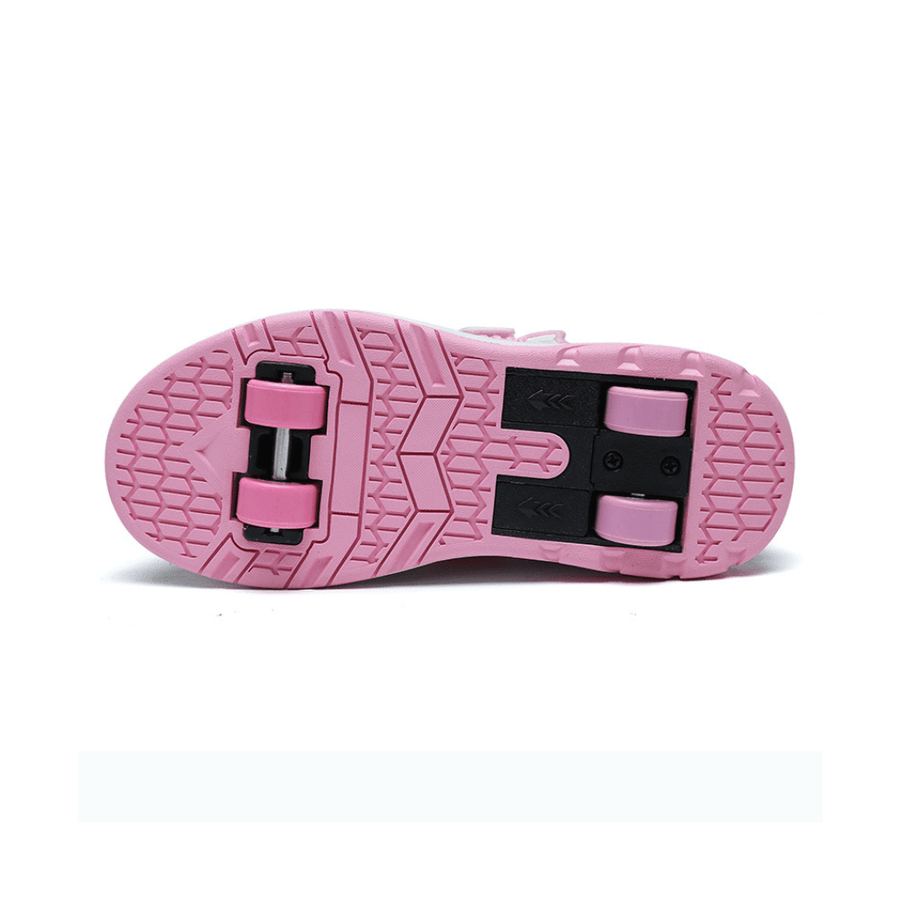
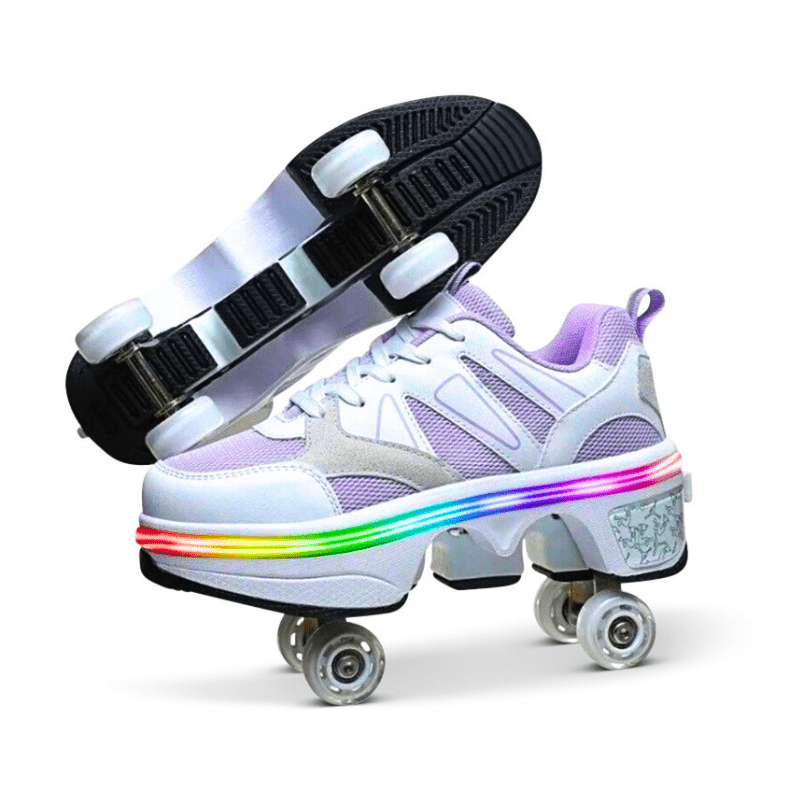
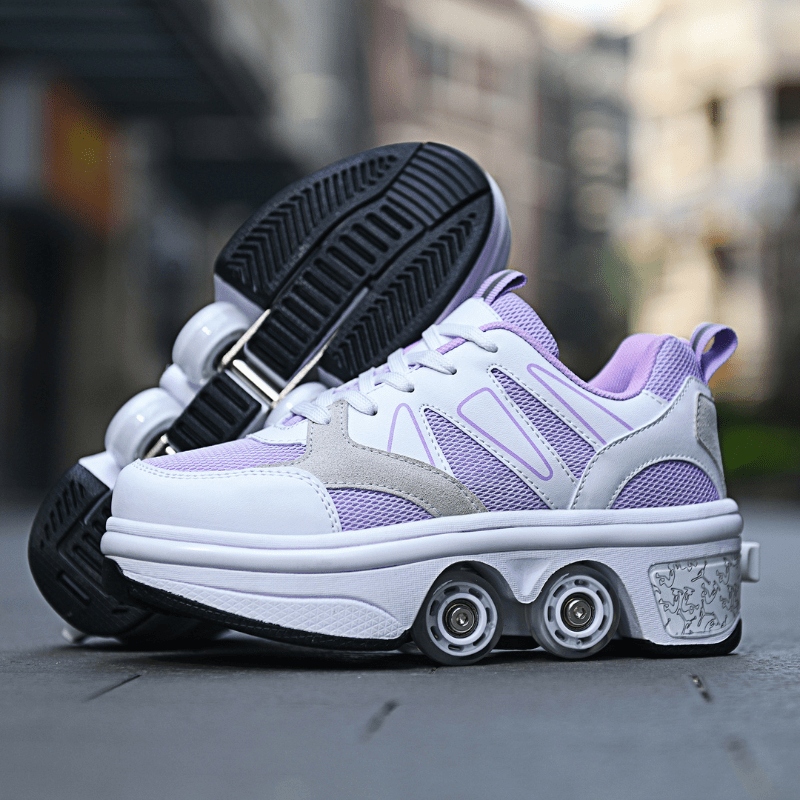
Pop-out four-wheel shoes. A different system, with four wheels deploying below the sole on a frame. This vocabulary does not describe it. The difference is set out in heel wheel vs pop-out roller shoes.
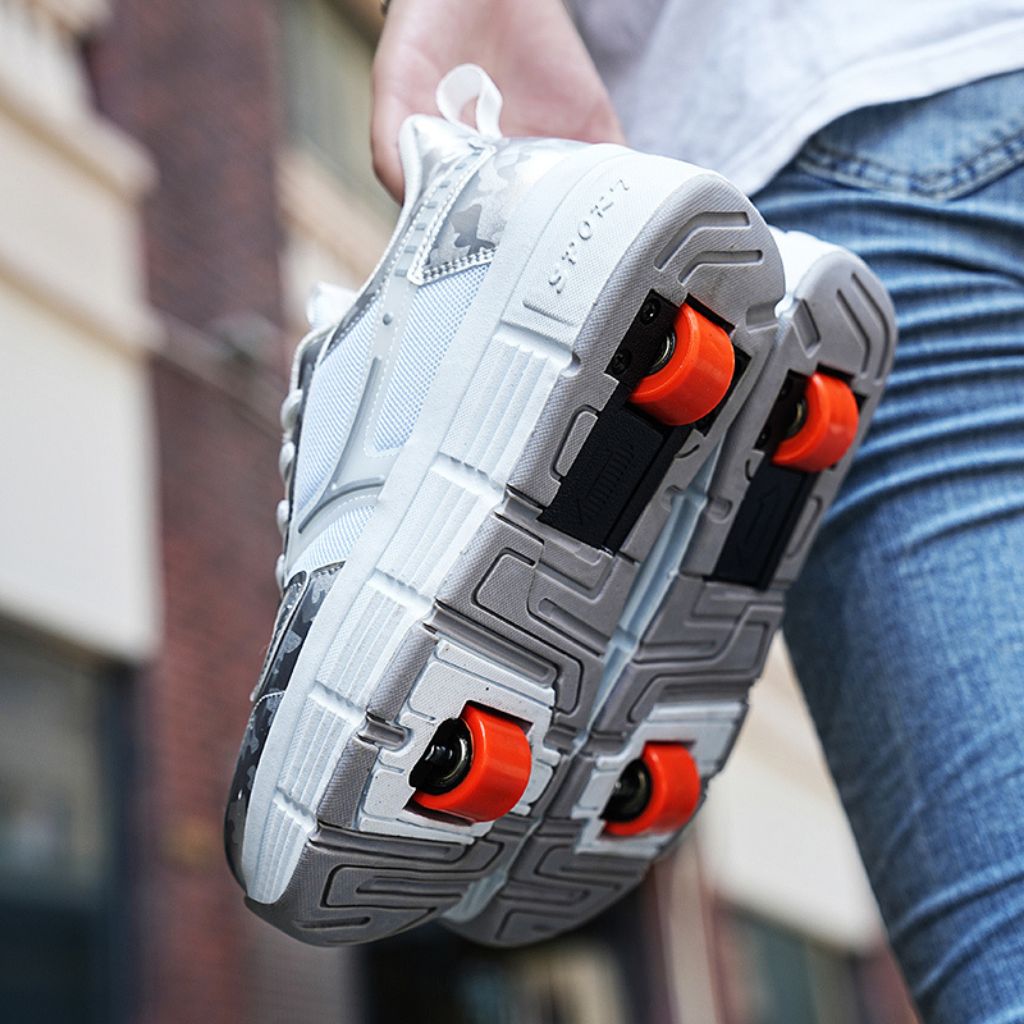
A name in this glossary is not a statement that a given shoe is suitable for that move. Suitability is set by the manufacturer of the exact model. Follow the instructions supplied with your shoes, and read the shoes with wheels safety guide before riding. Helmet, wrist guards, knee pads and elbow pads, a smooth flat surface, no traffic.
Sources and Terminology Notes
Three different kinds of source sit behind this glossary, and they do not carry equal weight.
- Current manufacturer instructions. The Heelys riding page for the basics of rolling and stopping on Heelys, and the product page for the model you actually own. Use the manufacturer's instructions to check the intended use and wheel configuration of your exact model. Historical definitions and forum posts do not establish product suitability.
- Ground-trick definitions preserved by the community. Heelys published an official "Tricktionary" defining tricks by name and category. Those pages are no longer on heelys.com. The ground-trick and spin definitions here are reworded from a copy preserved by a member of the heeling community forum and from the Wikipedia entry that cites the original. That copy covers ground tricks; it is not the source for the stall, vert and grind entries.
- Informal rider vocabulary. Many entries above — including all the stall, vert and grind descriptions — come from individual riders posting on the forum rather than from Heelys, and usage varies between riders. Each of those entries links to the specific post it came from so you can judge it yourself.
Where a name is widely used but we could not find a description we can point you to, the name is listed without one. That applies to most of the historical stall names and to a long tail of vert and grind names. Not finding a description is not proof that none exists.
Heelys Tricks: Frequently Asked Questions
What are the main Heelys tricks?
Ground tricks make up most of the vocabulary: switching, shuffling, heeling backwards, one-footed manuals, 180s and 360s, crabwalk and pipeline, toe jams and power slides. Stalls involve a raised object, vert names describe ramp riding, and grinds require a grind plate.
Can you do Heelys tricks on Kick Speed heel wheel roller shoes?
Kick Speed heel wheel roller shoes offer a heel-only riding configuration, which is the arrangement these trick names were coined around. That does not establish that every trick in this glossary is suitable for them. Follow the instructions for your exact model. This glossary is not confirmation that Kick Speed shoes are suitable for jumps, ramps, stalls or grinds.
Can you grind on Heelys?
Only models designed with grind plates should be considered for grinding. A standard rubber outsole is not a substitute. Check the specifications and instructions for your exact model.
What is a footy?
Rider slang for a manual: rolling on one foot with only the wheel touching the ground. Also called a uni. A footy 360 is a full spin performed on that one wheel.
What is the difference between a crabwalk and a pipeline?
The knees. Both describe sideways travel with the feet turned outward. Crabwalk has the knees bent; pipeline has the legs straight.
What does "tru" mean in heeling?
It marks how you entered a move. A tru entry means rolling straight into it off the wheels rather than stepping into it. Riders apply it to stalls, vert and grinds.
Where did the official Heelys trick list go?
Heelys once hosted a Tricktionary that defined each trick by name and category. Those pages are no longer on heelys.com. See sources and terminology notes for what this glossary was reconstructed from and what could not be verified.
Are trick attempts covered by a warranty?
Check the policy for the shoes you own. Warranties generally cover manufacturing defects and exclude misuse and excessive wear. Read the terms rather than assuming.
If you are still choosing between wheeled shoes and traditional skates, read our roller shoes vs roller skates comparison, or check fit with the size guide. If nobody has rolled yet, start with how to teach a kid to ride shoes with wheels.